/pic2402804.jpg)
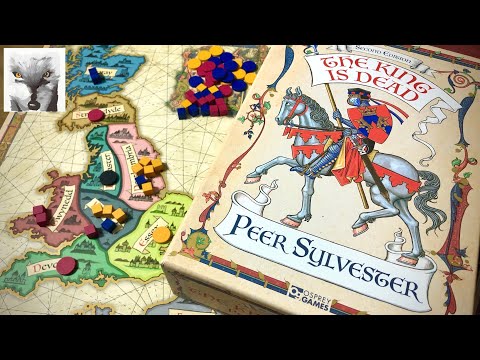


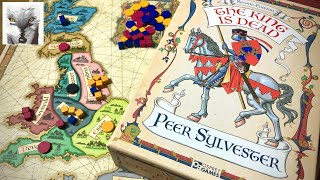











The King Is Dead Deep Dive
What the Community Thinks About The King Is Dead
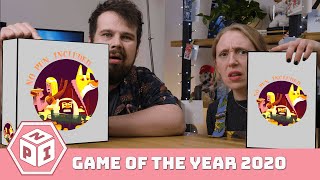
The King Is Dead occupies a fascinating position in the board gaming landscape. While it has earned passionate advocacy from certain corners of the community, most notably No Pun Included, whose glowing review elevated it significantly, many enthusiasts struggle to reconcile its elegant design with its demanding nature. Players consistently praise its mechanical precision yet acknowledge it demands much more from participants than its modest component list suggests. Some collectors have found it ultimately unfulfilling despite recognizing its craftsmanship, while others consider it essential to their collection. The game appears to polarize based on whether a player values austere elegance or thematic warmth.
Core Mechanics That Define The King Is Dead
Action Economy and Resource Scarcity
At its heart, The King Is Dead operates on a principle of beautiful constraint. Each player receives exactly eight action cards, no more, no fewer, and must deploy them across eight power struggles representing control of Britain's three factions: the English, the Scottish, and the Welsh. This fixed resource creates a puzzle of extraordinary depth. Every card spent is a card unavailable for future struggles. Players cannot afford to waste actions solving present conflicts if doing so leaves them unprepared for decisive moments later in the game. The game rewards planning but punishes rigidity, as the board state shifts unpredictably with each player's move. Community reviewers note that this constraint forces remarkable tension: knowing you have eight cards total and eight rounds to use them generates a sense of purposeful progression that longer games often fail to achieve.
Follower Collection and Power Manipulation
When a player commits a card to action, they immediately collect a follower token from the board corresponding to one of the three factions. This mechanic intertwines offense and defense into a single action, creating a core tension: the cubes you take to build your own power simultaneously weaken the factions on the board. A player seeking Scottish dominance must steal Scottish cubes, directly undermining their goal if other players can pivot their strategy. The followers themselves determine scoring, whoever possesses the most followers of the dominant faction becomes the new ruler. This creates a devilish calculus where every move toward victory also creates vulnerability and enables opponents. Reviewers highlight this as the game's greatest strategic achievement: the elegance of mechanics that reward thinking two or three moves ahead while remaining fundamentally about moment-to-moment decision-making.
The King Is Dead Experience
Timing, Passing, and Psychological Warfare
Perhaps the signature element of The King Is Dead is its approach to passing. Rather than playing through a fixed turn order, players may pass at any moment, deferring action and collecting temporary resources for future rounds. This transforms each power struggle into a chess-like confrontation where information asymmetry becomes critical. One player may invest multiple cards to secure a region, only to discover all other players have quietly passed, meaning the investment went toward a goal that no longer matters because the region has already been decided. Conversely, a player might pass early, reading the board state, and then strike decisively when the moment arrives. Community voices emphasize this as the mechanism that separates The King Is Dead from standard area control games. The choice of when to act versus when to wait, when to push a conflict versus when to abandon it, defines the entire experience. Multiple reviewers note they have experienced moments of brilliant clarity, correctly predicting opponents' behavior and orchestrating a perfect sequence, alongside moments of complete misjudgment, where they suddenly realize they have spent their resources on phantom conflicts.
Minimalism as Design Philosophy
The King Is Dead achieves its dramatic tension through ruthless deletion of unnecessary elements. The rulebook is spare. The board presents information clearly. The card abilities are straightforward. Yet within this minimalism emerges surprising complexity, as interaction between these simple elements compounds. Players describe the experience as meditative yet intellectually demanding, there is space to think because the rules never confuse, yet there is always something important to think about. The game respects player intelligence by trusting them to understand the implications of its mechanics without extensive narrative scaffolding. This design philosophy creates a game that feels like a thought experiment about political influence rather than a simulation of medieval Britain. Reviewers consistently remark that The King Is Dead plays differently at different player counts: the two-player version becomes a heated chess match with perfect information asymmetry, while three-player introduces the kingmaker dilemma that some find frustrating and others consider essential to the design.
What Makes The King Is Dead Stand Out
Elegant Abstraction in Service of Theme
The theme, medieval Britain, factions vying for control, players as power brokers, integrates so thoroughly with the mechanics that players debate whether the abstraction serves the theme or the theme merely justifies the abstraction. The lack of flavor text on cards, the colorless decision-making, the mathematical nature of control, all of these create a space where theme and mechanism become indistinguishable. One cannot imagine The King Is Dead as a space game or a fantasy game; the mechanics arise from the political context and vice versa. This integration explains why some players feel the game achieves what many thematically ambitious designs fail to accomplish: a mechanical experience that reinforces thematic intuition rather than requiring narrative suspension of disbelief.
Perfect Information About Your Arsenal, Uncertainty About Everything Else
In the advanced game variant, asymmetric card sets elevate the experience further. Players receive five common cards plus three unique cards drawn from a larger deck, meaning each player's hand remains partially hidden. The legendary plot card, which cannot be played, exists solely as a tiebreaker, yet its mere existence changes how opponents evaluate your strategy. Knowing you might be pursuing a tie rather than outright victory forces all players to recalibrate their approach. This design choice, information uncertainty that generates psychological tension without complexity overhead, appears in community discussions as the mark of sophisticated game design. It creates a situation where bluffing, misdirection, and adaptive strategy become possible without requiring hidden goals or memory challenges.
Potential Drawbacks
Abstraction and Accessibility
The King Is Dead's greatest strength, its elegant abstraction, functions as a barrier for some players. Those seeking thematic immersion, narrative progression, or the feeling of controlling armies may find the experience cold. Several community voices describe the game as "dry," noting that despite the medieval setting, no flavor emerges through play. The game is fundamentally about mathematical optimization, positioning, and timing rather than about experiencing kingship or political intrigue. For players who engage with board games primarily through thematic fantasy rather than mechanical puzzles, The King Is Dead offers little beyond intellectual challenge. Additionally, reviewers note that mastery requires repeated plays and commitment to studying the game deeply, it is not a game that yields wisdom to casual engagement.
Variance, Kingmaker, and Solo Experience
The three-player version faces legitimate criticism: the follower distribution can create situations where one player's early advantage becomes insurmountable, and the mathematical elimination of players' options can leave one player in a position to decide between other players' victories without meaningful agency. While the two-player game avoids this, players seeking variable player counts may find The King Is Dead frustrating. Furthermore, the game does not support solo play, and the competitive focus means that players seeking cooperative storytelling or solitaire experiences should look elsewhere. Some collectors report acquiring the game specifically because of its community reputation, only to discover it did not align with their actual gaming preferences, leading them to remove it from their collection despite acknowledging its design quality.
If You Enjoy The King Is Dead
Players attracted to The King Is Dead typically gravitate toward other streamlined area control games and abstract strategy experiences. Pax Pamir (Second Edition), Root, and Game of Thrones share the focus on political maneuvering and asymmetric player powers. Lords of Waterdeep, Patchwork, Targi, and Twilight Struggle present similar economies of scarce actions and high-stakes decision-making compressed into small turn counts. For those who appreciate the minimalist design philosophy without demanding the area control mechanics, Santorini and other pure abstracts offer comparable elegance. The King Is Dead serves as an entry point to a design philosophy that values precision, information efficiency, and player agency over narrative or component richness.
What Reviewers Are Saying
The king is dead is so beautiful and minimalistic having only eight cards having only eight rounds as you go through the eight power struggles only eight actions that anyone's playing and works fantastically as a two-player game it's a game that I always want to play and I'm always eager to have that chicken experience between players.
— The Cardboard Herald
Not only are you taking exactly eight actions but there's the choice to not take an action and wait until the right moment to take that action. I think that is a really clever decision in The King is Dead. It's such a satisfying thing to see every single action in your hand that you're going to take over the course of the game but just knowing okay how am I going to plan this out.
— Stonemaier Games
This game is like repotting a cactus. It seems straightforward until you actually try it, which is an analogy that works for anyone who repotted a cactus and since most of you haven't just take my word for it: it's really hard.
— No Pun Included