Top 10 Games With Low Complexity But High Depth . . . . kind of
Games in This Video
9 games are featured in this video — they unlock as you watch.




Transcript
GUESS THE NUMBER I'M THINKING OF between one and three, not including one or three. M. Yes, the number I was thinking of was the letter M.
Hi everyone, I'm the Broken Meeple. Win or lose, I'm going to be honest with you and we're bringing back an oldie of top 10 lists here and we're going to be continuing down this forefront actually because I've asked the Patreons to basically vote on their favorites that you want me to do for lists that I've done a long time ago. We're talking good 7 to 10 years back, you know, some really old lists to see which ones are worth doing. Now, some lists are more popular than others and definitely I want to focus on those ones primarily, but you know, there's a few other little niche titles that if the Patreons want it, I'll do it. And certainly one or two of them are a little harder to work with than others. But this one I've done twice before, the top 10 games that are low complexity but high depth. It's been very popular though. I mean, the first two times I did this, they have got a decent amount of views. They've had a decent amount of like shared a decent amount of time shared on social media and the like. So, it's definitely a question that people ask, you know, what kind of game can I get that doesn't have a lot of rules overhead, doesn't have a ton of reading, but gives me enough depth to make it a satisfying experience and not just autopilot. Suffice to say, that is an incredibly hard distinction to make because well, for three reasons.
Actually, well, two two mainly. Two reasons. Firstly, the definition of what is high depth and what is low complexity is incredibly subjective. You ask any person out there and I guarantee you you'll get a different answer. We could debate what you know, what we consider to be the benchmark line for what is considered like you know, low complexity high depth till the middle of the next millennium and we still won't manage to come to a consensus on that. It we would just be arguing forever. It's impossible to really quantify. You know, some people have tried to do it. They've um suggested well, maybe on BoardGameGeek if it's above or below a certain weight value it can it can be considered. But as we all know, pretty much every stat on BoardGameGeek is a load of crap. So, I'm not going to trust the weight rating on there. So, you just you can't do it.
You just kind of give into a bit of a feeling. And I've done this list twice before. So, I've done 20 games. The last one I did was November 2020. This list is going to cover effectively games from 2021 through to 2026. Well, I do I have any 2026 games? I don't think so, but you know, let's face it, what's come out? We're talking the last five or so years though. 2021 onwards, we're just going to cover that little breath. The second reason though is that in these last five years, as I've noticed when I was trying to come up with a hot list for this, man, games are not getting um low complexity. They're not getting like you know, easier to handle. They it's the complete opposite. They're getting more complex. Games are increasingly getting to the point where yes, they can have high depth or some of them even low depth, but they are just filled with rules. They're filled with cards you have to read. They're filled with niche little fiddly rules or they're just massive behemoth games with a ton of rules that you've got to learn up front which com- completely nullifies them from this list. And when you look at a lot of the best games that there are, it's all the complex stuff which is kind of sad really because I think we need more of these games that are low complexity and high depth. But sadly, that's just not the way publishers are going. It's all here's this big mammoth Euro that we can all play. Here and there you go. And so, all right, well, what have you got next? Well, here's this mammoth 200 lb crate. Here you go.
And so, I'm like, all right, well, what next have you got? You know, just something that's a little bit simpler. Here's Voidfall. It's like, come on. It's it's getting a little bit crazy. But and you know, hopefully we'll enter a period where we get some easier games. But not to say I don't like meaty games, but we do need more games that fit into this category. So, I'm just going to give my 10 here. This is another 10 games. I've ranked them based mainly on my own enjoyment while combining it with a sense of does it fit the definition? And obviously, you're going to agree or disagree with a bunch of these. So, by all means, just get your thoughts down in the comments for games that you think in the last five years, 2021 onwards, you think fit the bill. We'll probably end up debating what's considered low complexity high depth, but it'd be interesting to know what games you come up with. So, without further ado, let's just crack on. Get on with it.
So, with number 10 is a card game which I finally got to the table after months of trying to get hold of a copy of it. I found a copy of it at HandyCon. I think the publisher was there basically doing demos or stuff. I nicked their copy, played it with five of us at the time and then sought out my own copy afterwards when it finally came back into greater distribution. It's a cool little game where you're building up a row of cards and that's just set up for the inevitable scoring part which has to be done in the other way. So, you got to think left to right as well as right to left. This is a cool little game called Far Away. It's got some cool like sort of weird ass colorful artwork. It's from Catch Up Games and the idea with this one is that you are bidding essentially for these cards. These cards represent different sort of destinations that you visit effectively. You're taking a journey, whatever. The theme is pretty abstract here. They come in different colors and what they have are mainly two sort of like bits of information, a number and a scoring condition on the bottom. And it may provide some other symbols, you know, in the top right. It may also provide you with like maps for another part of the game. But the pri- main bit is those numbers and the scoring condition. And you have a bunch of them laid out and essentially, you have a hand of cards yourself. You use these to bid on which one of these you want to take. But this isn't what you're taking now. This is what you're going to hopefully have in your hand for future turns. What you're bidding with is the card you're actually placing down in your row in front of you. So, there you
go. Run away card there. So, I particularly fancy this blue card here and it's like, well, the highest card in my hand is a 22. Do I want to play that though? I could play a lower card, but if I do, I may not necessarily get the card I want. But also, I got to think about the journey I'm taking cuz let's say I do the 22 one here. Okay. Boom, I've done it. Was it higher or lower than the previous card I had? In this case, 18. You know, if it's a if it goes in sequence, then great. You get to pick up these other little cards in the box which basically give you other scoring abilities and other icons. But the idea is is that you you're trying to build it up in such a way that once you do your journey from left to right, it's getting you more bonuses. But eventually, you will have a row of cards like this and go back the other way to score. And every time you visit a card, you must have the prerequisite on the card at the time you reach that part of the journey.
So, I go three cards here. First one gives me four points. Nice and easy. No big deal. This one gives me three points for every pineapple as we call it, whatever the symbol is. Unfortunately, by this point, I don't actually have any pineapple symbols. Oops. I then get to the next one. It's worth 19 points if I have two pineapples and two devil horns. I don't know what I can't remember what the symbols are. I'm just calling them by their picture. Uh problem is, I don't have the prerequisite. So, I don't get the 19 points. But then let's say I get to you know, down to here and it says I get 10 points if I've got one card from every color in my display. So, let's say that's my setup. Yellow, green, red, blue. I've got it. That's worth 10 by the time I get to here. The depth from this game is knowing what card to bid with for the card that you want to take for future reference. What how you're going to do your sequence of numbers cuz you can't keep going in ascending sequence all the time. You're eventually going to have to break the the break the chain at some point. But then also trying to fathom going in the opposite direction and how you're going to score your cards. It's not easy. Not easy to do it. Not a huge amount of rules to learn. The gameplay is pretty quick and snappy. But you know, even when you get a bunch of these little bonus cards to help you across your whole display, you are still there constantly thinking, uh
[clears throat]
which one do I want? Uh is that better? Is that worse? What should I bid with? And inevitably, you get loads of people sort of saying during the game, uh I screwed up. And I'm usually one of them as well. You can easily mess yourself over here. But that is the hallmark of a game that has low complexity high depth. You can mess yourself over in this one, but it will reward a player who's pretty nifty and crafty with their cards, but doesn't take very long to teach and doesn't take very long to play even if you go up to five or six players. It's a just a nifty little hidden gem. By all accounts, it doesn't make sense.
For number nine, we're going to Devir Games. They do mostly games that are pretty complex. Let's be honest. I mean, if anybody even tries to argue that Covenant is a low complexity high depth game, then uh yeah, good luck with you in the comments for that one. But uh and I've already done a review for Covenant. You can get out my thoughts on that one. Bit overrated. But the main thing that Devir did do was one particular game that caught my attention more. And most of Devir games I got to admit, I don't go crazy for. They've kind of been very meh, above average, in some cases quite bad, you know. They are definitely a very hit and miss group. This one though is their hit for me, the one that I keep in the collection which is Cities, Phil Walker-Harding. If you want a designer who's pretty much tailor-made for making something that is low complexity but potentially high depth, Phil Walker-Harding is the guy to go to and Cities is no exception. You effectively I'm not going to like get all the pieces out for every single one of these games.
I just wanted to grab a few off my shelf, but Cities has you basically building up your little like little map segments in front of you and placing plastic buildings on them and the buildings are different colors. But the the way the board is set up is that you effectively have four different things you're going to be grabbing during the round. You're going to grab a scoring card. You're going to grab a special sort of um What's the word? Like a landmark tile. You're going to grab another tile for your map. You're going to grab a selection of colored buildings. But it's first come first serve. You know everything that's laid out at the start of the round, but first come first serve with everybody taking it in turns. So you might really need a particular grouping of houses. So you may want to go there first. Hopefully somebody didn't beat you to it. But then you also quite like the look of that particular map tile that gives you exactly the sort of layout you want. Which one do you go for first? Do you risk those group of buildings not being there? Or do you go for them first and the map tile still remains? Is there a scoring card that's particularly good for you based on your strategy at the moment? Are you going to go for it first? You're going to wait till later? And that involves you having to look at other players because you look at what they're doing and think what's the likelihood he would take those buildings I want. Are you really going to take that scoring card?
Probably not cuz you're not going for rivers and stuff like that. Should be all right. Um that map tile is pretty neat for you though. I I reckon you'll want that cuz you want to make that little grouping. So I don't think that's going to be there by the I get smart rounds. So maybe I should grab that first. All this thinking is in your head while you play this. Has it got a lot of rules though? No, not really. I mean you've basically got the turn sequence right there. You have four things to pick. Pick one of them. Take what's there. Stick it on your little map set up and that and Bob's your uncle. And then rinse repeat for a few more rounds. You know, if anything scoring at the end probably takes more effort than half the game does in terms of a complexity standpoint. But you know, and you do have your own personal Well, sorry. You have some global goals that you can go for as well. But trying to sort of figure out like the best way to set out your map tiles and how to deal with your scoring cards and just that constant tension of you know, thinking about where is where are the what are the other people doing? Are they going to get in my way? It's similar to another game like called I think it was called World Wonders. The Oh, who did did that one?
Same people that did Sheriff of Nottingham and stuff like that. I forget. But the the same company did that one and you know, I considered World Wonders. But I thought maybe just a step up above the complexity rating. This one though in that same vein of oh my god, it's tense. Do I go for this one first? Do I go for that one first? Is here, but with I would say simpler rules and a simpler sort of more snappy gameplay and certainly a little bit less AP present. Cities is the one on my shelf from Devir out of all their games that they have done. I don't think I own any other Devir game that there is. This one though works. Good old Phil Walker Harding. He knows what he's doing. And learn his friend Jesus.
For my number eight, this one may be a little bit low on the complexity side as well as the depth side. And maybe there's only so much depth here. But I find that this game is one that is typically won by the person who knows what they're doing even though it calls itself a relaxing card game. And it was difficult to find 10 games for this list, I'll admit. But this one is a cool little game from the same makers of Herbaceous and you know, a couple of other nice sort of relaxing games. This one though I find has just a little bit more tension to it which adds to that level of depth while making it a pretty simple game to teach. Which is the ever beautiful Floriferous. Floriferous is a cool little card game by Steve Finn who I believe also had a hand in the Cities one actually come to think of it. Eduardo Baraf and you know, with some beautiful art involved. It sounds like a very simple relaxing game.
And in some ways it is, but you essentially have to collect a bunch of cards that are all these different flowers. in different colors. They've got different bug symbols and everything. But you're also grabbing little like little bug cards that are also little scoring cards that score for whatever you get in your tableau in various ways. The depth part of this comes from the acquisition of the cards themselves. Not necessarily how you score, but figuring out which cards you ought to take and most importantly when other players are going to go in the turn order. The turn order for this keeps changing because you'll have your cards set out in columns. So let's just take a column of four here. And let's say you've got first, second, third, fourth for player counts here. First player is going to choose one of these cards. And this one would be a scoring card. So let's just say let's just say that's a scoring card down there for example. So I've got to choose one of these five cards here. Top one might even be face down depending on the setup for player count. So I know which sort of one I could do with. Maybe want that, but I also kind of want that. But then you've also got to look at the cards in the next column afterwards because whichever one you select, the order of the pawns at that point is going to dictate the turn order for the next selection. And you look at the next selection and you think there's something I really want in that.
That means I need to really go first next round. But that means I need to go first here ideally. But what am I going to take instead? Am I willing to take that card now or am I willing to go last here, get something else that's useful and just hope that that card is going to stick around. And obviously you're looking at other people's displays to kind of think well, what's the likelihood they will take the card from you. You've got some global goals to go for. You've got some other little cards that can score in various ways like the the the little water features, the the little basket arrangements where you try to get three of a three different symbols for your thing. It's a nice relaxing game in terms of its rule set. But the game should still go to the better player. You know, my particular my sister-in-law is like really like grabbed onto this game. We play it a lot whenever I go to visit and I do tend to win it. So it's not entirely like a you know, a luck based game. You do have to make proper decisions as to which cards you gun for.
And that little bit of tension there does make this you know, have enough depth for the level of complexity it is. But I will accept that this one is probably on that border of maybe it's not quite as much depth as some other games can be. But I find that this is definitely like probably my favorite of all the games from this particular publisher. It looks great. It sorry, that good. It looks good. I can teach it in no time at all. You can play it in about 20-25 minutes. But it gets people thinking. People are definitely like switching on their brain as to what they want to pick up for their next card and what the turn order is going to be like going forward. Because if you just grab the first thing that you think that looks good for what you've got, you're possibly screwing yourself over for later. So you got to think about the long game as well as the short game. And that for me adds just enough depth for this one to qualify.
Quiet, bud. Well, if you thought that last game was a little bit on the borderline, yeah, now you're going to have a problem with this next game. In fact, I reckon people would have called foul if this didn't turn up in the list somewhere. It's a bit lower down though because I don't enjoy it as much as I other games on this list. But it is definitely one with low complexity with the rules. But man, does this cause some chronic AP at times when you're trying to take your turn and some highly tense finishes in that. This is the surprising The King is Dead. Peer Sylvester. Osprey Games. This one is a box that's way too big for what it needs to be. You're effectively doing a small little area control game. Controlling different areas of you know, Britain you know, Britain. You know, Scotland, Wales and England. As well as worrying a little bit about the French. But The King is Dead is just a very bare bones game. I mean, there's your board along with a bunch of tokens. Here's a bunch of little cubes you know, from various people you know, three different factions that are effectively on the board. And then everybody has a hand of these cards and not very many of them. I mean, they really do not get many of these. And these basically have to last you the whole game. But when you play one, they effectively let you move cubes and you know, swap around power struggle cards and stuff in various ways. You know, move a cube, put three cubes on these particular areas, put two cubes on this one and put a disc down and stuff like that. You know, so they're very simple rules. But whenever you've like
all passed in terms of like okay, this is what I'm done with playing cards and stuff. You resolve power struggles in the regions and based on the order of play, you'll get points at the end and stuff like that. So it's it's a very simplistic game. And I know I'm struggling to explain it in full. That's mainly cuz I haven't played it for a while, I admit. But this one is just whoa blimey. Yeah, it takes you about five seconds to explain the rules once you've got them all listed down. But the real sort of depth from this just comes from trying to work out what what cards should I play? Where should I put these different faction cubes? I mean, you know, when's the next power struggle? Is there a chance that you're going to just screw me over as a result? Well, I like war, but I wouldn't say I love it. It works well at the different player counts as well though. Three player is possibly even slightly the weak link here. You know, you play it three player and you you play sort of all against all. Two player though is a very tense head-to-head. Four player is a two V two team game that works surprisingly well for this. But manipulating the three different followers around the map for your own game again is a very rewarding and very tricky to figure out. But based on how the game goes, there are two different ways the game can end and that's going to influence who technically wins the game based on how many areas they control at the end of the day. It's got some asymmetric cards if you want to throw in some advanced play. But frankly, if you just stick to the basic game, you're going to still be like what the hell do I do on my next move? I ain't got a bloody clue. It really is a head scratcher at times. A
surprising amount of depth for how few rules there are in here. Is it my favorite game ever? No, it has been a while since I brought this out. There are some people that I would not want to put this anywhere near with the amount of AP that this generates, and it is area control at the end of the day, which is certainly not high on my list of mechanics, but I like the card play in this, and I like just how tight it is, you know, this isn't an area control where, you know, you have a ton of turns and loads of things can happen in that. No, this is one where every turn matters. Every follower shift, every follower move, every power struggle makes a big difference as to what you're doing here, and it just adds to the tension. It makes this one surprisingly high depth for what it is. So, yeah, I know I would have been called foul if this wasn't on the list, so here it is. The king is dead. Long live the king.
All right, let's go on to a game that I actually do know reasonably well. This is from Czech Games Edition. Pretty recent. I think I reviewed it last year cuz I think it came out at Essen. This is a tile laying game, abstracted tile laying game to some extent. And I say the word abstract, you're probably wondering where is like games like Yinsh and various other ones. I'm not putting pure abstract games on this list because by their very nature they are low complexity high depth. That's kind of the point. But this one is a tile laying game, very beautiful looking tile laying game called Whistlewood. This one 45 minutes to an hour. This one does not have a lot of rules at all because pretty much the rules stem from having a board with a bunch of these tiles on there that you just basically select from as you go around. Uh you have a few cards laid out that have different scoring conditions. So, if your pumpkins are set in a different different way, if they're scattered around you get points based on the number of pumpkins, and you know, the witches hats they need to be in clusters of three to score points.
You know, stuff like that. Pretty straightforward. So, the way this works is that let's say this is your grid for now. Your grid is bigger as you go through each round, but your colored wisps stay where they are in whatever orientation you shove them in, okay? The ones with the trees that the face down ones, you score for the trees based on the card card criteria, and then these go away, but these stick around. Now you've got to build a bigger grid, a 4 by 4 4 by 5, you know, 5 by 5, 6 by 5, and now these wisps stay in place, and you build around these different wisps, but you're scoring for them again. So, you're scoring each of these cards three times during the game, once in the first round and in the end of the second round, and again at the end of the third round, and you're sort of playing not only the short-term game for getting a few points for, you know, what tiles are available, but also the long game for positioning your tiles in such a way that in the third round you'll get a decent amount of points for some of the criteria's more like higher end scoring functions. It's just that extra level that makes this one a little bit more unique compared to other tile laying games. Perhaps a little bit long for what it is when you got all the players there, but it works surprisingly well solo. It's a very nice sort of two to three player game, you know, rather than I'd say playing it with four. And these, you know, wisps look very nice. I mean, they come out on photos really well. You've got a lot of different variations with the different scoring cards, so there's a decent amount of replay value as well. It's just a very neat tile laying game with a beautiful cover, some gorgeous art in places, and,
you know, doesn't take long to teach it at all. I mean, you've got the five cards there. The scoring conditions are written on there very clearly, and then the basic rule for how you take tiles off the main central board, and that's pretty much it. Oh, and how clean up works. There you go. Not that difficult. Very few rules, but you're going to be thinking about this. You're going to be planning ahead long-term and short-term, and that works. Our only hope is the sweet relief of death. You've got to be kidding me.
Number five. Now, one thing that I was vetoing on this list were games that even though the rules aren't that complex, if they involve a lot of reading of card abilities, they get vetoed. So, I did consider Earth. I did consider Forest Shuffle. I did consider Wondrous Creatures, and probably a few others. In fact, where have I got on this list here? Echoes of Time I considered. Did I consider Black Forest? Yeah, there's not so much cards, it's more the tiles. But the problem with those games is that yes, the rules might be simple, but if you've got a bunch of different cards with different abilities that you've then got to process, the cognitive power required to do that takes the game out of the regions of low complexity. I mean, you know, Wondrous Creatures does not have a lot of rules to it, but you've got to constantly absorb all the different cards that are coming out at a rapid rate while trying to figure out combos. It's got the depth, but I've seen people freeze up at that game for not being able to process all these new cards. So, it doesn't quite meet the criteria. This one is, as far as I can tell, the simplest iteration of such a game where you do have cards with different abilities, but this is a very straightforward one. And if I can reach it over here, I will get it for you.
That is the Veil of Eternity. This is a very straightforward game. Get to 60 points, and that's it, you know, race to 60 points. But this one, yes, does have those sort of cards where you have the ability on the card, but they are very simple. I mean, these are boiled down, you know, types of abilities here. I'm not including the expansion in this. I mean, I've got artifacts in here, but you don't want to put artifacts in the game if you're trying to keep this low complexity. But the cards themselves are very straightforward. I mean, they have a resource cost and a very basic ability, like probably the most basic that you see of these. But it is all about building the combo, so there's where the depth comes from. But the selection the the turn sequence, very straightforward. I mean, you essentially lay out a bunch of cards around this like display here.
I'm not going to match up the colors or anything cuz I've only got so much space here, but you draft two cards first with a little disc that you put on the card. So, you're already trying to think, well, what card is likely to get grabbed by another player? What do I need for my strategy? What syncs with mine? What syncs with yours? Should I just hate draft one of yours? That kind of thing. But then even when you've got the cards, you've then got actions to play them, you know, some of them to your table, and abilities that kick them back to your hand, and do all the sorts of stuff. So, you know, earn two points for each fire card in my area. Well, it's not difficult card to understand, but it's instant, so I've got to play this later in the game when I've got a bunch of fire creatures out. And yeah, there's a lot of different shenanigans you can pull off with these cards on top of the fact that you're maintaining a currency system, which basically limits you to four power stones. They can be of different values. I think it's four, but you know, correct me if I'm wrong, but you essentially have a set number of power stones that you're allowed. They can be of different values, that's fine. And ideally you want them to be high values because it's more efficient. But you're limited to four actual stones. So, you're trying to maintain this weird little currency system for acquiring the cards while also building up your engine with this. And of course, it's a race to 60 points. Game doesn't take long, less than an hour, you know, 45 minutes if you're going pretty quick, and it's a very rewarding game. Like you play this and you if you make an engine that works or you create some nifty combos, you feel good about it, but it didn't take me ages to explain all the rules to you.
Most of them you can understand just literally by looking at the reference card. There's very little on there. Now, granted, yes, with the expansion it goes a step too far in the complexity. In fact, the the expansion I'm kind of kind of hit and miss as to whether I would want to include it in most of my games, really. But it's still a nice expansion. It's just more for the the familiar players. Like it's for the ones who know this game well. If I just want to teach this to new players though, the base set will do me just fine, and it's probably I would say the easiest iteration of those games cuz I mean, Earth, yeah, there's not a lot of abilities you got to read on the cards, but there's still some, and you've got to process loads of the cards as they come into your hand and go away. So, you've got to you know, you've got to like interpret a lot of information. That takes Earth out of the low complexity side of things. I mean, it's not the most complex game in the world, but that's for someone like me who's used to tableau building games. Somebody who's not very good at reading a lot of cards with abilities will struggle at a game like that. This one though, they might be able to do just that little bit better. He is an idiot. We have purposely trained him wrong as a joke.
Number four. This one might argue is not quite as high depth as you might think, but you know what? You throw in the adventure book with this one, it certainly can up in terms of a, you know, the depth. But even then, if you just play the base game, it's a relaxing game, and relaxing doesn't necessarily mean it can't be high depth. It's relaxing mainly because it's theme. You're collecting cards. You know, it's there's tension for which cards are going to be available, but you need to know in this beautiful ask game, Meadow, what you are doing with said cards. So, this one has the adventure book expansion, so it's got like a a few like stuff from there. You've already hopefully seen my review for this, so by all means check it out. But in Meadow, you're grabbing a bunch of different animal cards and like landscape cards and scenery cards. They look beautiful.
There's not a lot of information on the cards. I mean, you've pretty much got the prerequisite to play it and what it gives you and a point value. That's about it. The rest of it is just juicy artwork. But you're effectively building these cards in front of you in a tableau display, and you can only put certain cards on top of other cards. So, you've got to plan ahead as to which cards you're able to play now, which ones you're trying to get later because you've got the campfire board with gold tokens that you're trying to achieve, and it's like, well, where can I get those symbols? Well, I can get that one over there, but if I want that one, I need to grab the card before someone else nicks it, and then even then, I need to get a beetle symbol on my thing. Well, where can I get a beetle symbol? Well, I've got one in my hand, but in order to play that one, I'm going to need a bird. Well, I can get a bird if I grab that card over there. Can I grab that now? Which tile do I use? The one, two, three, or four to grab it? And there's a few little bits like that that take it into that region of being, you know, decent depth for what it is, but not a lot of rules to explain. You know, the four action tiles that you've got, pretty straightforward. I mean, one, two, three, four is where you collect your card off the board. The bottom bit is just a simplified camp campfire action for going to that space, but that's got limited spaces. When do you go to the campfire board versus the main board? Again, there's that aspect. And if you want to make it a little bit more, you know, in-depth without adding too much to the complexity, you can throw in the adventure book. Because as my reviewer said, you don't add a lot of rules complexity with these modules, but some of the modules, wow, do they throw in an extra level of, oh my god, depth to the game. So, I suppose you got to caveat this with, if you don't think it's quite enough depth in the base
game, throw in the adventure book, and that will change. You know, not so much downstream. Downstream maybe takes it a bit out of the region of complexity, but I really am like, you know, liking Meadow a lot more than I used to. It's a solid game, and I think it's going to be on that region of low complexity, very approachable theme, looks the business on the table, but it will get people thinking, and the better player will win the day at the end. There'll be plenty of time to discuss your objections when and if you return.
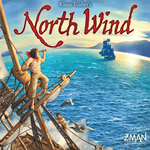
Number three, we're going with a solo game, solo-only game. You can't play this with other players. Small box, very nice cards, a very hit, you know, definitely a hidden gem for me, and certainly something that I was so glad that viewers told me to go grab this one because they were suggesting it to me for ages. Go try this one, go try this one. And it's like, fine, I've got it. I paid a little bit extra for it, but it's like, I'm going to try it. Holy crap, this game is good. This is a solo trick-taker for Northwood. This one is definitely, I think, in this category because there is not a lot of rules to this at all. I mean, if you know how to play a trick-taking game, you already know half the rules to this. The rest of it is a case of, right, I need to get as many points as I can from these different, like, rulers, effectively. Like, these different characters. Right, well, the character has a prerequisite of how many tricks I need to win. You know, either no tricks all the way up to seven tricks, and they have a trump suit. Okay, cool. I've got four cards with fairly straightforward abilities that I need to, you know, that I can use at my disposal, but I could also use an ability from somebody I've succeeded with previously in the game as a one-off. And these abilities are not complicated, so this doesn't invalidate its role based on what I said about Earth and Wonders' creatures. You know, they're very straightforward abilities.
But then, when you play through each round, it's a solo trick-taker where you've got to manipulate the deck of cards and the tricks that you're winning in your hand and stuff in order to try and satisfy the trick number criteria. Like, do I need to win three tricks, four tricks? And you've got to be exact. This does lead to some very cool tactical card play. It's a very neat system, and it's like a very clever game. I know I debated about whether I should sleeve these cards or not. Yeah, they're they're PVC. I think I'll be fine, actually, you know, now that I think about it, but it's just because it's such a nice production, and, you know, the cardstock is still thin even though it is PVC, but you know, I love the different abilities here. You've got, like, lots of different ways that the game could go. It adds to the variety. But just the very nature of trying to think, right, okay, so let's see. I need to win the two more tricks.
Well, the rest of my hand is not bad with the numbers, but I'm lacking on trump suits. If I pull out some of the poor prints ones, I'm screwed. Is there a way I could swap a card with one from the deck? Well, I've got an ability here that does let me look at the next card from the deck and choose whether to swap. Okay, let me have a look. Okay, it's a trump card. It's a low one, but that should be good if I swap it with this card specifically, one that's guaranteed to lose a trick if I play it. Fine, we'll put it on there. Flip the card, I win it with this. Cool, done. There's another trick. Just going to win one more. And it's these it's this sort of level of thinking coupled with using these different abilities, like, the Queen of Claws, you know, draw the top card from the deck, the discard pile, and the score pile. So, you draw more cards into your hand. But then, let's look at some of these other ones here. The Lady of Flowers, discard a card with value equal to the number of cards in your hand. You know, the timing of when you can pull these tricks off and how they're going to help you is the depth for this game.
And for something that literally just comes in the box this big, that's all it is. Yeah, it may be a little pricey for what it is, but it is a damn good game, and one of my favorite solo games that I have. It's infinitely replayable, light and tactical, not a lot of rules, but it's definitely got the depth to keep a trick-taking fan happy. This is why Superman works alone.
Okay, number two is a game I have touted the praises of. I wish other people would tout the praises of it because I seem to be the, like, the spokesperson for this, but it is getting a fancy new set this year and an expansion, which I'm going to be very keen to take a look at. I'm sure Mighty Boards will get in touch with me on that front. But this one, I, you know, think is just a fantastic light game. There is not a lot of rules to this. I suppose you could call it a tile-laying game. It's kind of like a tile bidding, drafting. It's got all sorts of little bits in there, actually. But the rules are very simple, and yet there is a surprising amount of depth in this underrated classic, which is Art Society. Art Society from Mitch Wallace is a brilliant little game here because you have got, you know, your board where you've got to lay out the paintings. And the paintings have got different frames, different themes, and this basically indicates whether you should put them next to each other or as far away from each other as possible.
So, there's like, you know, the general crux of the game, but you have got these different paintings. They all come in different sizes. You have the depth part of first selecting which ones are even going to feature in the current round. That's a decision you're going to make. But you're then bidding with these different sort of token cards. They're sort of buried in there. I'm not going to get them out right now, but they're numbered 1 to 20, and it's a it's a closed bidding system. So, you can see which paintings are there, and you know, I really do fancy one of those two. The other two are pretty nasty. I might want to put a high card down. How many cards have you been playing that are pretty high, though? Are you likely to outbid me on this? So, you're already thinking on that front. But then, your consideration for what you want from the tile goes four different ways. You've got to decide, right, is the frame something I want? Is the theme of it something I want? Is the shape the right size to go on here? But then, on top of all of that even, you then have to consider which one gets left over because this track at the end tracks the value of each of the different colors of paintings. And depending on how big the painting is that's left over and what color it is will shift it X amount of spaces on here. And at the end of the game, you'll rank them for a second, third, and fourth, and that's how many points they're worth. Does that correspond to what you've been collecting on your board, though? That depends. You've got to consider those four different things every time you take a painting tile in here. Every time you bid for something, you're thinking about that. But I don't have to explain a lot of rules to you. I mean, that rule's pretty straightforward. The rules for putting them on your board are straightforward. It's just like most tile-laying games that you've ever
played, you know, spatial awareness. They've got to fit. Try not to leave loads of space and be inefficient, you know? But the fact that some of them want to be spaced out, some of them want to be close together, and you're trying to think, well, have I got too [clears throat] many of the blues? They're not going to be worth very much. Maybe I should grab a red because that's likely to be high value. Can I put a red somewhere? What am I going to do? You know, all these different things you've got to consider on top of choosing which tiles are even going to feature in the round. It's like, I'm looking at your boards. You can't really fit a lot of big stuff on your board right now. I've got a bit of space, though, cuz I've been taking it slow with small paintings. You know what? Big paintings for everybody. And, you know, that is another consideration. Not didn't have to explain much in the way of rules to tell you that, but you're having to think about it. There is a lot to consider every turn you play this, and that's where the depth from this game comes from, and why I gave it such a high rating before.
Maybe 10 is a bit high. I did give it a 10, but check out my review for reasons. Maybe nine is probably more where it sits at the moment. It's still worthy of a distinction seal regardless. And going below a nine, you know, I still love to bring this one out as something that's a little bit different from a lot of these different types of this sort of style of game. And I'm keen to see what the new expansion will do to it, not to mention what the new fancy set will do. Cuz as you can see, the insert in there is not perfect. I would like a sort of small snazzy copy with a better insert. So, hopefully, the new version will improve on that front. But I like the sort of jewel-ish nature of the cover, you know, that looks pretty cool. So, it's striking when you look at it. It's just a neat game, and I would say a little bit of a hidden gem cuz it was super popular at Essen, but that was it. Nobody kept talking about it after the fact, and I never see it being played at conventions. And yet, I'm like, come on.
This is a solid game. Come on, people. You got to give it a try. So, I'm putting it at number two here. This is definitely low complexity, high depth I'm feeling here. Give this one a try. OH, JESUS. OH GOD. [screaming] OH. OH, JESUS. AND MY NUMBER ONE, I I enjoy this one a lot. Do I enjoy some of these games more? Probably. I'd say definitely in a couple of cases. But when it comes to low complexity, high depth, or low complexity with a decent amount of depth, it's not, you know, some of these you will argue have got a bit more depth to them. This one, though, is just the perfect game you can bring out. People have got to think about what they're doing, particularly if you use some of the more complicated scoring cards for it. In solo mode, you've got the different scenarios that you can do, and they get progressively harder, and you've got to think about what you're doing. The rules, though, are literally just take a token and a tile, build up your little map, put the little animal on top, and Bob's your uncle. There's your rules. And whatever the five animals are scoring for, yeah, you guessed it. This one wasn't on the previous list because this only came out in 2021 apparently, but how can you not have Whoop, there you go. This list without Cascadia. This is like borderline an essential game that should be in everybody's collection because it just ticks all the boxes for what a sort of, you know, a low complexity game should be. I just played two or three games of this over on my birthday weekend with my brother, you know, when I went home. So, and I won all the games. Sorry, brother. But, uh you know,
at the end of the day, it you know, it proves that you can't just autopilot win this thing. I do win more of these games with the family than I don't. And you can argue that maybe the complexity isn't there if you use the A and possibly the B scoring cards with the animals. They're relatively simple and if you, you know, you you'll find it hard to paint yourself in a corner with the A cards. But, you start using the C and D ones, then the placements get a lot more picky. You've got minimum thresholds. You can't just stick it down willy-nilly like tokens and expect to score well for it. But, on top of that, you're also looking at everybody else's board because not only do you want to know if they're likely to grab the sort of animal combination in the middle that you want, but you're also thinking, "Hmm, okay. So, how many of those are like marshlands have you got? How many of those plains? How many of the water have you got?" Because at the end of the game, you're also scoring not only for your big areas of terrain, but you're getting bonus points for having the most and potentially second most. So, you're looking at everybody else's display to think, "Well, which one am I actually winning on? Which one am I struggling with? Which one should I abandon?" And that again is a nice little area of depth. So, in its base form and certainly in its family mode, you could argue that maybe this doesn't quite meet the high depth like threshold. But, honestly, the mo- most of the time I play this game, I'm playing with minimum the bees and then I'm mix and matching the C and D's, you know, with them as well. And especially the D's. If you try to play with the D cards in this, yeah, you really got to think about where those tokens are going. It And the solo
challenges add to this because to begin with, you just need to get a certain amount of victory points. But then later on, you need to make certain that certain terrain never go next to each other as well as also getting so many points from a particular animal. And it could be a really weird fiddly animal. So, there's a cool puzzly aspect to this. But, the rules, next to none. I mean, you choose one of the pairings from the middle and it's your display. Those are how you score. They're written on the cards and there's a little pine cone that you can discard to do various things. That's the rules. Very few rules to this, but it gives, you know, people will be thinking about their turns. Trust me. My brother is somewhat prone to AP, so he's certainly thinking on his turns. Damn sight slower than I am. But, the you know, the game itself, it's just great. It looks nice on the table. It always goes down well. It ticks every box. You know, it's got to be one of those I don't think I'll ever do a top 10 essential games cuz that's going to be very subjective. But, if I did, this would have to be up there. It the the top three or something. You've got to have this game in your collection because it's just suitable for non-gamers and gamers alike. It's in every game cafe. It, you know, and honestly, I don't even like the expansion to this. I don't want to play this with five or six players. That's just madness. But, if you want to add a little bit more complexity and some more animals, you can at least throw the expansion in here. But, honestly, I haven't bothered. I found it a bit lackluster. I'm just happy enough with the basic frankly. Cascadia, an easy choice for the number one on this list.
So, there you have it. My 10 favorite games that are sort of low complexity, high depth. I know we're going to argue until the cows come home in terms of, you know, what is low de- low complexity and high depth. Let's not get too bogged down with that. You know, it's going to be very subjective. It would just be interesting to know a few games that you would put in this list that weren't mentioned either in my, you know, forgotten like honorable mentions or just ones I never thought of. It could just simply be a case that I think, "Yeah, you're right. That is low complexity and high depth." If only that I enjoyed the game. You know, I am putting games I enjoy playing on this list. So, I did definitely see a few games where I'm like, "That would fit. I just don't like it. That would fit. It's just boring." You know, there's definitely a few of those. But, I'd be interested to know your thoughts in the comments. So, by all means, get them down there. That's it for me on this video. If you like what you see, then please thumb it up on YouTube. Thumb it up on, you know, Facebook and Twitter, wherever you get to send it. Check out the affiliate link for we- for By the Same Token if you want to grab some cool upgrades to some of your games. I've done a little video showcasing some of their stuff. So, by all means, check that out. And as I said, let me know in the comments the games that you think would feature on this list. I don't think we'll be doing this list ever again because we've just done the last five years. It's going to be a long time before we ever get another collection of games where I think were suitable. So, this will probably be the last time I ever do this list. So, hopefully it was enjoyable. So, take care and remember, it's only a game and I'll see you on the next Broken Meeple video. So, bye for now.