/pic7628025.png)




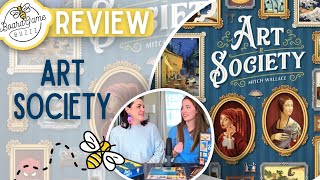














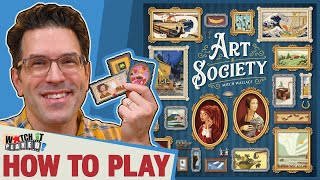




















Art Society Deep Dive
What the Community Thinks About Art Society
Art Society has emerged as a beloved title that resonates with a surprisingly broad audience. The game manages to appeal to both casual players seeking a relaxing aesthetic experience and competitive gamers looking for strategic depth. Reviewers consistently highlight how the game walks a fine line between accessibility and complexity, making it welcoming to anyone from museum-loving families to seasoned board game hobbyists. Many players report unexpected delight after initially approaching the game with modest expectations, discovering layers of interesting decisions beneath its elegant surface.
Core Mechanics That Define Art Society
Auction and Bidding
The auction system lies at the heart of Art Society's appeal. Players bid using numbered cards from 1 to 20, with each card being spent only once throughout the entire game. This creates meaningful tension around when to bid high versus low. The mechanics contain clever asymmetry: the player who bids lowest gains control over which paintings enter the museum, directly influencing their future value. This inverts typical auction expectations, allowing players to occasionally win by bidding low on purpose. Reviewers praise how this system creates interaction without being directly confrontational, and how the auction setup itself becomes a strategic tool.
Tile Placement and Spatial Puzzle
The tile placement mechanic transforms beautiful artwork into a satisfying spatial puzzle. Paintings must connect edge-to-edge to existing tiles and cannot extend past gallery board boundaries. Players must balance multiple competing goals: matching frame types for bonus decor tiles, avoiding placing same-type paintings adjacent to one another (the "faux pas" penalty), and carefully planning piece sizes to maximize their gallery space. The eyeline bonus adds another layer, rewarding players for positioning the most prestigious painting types in the center of their galleries. Board Game Sanctuary describes this as streamlined yet deeply engaging, with turns being "snappy, short and thinky."
The Art Society Experience
Cozy and Accessible Gameplay
The game was explicitly designed to deliver a cozy experience, and this intention shines through in execution. The beautiful original artwork creates an immersive aesthetic, with reviewers noting they often make piece choices based on visual appeal alone rather than optimization. Board Stupid confirmed that some players are "happy to collect the art" without caring whether each piece is the optimal strategic choice, and this dual-path approach enriches the social dynamic. New players pick up the core rules in minutes despite apparent complexity, making Art Society equally comfortable at casual family gatherings or serious board game nights. Reviewers mention playing successfully with people who have never touched board games before, highlighting how quickly non-hobbyists grasp the auction and placement systems.
Gorgeous Production and Table Presence
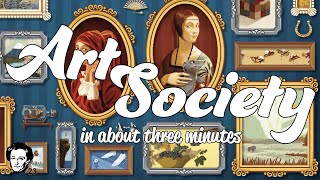
Mighty Boards brought exceptional craftsmanship to Art Society's physical presentation. The box insert allows for quick setup and teardown by keeping painting tiles organized by type and value. Component quality is substantial throughout, with chunky cardboard, raised board details, and thoughtfully sized pieces. The artwork itself is the star, featuring reimagined takes on classic paintings presented with unique twists that reward close examination. 3 Minute Board Games noted spending time trying to identify references hidden in each card. The design palette employs elegant blues and golds that reinforce the refined gallery aesthetic without overwhelming play. The cutout details on the box, visible artwork, and overall presentation create strong table presence that invites engagement even before play begins.
What Makes Art Society Stand Out
Surprising Strategic Depth for an Accessible Game
Art Society delivers genuine strategic challenge without requiring extensive rules explanation or heavy mental load. The auction system creates fascinating tension: knowing what paintings will become valuable forces players to think ahead about museum placement. The tile placement puzzle rewards careful planning around frame-type bonuses and type-adjacency penalties, yet players can adapt their approach each round based on what emerges from the auction. The Board Gaming Doctor highlighted how "tough decisions" emerge from bidding dilemmas, particularly when choosing between large pieces that consume space or small ones that maintain flexibility. The interplay between the auction selection, the bidding competition, and the placement strategy creates a satisfying multi-layered puzzle that rewards both forward planning and tactical adaptation.
Inclusive Design That Welcomes Different Play Styles
Perhaps Art Society's greatest achievement is accommodating radically different player motivations. During playtesting, the designer observed one player meticulously building an orderly, refined gallery while across the table another pursued a "Swiss cheese board" with strategic gaps, yet both remained engaged despite their opposite aesthetics. This dichotomy extends beyond the table: the same game plays as competitive and aggressive when players optimize for victory points, yet transforms into a relaxed aesthetic experience when players prioritize artistic preference. Reviewers confirm this flexibility, noting the game appeals to both sides of the hobby sphere and works equally well at Christmas with family or at a competitive board game club.
Potential Drawbacks
Assistant and Excess Painting Rules Create Confusion
The rules around the assistant (a temporary holding space for paintings), excess paintings (pieces that do not fit), and museum exchanges are written in a way that has confounded some players. 3 Minute Board Games explicitly recommended getting these rules "clear in your mind before playing" to avoid frustration. While the mechanics themselves work well during play, the learning curve around edge cases and penalty resolution can create bumps in early sessions.
Limited Direct Player Interaction
Reviewers noted there is "no direct way to attack other players or to slow them down" in the traditional sense. The auction system creates implicit interference through control of market offerings, but Art Society lacks the aggressive take-that mechanics some players enjoy. For competitive groups specifically seeking head-to-head confrontation, the game's gentler interaction model may feel less satisfying. However, reviewers balanced this by noting the bidding system and museum value manipulation create sufficient strategic interaction, simply expressed through more subtle economic means rather than explicit player blocking.
If You Enjoy Art Society
Reviewers frequently compare Art Society to games with complementary mechanics and themes. If the tile placement appeals to you, explore Patchwork, Isle of Cats, and Cottage Garden for similar satisfying spatial puzzles. For the auction experience, Ra and Modern Art offer different takes on the bidding mechanism. The combination of both systems appears unique, though El Grande shares the auction-driven turn order elegance. For pure aesthetic enjoyment, Museum delivers a similar art-collection theme with set collection mechanics. Expansion content now available adds depth and competitiveness for players seeking additional strategic layers.
What Reviewers Are Saying
"It's a clever game with lots of fun decisions but without unnecessary complexity and I'd recommend it for just about any group."
— 3 Minute Board Games
"When this game comes out, if it comes out, I want the art to be so good that I don't care if it's the right piece for me to win the game. I just want it because it's awesome."
— Board Stupid
"The tough decisions that you had to make when bidding for pieces, going for either really large pieces to take up a lot of space versus the small ones to kind of stay flexible, makes this game feel very interesting and reapproachable over and over again."
— The Board Gaming Doctor