/pic7945692.jpg)
/pic8446151.png)
/pic7945692.jpg)








































The Quest for El Dorado Deep Dive
What the Community Thinks About The Quest for El Dorado
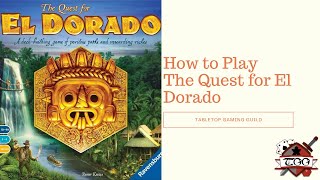
The Quest for El Dorado consistently draws praise from board gamers as one of the most elegant and satisfying deck-building experiences available. Reviewers celebrate it as a masterclass in design simplicity, where Reiner Knizia combines racing mechanics with deck building in a way that feels fresh and intuitive. The community consistently points to its reliability, it rarely disappoints when brought to the table. This is a game that works across player experience levels, from newcomers discovering deck building for the first time to experienced gamers seeking something breezy yet engaging.
Core Mechanics That Define The Quest for El Dorado
Deck Building Meets Racing
At its heart, The Quest for El Dorado fuses two mechanics into something greater than their sum. Players begin with a modest starter deck and gradually acquire better cards from an open market as the game progresses. But unlike pure deck-builders that can sprawl across dozens of rounds, this game layers in an urgent race condition. Every card purchase is an investment in future movement, and every decision carries weight. Players must constantly balance whether to spend resources acquiring powerful new cards or cash them in to move across terrain right now. This tension between short-term momentum and long-term engine building creates the game's strategic heartbeat.
Terrain-Matching Card Play
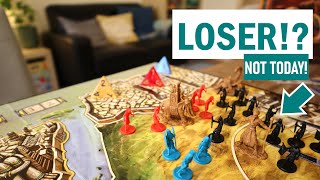
The modular board features hexes representing different terrain types, jungle, desert, river. The cards players acquire don't just provide generic movement points; they must match the terrain being traversed. A machete cuts through jungle. A canoe navigates water. A horse crosses desert. This creates elegant visual clarity where the card icons immediately communicate what they do, and it forces players to anticipate the map's demands when building their deck. Smart deck construction means looking ahead at the terrain bottlenecks and investing in the right cards to overcome them, transforming deck building from abstract card accumulation into concrete spatial strategy.
The The Quest for El Dorado Experience
The Rush of Momentum
Reviewers consistently describe an escalating sense of acceleration. Early game feels constrained and deliberate. Mid-game brings the first powerful hands as purchased cards begin cycling through decks. Late game erupts into a true race where players are moving 10+ spaces per turn, playing high-value cards in sequence, and desperately pushing toward El Dorado. This arc creates natural dramatic pacing. The game doesn't feel slow early; instead, it smartly telegraphs the coming power fantasy. Players earn their moment of unbridled speed by investing wisely in the opening turns.
Satisfying Puzzle-Like Elegance
There's something deeply satisfying about this game's design. Every component serves a clear purpose. The card icons are self-explanatory. The open market creates visible scarcity and meaningful choices. The modular board ensures no two games feel identical. Rules teach within minutes, yet the game sustains engagement across 30-60 minutes without overstaying its welcome. Reviewers note that even losses feel good because the loss came from their own strategic miscalculation, not from bad luck or overwhelming complexity. The design is tight enough that misplays are visible and instructive.
What Makes The Quest for El Dorado Stand Out
Strategic Blocking and Route Competition
While the game emphasizes low direct interaction, it includes a clever blocking mechanism. Players move their tokens along the same terrain routes. You cannot move through another explorer's space, forcing creative pathing. Savvy players can use this to their advantage, positioning themselves to force opponents into longer, slower detours. This creates interesting positional tension without devolving into direct conflict. A well-placed token becomes a temporary roadblock that rewards spatial awareness and forward planning. It's the kind of negative interaction that feels fair because it emerged naturally from shared map space, not from card-driven attacks.
Modular Board Design and Variable Setup
The Quest for El Dorado ships with multiple pre-made map configurations, and the rules support community-created custom layouts. This variability ensures the game stays fresh across many plays. A water-heavy map demands different card investments than a desert-dominant layout. Terrain bottlenecks shift, making early-game strategy meaningfully different each session. The modular approach also lets players adjust difficulty and game length by choosing smaller or larger maps, making it an excellent teaching tool that scales with player skill and group patience.
Potential Drawbacks
Luck in Card Availability and Draws
The game includes an inherent luck component that some players find frustrating. The open market rotates as cards get purchased, but there's no guarantee the terrain cards you need will surface when you need them. A player locked on water terrain waiting for a river card may watch several rounds slip by before the right card appears. Similarly, deck shuffling determines which cards hit hand during critical turns. Skilled players manage this by building flexible decks with broad coverage, but some games will punish optimal strategy with unlucky draws. Players must accept this as part of the design philosophy rather than view it as a flaw.
Self-Contained Scope May Feel Limited to Deck-Builder Enthusiasts
The Quest for El Dorado is deliberately contained. There are no massive expansion arcs, no endless card acquisition, no bloat creeping in over time. This is an elegant feature for most, but players who love deck-builders like Dominion partly because of their sprawling ecosystem may find this game's tight scope a touch lean. The base game is complete and satisfying, but there's no deep rabbit hole to fall down. For purists seeking an introduction to deck building or a quick, reliable hit of the mechanism, this completeness is a strength. For collectors and expansion hunters, it offers less long-term feeding ground.
If You Enjoy The Quest for El Dorado
Gamers who love this game should explore Camel Up, a betting and racing game that shares the same breezy speed and social energy. Cascadia offers similar elegant design and puzzle-like satisfaction through tile drafting and placement. For more deck-building depth, Dominion remains the classic, though it demands more time and table space. Great Western Trail delivers a more complex deck-building race with tighter resource management. Fans of the modular board concept should try Ticket to Ride, which shares the satisfaction of route-building and spatial planning.
What Reviewers Are Saying
"The Quest for El Dorado is a simple racing deck builder by Reiner Knizia. Just skipping tiles and things to race to the end playing certain cards matching terrain cards. I tend to like deck builders when they are not so bloated and you don't need to constantly keep getting new material. I understand that is kind of part and parcel with the mechanism, and I have done a deep dive into some deck builders before such as Legendary and ended up picking up pretty much all of the expansions for Legendary and ended up coming so bloated that it was just unplayable really, so I try to avoid those styles of games now. And if I do want to play a deck builder I would go something a bit more self-contained such as the Quest for El Dorado."
— Chairman of the Board
"The Quest for El Dorado is a great game, it's one of my favorite games of all time. It's such a brilliant game. This is a Reiner Knizia gem. It's essentially a combination of deck builder and racing game and it's absolutely genius how it works. You have a map that you're trying to get to the end to get to El Dorado and on the map there are tons of little hexes. The hexes will have different colors which will represent different types of terrain like the forest, sands, the water. And the cards that you're buying will help you get through those types of terrain very, very clever."
— Board Stupid
"This is actually climbed to the front of my favorite deck-building-style games because it's all self-contained. You don't need to keep buying new stuff and it's like a nice little charming design here by the good doctor Reiner Knizia. So I actually think for a gateway deck-building racing game hybrid this is a really cool option and it's again that I don't really ever feel like turning down. I might not always request it but I've always had a good time when it gets to the actual table."
— Chairman of the Board