









































The Red Dragon Inn Deep Dive
What the Community Thinks About The Red Dragon Inn
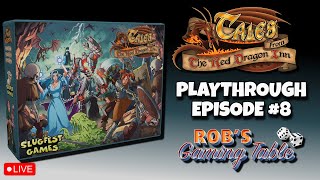
The Red Dragon Inn is a light to medium weight card game from Slugfest Games, first published in 2007, in which a party of fantasy adventurers celebrates a successful dungeon raid by drinking, gambling, and roughhousing at the tavern. Reviewers treat it as a table-talk game first and a card game second. Hawk describes it as a "fun-filled, flavor-packed, winner take all battle royale fantasy extravaganza," and frames it as the closest thing to a drinking playthrough that a table can run without actually drinking.
Meeple Mountain, hosted by Tyler Williams, calls the series one of their favorite party games and praises its breadth. Tyler points to more than fifty playable characters across the line and argues that the mix of characters and optional variants keeps the game from ever feeling the same twice. Both reviewers present the series as a flagship Slugfest franchise whose expansions are generally well made, with Tyler noting that the rulebooks are clear and avoid leaving players guessing about edge cases.
Core Mechanics That Define The Red Dragon Inn
The Drink and Gold Economy
Every adventurer tracks two numbers: an alcohol level and a fortitude level. Hawk explains that a player is eliminated when alcohol equals or exceeds fortitude, which is called passing out. Players can also be removed for running out of gold, which Hawk describes as being a "cheapkate" who gets thrown out by the bouncer, a large ogre. Each player starts with 10 coins and 20 fortitude, and the coins represent questing loot that must be spent on drinks, gambling, and abilities.
The push-your-luck tension comes from the turn structure. During the celebrate phase, a player resolves the top card of their drink pile, and many drinks raise alcohol while adding extra effects or chasers. Hawk notes that the philanthropy phase lets players hand drink cards to opponents face down, so every purchase and gift carries a risk. Gambling rounds add another layer: each player antes a coin into the pot, and the player who holds control when everyone else has passed once around the table takes the pot.
Asymmetric Character Abilities
Each adventurer has a unique character deck, and the asymmetry is what gives the series its identity. Hawk highlights Whizgild the Tinkerer, whose inventions can blow up in the player's face, Brew Master Frank, who brews a free potion every turn, and Serena the Pious, whose cards change strength with her piety level. Tyler Williams, reviewing the Pub Crawl and Under City expansions, describes characters that run their own mini games. Dale the Mycologist grows mushrooms that must be harvested or gathered at the right moment, and Teri the Doctor must supply patients with medicine, bandages, and sutures. Petra the Devious plots scheme cards that flip into traps and builds Hellfire damage on a track.
Some characters also support a Boss Battler style of play. Nudia, a Gorgon bar owner, is a boss character who can add fifteen dragon-marked boss cards to her 40-card deck, letting a table pit one powerful opponent against several ordinary characters. Tyler notes that bosses can also fight bosses and that a co-op boss battle option gives groups a scripted, one-versus-many challenge.
The Red Dragon Inn Experience
Raucous Table Talk and Bluffing
Reviewers describe the game as loud, social, and deliberately silly. Hawk compares it to a playthrough of a tabletop adventure in a bar and treats the diplomacy as central to winning. In a game where the last player standing wins, Hawk warns that a player who gets too far ahead will be targeted by the rest of the table. Tyler similarly describes "high jinks and hilarity" as the normal outcome of a session, with players constantly pressing each other to drink, gamble, or cheat.
Tactical Choices Inside the Tavern
Tyler argues that the Pub Crawl variant adds a layer of decision-making to that chaos. When a drink with a chaser is revealed, the active player chooses which pub the table moves to next, and each establishment has its own drink deck and tavern event. Tyler says that the active player gains tactical depth from these choices, since a tavern may hurt an opponent or favor a particular drink. The result, in Tyler's view, is a game that feels like a crawl through town rather than a sequence of identical rounds.
What Makes The Red Dragon Inn Stand Out
Replayability From a Deep Character Roster
The feature reviewers praise most is the sheer variety of the line. Tyler stresses that the number of characters, combined with the option of adding boss cards, variants, and the AI companion Auto from the Under City expansion, makes the game very hard to exhaust. Tyler calls the collecting aspect a Pokemon-like pull and notes that the expansions are entirely standalone, so a new player can start with the ninth expansion alone and still have everything needed for play. Hawk adds that the game supports very large groups when multiple sets are combined, which Hawk jokingly suggests is good for a family reunion.
A Pub Crawl Variant With Real Flavor
Tyler calls the Pub Crawl expansion the real centerpiece of the new releases. Rather than a simple add-on, it changes how the game moves from place to place, adds establishments such as Lucky's Rolling Barrel and the Black Dragon Depths, and gives each one its own events. Tyler says the variant "really changes the way the game is played," and sees it as a strong fit for the adventuring party theme. Reviewers who value flavor tend to rate this variant highly for the way it reinforces the story of celebrating a victory across town.
Potential Drawbacks
Kingmaking and Elimination
Hawk is direct about the risk: the game has "heavy kingmaking potential," so players should be prepared for the table to shape the outcome. Because players are eliminated for passing out or going broke, a player who is knocked out early has little influence over the rest of the game, while the remaining players can steer the final result. Hawk's advice is to avoid getting too far ahead, which is a reasonable warning in a game where alliances are fluid and the last standing player takes everything.
Complexity Creep and Longer Play
Tyler notes that the expansions raise the difficulty considerably. Lucky, the goblin rogue in the Pub Crawl set, is not the easiest character to learn because her heat track can knock her out if she uses cheating cards too aggressively. Nudia requires careful management of her petrification pile, and Dale plays like a separate mini game. Tyler also cautions that the Pub Crawl and other variants add playing time, and that the prize variant may favor gambling-heavy characters in lopsided games. Tyler recommends the expansions for players who already know the base game and explicitly describes the review as not a learn-to-play guide.
If You Enjoy The Red Dragon Inn
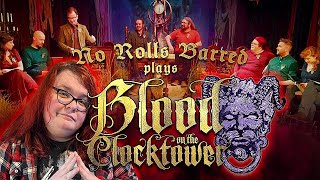
Players who enjoy the bluffing and table talk in The Red Dragon Inn may find a similar social tension in Blood on the Clocktower. The No Rolls Barred sessions show a hidden-role game where players claim roles, make accusations, and decide who to nominate, which mirrors the way RDI players weigh whether to trust an opponent's gambling bluff or drink offer. The No Rolls Barred session and the follow-up session show how a single claim can reshape an entire table.
Fans of Red Dragon Inn's character asymmetry and tavern variety may also enjoy the wider Slugfest catalogue, since reviewers consistently describe it as the company's flagship line with expansions that plug into the core game.
What Reviewers Are Saying
"This is a game with heavy kingmaking potential, so be sure to brush up on your diplomacy skills."
— Hawk
"The pub crawl really changes the way the game is played and it feels like you're going on a crawl around town."
— Meeple Mountain
"I felt like I was playing an entirely separate mini game from everybody else trying to manage all these shrooms that I'm growing."
— Meeple Mountain