



The Royal Society of Archeology Deep Dive
What the Community Thinks About The Royal Society of Archeology
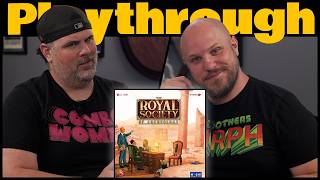
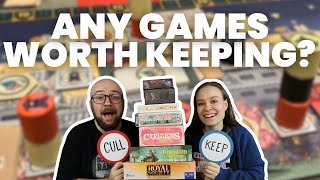
Reactions to The Royal Society of Archaeology from Capstone Games are mixed, and the channels that covered it approached it from different angles. The Brothers Murph played a full two-player game on camera and came away with a generally positive experience, although much of their session went to sorting out terminology and money. Grant's Gamerecks described it as one of the more interesting new worker placement releases of the month, without discussing a table session, and found its scoring and worker design distinctive enough to sound appealing. Board Gaming Ramblings delivered the clearest negative verdict. After deciding to cull it, the channel said it was fun to play in the moment but quite forgettable, and one of its hosts named it their least favorite of the batch. Tantrum House placed the game on its list of most anticipated titles from Essen Spiel 2025, praising its turn-of-the-century flavor and art, though it had not played the finished product.
The disagreement largely comes down to staying power. Grant's Gamerecks and Tantrum House see a fresh twist on worker placement worth exploring, while Board Gaming Ramblings questioned whether there is enough in the game to make anyone want to return to it. The Brothers Murph landed in the middle, enjoying the play while noting how much of the experience goes into tracking similar-sounding terms and a steady stream of patrons, relics, and money.
Core Mechanics That Define The Royal Society of Archeology
Worker placement with explorers that grow stronger
Each round, players send explorers out to locations such as the University of London, the city, the Port of London, and the Royal Museum. The Brothers Murph explained that every explorer has an expertise level that determines how strong their action is, and that completing an expedition always raises that explorer's expertise. Grant's Gamerecks highlighted the twist that sets the placement apart: a player who goes to a space occupied by a more experienced explorer gets an immediate bonus, while the player who owns the more experienced explorer collects points. Board Gaming Ramblings also noted that the workers improve over the game, though the channel said the mechanism added to the evening without making the game stick with them.
Dual prestige and knowledge tracks
Scoring runs on two tracks, prestige and knowledge, and the lower of the two becomes a player's final score. The Brothers Murph repeatedly reminded each other of this rule while moving pieces, and noted that expeditions often pay out large amounts of prestige, knowledge, and relics at once. Grant's Gamerecks framed the dual tracks as a major reason the game feels different from other worker placement titles, because neglecting either track drags down the final total. Relics link the two systems together. They can satisfy patrons, be delivered to the Royal Museum, or be sold for money, though selling costs reputation. The royal requirements checked at the end of rounds three and five add pressure, and The Brothers Murph spent much of their final rounds worried about missing them.
The Royal Society of Archeology Experience
A tight squeeze of turns and money
The Brothers Murph's session feels like a race against a clock they can see but cannot easily stretch. They joked about having only 15 turns for the whole game, and at several points they described being short on money, with one of them admitting they had not been looking at the cost before committing to an expedition. Attractive expeditions often turn out to be too expensive or require knowledge the player does not yet have, so the choices rarely feel free. Grant's Gamerecks placed the game firmly in the strategic Euro camp, which fits the sense of planning several moves ahead.
A historical theme that invites conversation
The Brothers Murph described archaeology's past as a murky subject, a time when objects were taken from their cultures and carried home with little thought for the people they belonged to. Rather than leaving that history out, the game includes thematic notes in the rulebook and a QR code that opens a directory of historical context for the rulebook's spaces. That combination makes relic collection feel like a deliberate reflection on the period, not just a resource to gather. Tantrum House pointed to the game's turn-of-the-century feel as one of the reasons it stood out on their list.
What Makes The Royal Society of Archeology Stand Out
Historical care built into the rulebook
The Brothers Murph gave the game clear credit for its historical approach. They appreciated the thematic notes and the QR-linked directory, and said they always enjoy historical addenda when a game is rooted in real history. They also acknowledged that the sale and donation of relics reflects a part of history that the field has since moved away from, which made the game's treatment of the subject feel honest rather than decorative.
Upgradeable workers and shared-space bonuses
Grant's Gamerecks singled out what makes the worker placement feel fresh. Explorers can be upgraded during the game, and landing in a space alongside a less experienced explorer rewards the newcomer while giving the owner of the more experienced worker points. Grant's Gamerecks said that managing this interplay is what makes the game stand apart from other worker placement titles. Board Gaming Ramblings also picked up on the worker improvement, calling it interesting even though the channel did not find it lasting.
Potential Drawbacks
Forgettable after the first few games
Board Gaming Ramblings was the most critical voice and did not soften the verdict. The channel said it had a fine time playing the game but that it "didn't give me a lot," and that it had no need to play it again. The hosts described it as one of those games on their pile that is fun to play but ultimately quite forgettable. The art also worked against it in their eyes, since the cover makes the game look like a kids' title even though it is a medium-weight Euro, which could steer some buyers away before they reach the table.
Heavy bookkeeping and a crowded vocabulary
The Brothers Murph ran into friction with the game's terminology early on, admitting they kept mixing up expertise, prestige, reputation, and knowledge. They noted that a review they had read warned about the same confusion. Keeping track of patrons, relics, money, and several scoring tracks at once demanded constant attention, and they were visibly anxious about the royal penalties for falling short. For players who prefer to glide through a game, that level of bookkeeping is a real cost.
If You Enjoy The Royal Society of Archeology
The only title the reviewers compared directly to the game is Teotihuacan. The Brothers Murph called it "one of my favorite games" during their session, and they were clearly pleased when an expedition let them travel to Teotihuacan. That enthusiasm makes it a natural next stop for anyone who enjoys the expedition-driven side of The Royal Society of Archaeology.
What Reviewers Are Saying
"So, they do have thematic notes in the rule book, which I appreciate."
— The Brothers Murph
"And that makes it feel different than other worker placement games."
— Grant's Gamerecks
"It's one of those games on my pile of games that it's fun to play them, but then ultimately they're quite forgettable."
— Board Gaming Ramblings