



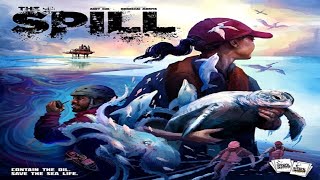







The Spill Deep Dive
What the Community Thinks About The Spill
The Spill has found an enthusiastic but surprisingly quiet fanbase among cooperative game enthusiasts. Board game reviewers consistently draw parallels to Pandemic, describing The Spill as a spiritual successor that strips away cards in favor of something more visceral: a physical dice tower. The comparison is apt yet incomplete. While Pandemic remains the genre's gold standard, reviewers emphasize that The Spill doesn't simply ape its predecessor; instead, it borrows Pandemic's cooperative skeleton and dresses it in a genuinely urgent environmental narrative that makes thematic sense with every mechanic. Most striking is how often reviewers lament that The Spill remains underappreciated. Multiple channels note they rarely hear discussion about the game despite its quality, a puzzling oversight they attribute to market saturation rather than any fault of the design itself. For players new to cooperatives, Board Game Dad's reviews emphasize accessibility. For experienced hobbyists, Ryan and Bethany note real depth hiding beneath the approachable surface. Across the board, reviewers value thematic coherence above all: the game's systems genuinely feel like responding to an environmental crisis, not simply moving pieces around a board.
Core Mechanics That Define The Spill
Dice Tower Mechanic
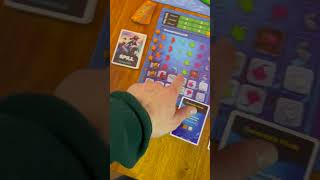
The innovation that most defines The Spill is its use of a four-quadrant dice tower that determines where the oil spreads. Each turn, players drop colored dice into a central tower representing the damaged DeepWell-4 rig. The dice tumble and scatter, their final resting places dictating both which quadrant of the board receives oil and precisely where within that sector it lands. This reverses the familiar Pandemic formula: instead of drawing cards that determine where disease spreads, players watch physical dice create unpredictable patterns of destruction. Board Game Dad notes this as a crucial strength, explaining that "what you're trying to do is letting the oil spill out from the center of the board." The mechanism creates genuine tension without feeling unfair. Even Board Games UnLocked, which highlighted the dice-heavy randomness, concedes the design "doesn't feel unfair" because players have substantial resources to respond. The tower's elegant split into quadrants focuses threat without eliminating spatial variability, giving teams something to prepare for even as exact oil placement remains uncertain.
Cooperative Action Economy
Like Pandemic, The Spill grants players four action points per turn, which they spend cleaning oil, rescuing contaminated animals, or activating their specialist abilities. What reviewers emphasize is how naturally the theme drives decision-making. Spending actions to permanently remove oil cubes from the board isn't bookkeeping; it represents direct intervention in an ecological catastrophe. Rescue actions succeed immediately when players visit the same sector as threatened animals, avoiding punitive mechanics that would frustrate families or younger players. Board Game Dad describes the genius of specialists: "everybody has special unique abilities which you try to optimize in order to save the environment." Rather than a single broken role dominating play (as in classic Pandemic), The Spill's specialists encourage table talk and collaborative strategy without overshadowing the central challenge.
The Spill Experience
Manageable Urgency
Reviewers consistently describe playing The Spill as experiencing a specific kind of stress: present but not paralyzing. Ryan and Bethany capture this precisely: "I like you get a little bit of that stress while you're playing it like of even just a loose conceptual idea of what it would be like to deal with something like this." The game maintains pressure through escalating oil dice and the threat of spillouts (vertical stacks of dice representing catastrophic overflow), yet the pacing feels tighter than Pandemic. Board Game Dad calls it "a shorter game than Pandemic in my opinion and extremely intuitive," meaning teams aren't grinding through lengthy turns or drowning in fiddly rules. The result is a cooperative game where hope and danger coexist throughout: players rarely feel they've already lost, but never feel completely safe.
Emotional Connection to Rescue
The most consistent observation across all reviewers is how The Spill creates personal investment through its wildlife theme. Board Games UnLocked players joke and argue about which animals to save and when, proof the theme has teeth. Kurt Covert, the game's designer, reflects on this during an interview with Board Game Animal, noting that "if I could have just saved that sea turtle" captures why The Spill works. Reviewers don't walk away discussing optimal point totals; they walk away remembering specific moments of animals rescued or lost. This emotional signature is what separates The Spill from abstract engines and what makes it appropriate for families alongside hobbyists. The game generates memories of cooperation under pressure, not memories of mathematical elegance.
What Makes The Spill Stand Out
Thematic Integration That Actually Matters
Board Game Dad emphasizes repeatedly that "the theme of this game is phenomenally well implemented making it not just fun but also educational." Reviewers note that The Spill never feels like theme bolted onto mechanics. Each specialist's ability, the dice tower's quadrant layout, the marine animal rescues, the oil removal system, resource cards charged with effort, and even weather dice that complicate the situation all reinforce the central narrative of an ecosystem in crisis and human response to it. This is crucial: reviewers value that cleanup and rescue are the win conditions, not conquest or profit. The game's environmental message isn't preachy because it emerges naturally from play.
Accessibility Without Sacrifice of Depth
Multiple reviewers praise The Spill for welcoming new cooperative players while rewarding deeper engagement. Board Game Dad notes it's "easy to learn," and Ryan and Bethany describe playing it successfully across different player counts and skill levels. Yet reviewers also note the game offers genuine strategic challenge: resource prioritization, specialist synergies, and risk assessment create decisions that matter. Smirk and Dagger, The Spill's publisher, deliberately designed the game to appeal broadly. The physical dice tower and colorful board art make it visually inviting, while streamlined rules and intuitive turn structure keep it from overwhelming families, yet careful tile selection and action sequencing reward experienced players.
Potential Drawbacks
Dice-Driven Variance and Limited Replayability
Board Games UnLocked raises an important limitation: the game relies heavily on dice rolls, and unlike Pandemic's epidemic cards that create known patterns players can strategize around, The Spill's oil placement is largely random. While they concede "it doesn't feel unfair," reviewers note the randomness can swing games dramatically. One playthrough might concentrate oil in a single quadrant (creating a catastrophic spillout problem), while another spreads it evenly. Additionally, the board layout and marine animal starting positions don't vary game to game, limiting long-term replayability compared to games where setup itself shuffles the puzzle. Reviewers still recommend the game despite this, suggesting the cooperative experience and urgency justify the variance, but it's worth noting for players who prize strategic control and puzzle-like replayability.
Limited Awareness and Availability
Ryan and Bethany's observation that "nobody really talks about this game like I never hear anybody talk about this game" points to a practical barrier. The Spill doesn't dominate hobby conversation, so new players discover it less frequently than Pandemic, Forbidden Sky, or other established cooperatives. While reviewers offer enthusiastic recommendations, The Spill lacks the network effect that drives visibility. For prospective buyers, this means less online discussion to consult and fewer local gaming groups that own copies to demo. It's not a design flaw, but a market-presence issue that makes the game harder to encounter despite its quality.
If You Enjoy The Spill
The obvious recommendation is Pandemic, which pioneered the cooperative action economy The Spill expands. If you enjoy Pandemic but want a shorter game with a tighter theme, The Spill delivers both. Forbidden Desert and Forbidden Sky share The Spill's environmental framing and cooperative structure, though they use different mechanics (tile placement and programming, respectively). The Loop offers cube tower mechanics in a science-fiction time-travel context, appealing to players who loved the dice tower novelty but want a different setting. For reviewers seeking genuine emotional weight, Memoir '44 shares The Spill's commitment to meaningful player powers and scenario variety, though it's competitive and grounded in historical warfare rather than ecological rescue. The Spill's greatest peer, mechanically and thematically, remains Pandemic; if Pandemic resonates with you, The Spill is worth seeking out as a thematic and mechanical sibling.
What Reviewers Are Saying
"If you like Pandemic then I think you would be really interested in The Spill. The propagation of this oil spill is done by dropping dice into a dice tower which splits them into four quadrants and you place them in the sector corresponding to the number. I think that's a really cool way to drive the oil spill and you are obtaining powerful cards when you achieve objectives in order to help you accelerate your cleanup."
- Board Game Dad
"It's one of those things where you can Envision yourself on a mission to save these animals and there is that tension but there is that fulfilling end goal. The ride or die on any Cooperative game is if the theme makes sense for what you're trying to do."
- Kurt Covert, Board Game Animal
"It makes me sad that nobody really talks about it like I never hear anybody talk about this game but it's solid if you like Cooperative games I would highly recommend checking this one out."
- Ryan and Bethany Board Game Reviews