/pic7798257.jpg)


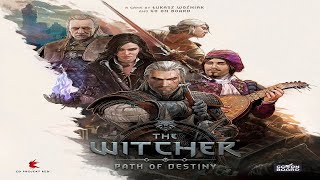
The Witcher: Path of Destiny is a competitive 1-5 player tableau-building card game where you become one of the characters taking part in the most iconic stories from the Witcher universe.
Take on the role of Geralt, Yennefer, Ciri, Vesemir, or Dandelion and retell the 3 iconic stories from the saga: Striga, Edge of the world and Lesser evil.
Use your unique abilities and follow the path of destiny or completely change its course. The actions taken by the group will determine how the story ends - but only one of you will be remembered as a hero...
Witcher: Path of Destiny is a strategic tableau-building card game, where players are drafting and playing action cards, trying to make the best use of them. Players craft their unique paths in the saga and compete to become a hero of the story: a unique merger of an exciting strategic card game with a non-linear narrative.
This page includes videos and mentions from the whole The Witcher: Path Of Destiny family. Drill into a specific game below.
/pic7798257.jpg)

- The minis are very nice.
- The playmat's nice.
- You can play as Dandelion.
- It all fits in the core box, the playmat goes in there too.
- The ending cards all have art on them.
- There's one art card in the Witcher one where you get to see their feet.
- Got everything for $160, which was worth the risk.
- Painfully mediocre and possibly a troll game.
- Feels like it was designed by AI, with no human effort.
- The Witcher theme is pasted on and not utilized well.
- Bloated and lacks depth.
- Overstuffed with components but offers little gameplay.
- Card abilities are lame.
- Competitive storytelling is an odd focus.
- Setup takes longer than the gameplay.
- Expansions are considered bloat.
- The game design is lacking without adding many expansions.
- Missing explanations in the rulebook.
- The writing feels like it has no heart or soul.
- The game's narrative is driven by players choosing symbols that determine the story's progression and grant victory points or experience.
- The Witcher: Old World
- Valhalla
- Rings of Power
- Faraway
- King's Dilemma
- My Father's Work
- One Hit Heroes
- Chronicles of Druidor
- Too Many Bones
- Shadow Tactics
- Legend of Zelda Monopoly
- Tekken
Mechanics (from transcript analysis)
- Card Drafting — Players draft two cards and play two cards.
- Narrative Choice — Player decisions influence the direction of the story and lead to different endings.
- Set Collection — Players collect symbols to gain victory points and XP.
- symbol matching — Players match symbols to achieve objectives.
Video topics + discussion points
Quotes (from this video)
- This game is so painfully painfully mediocre that it's it's almost I think it's a troll.
- This one is is it's almost like you know what you know what it is AI. This is ChattB Chat TBT designed this game.
- The the the writing is serviceable but it feels like the rings of power to the Lord of the Rings where it's like there's no heart or soul behind it.
- But the worst part is is I can't give it a low score. I mean, I'm not saying they're going at a two cuz it's like it's not it's you can play it.
- The Witcher video game, The Witcher 3: Wild Hunt, is one of the best video games ever made. And there's not a board game that even comes close.
References (from this video)
- Mechanics-first system with heavy story integration
- Allows players to choose story direction and offers multiple endings
- Encourages replayability with different character combinations and stories
- Unique mechanics for each of the three core stories
- Asymmetric characters with special abilities
- Includes a solo mode
- High integration of narrative and gameplay experience
- Choosing your own narrative path and influencing story outcomes
- The Witcher world
- Mechanics-driven with heavy story integration allowing player choice
- The Witcher
Mechanics (from transcript analysis)
- Card Drafting — Players draft cards from a central marketplace to add to their hand.
- Experience points — Experience points are gained and are used to unlock different abilities on a player's tableau.
- Secret objectives — Players may pursue secret objectives that contribute to endgame scoring.
- Story Driven Objectives — The game progresses through chapters with unique objectives, and player choices influence the story's direction and outcome.
- Tableau Building — Players play cards onto their personal tableau, building a set of icons and traits that grant special powers and abilities.
- Variable player powers — Each character has unique abilities and starting cards, leading to asymmetric gameplay.
- Victory Points — Players aim to gain victory points by influencing the story and completing objectives; the player with the most points at the end wins.
Video topics + discussion points
Quotes (from this video)
- The Witcher Path of Destiny from Go On Board
- The path of Destiny is going to be a little bit more of a mechanics first game system with a heavy integration of story that allows you to choose what direction you want the pathway to go
- Every single chapter every single story arc the three in the core game are going to have their own unique mechanics
- The person with the most points at the end of the game will be the person who's influenced the story the most
- I think the Witcher Path of Destiny for those of you that are big Witcher fans out there will do just that for you
- So that's what we're doing here we're in a Tavern we're telling stories and spinning some would say tall tales and other would say accurate renditions of what truly happened in the far reaches of the old world
References (from this video)
- Lots of various endings to each story
- High replayability in the core narrative arc
- Characters have asymmetric powers and abilities
- Cards drafted change depending on the timeline
- Story and ending can be varied
- Eight alternative endings per book per scenario
- Unique mechanics are mixed in each book/scenario
- Plays like a storybook
- Simple mechanic-based game
- Not the grand adventure the last game was
- Simpler mechanics might not fit everyone
- Choosing between two sides of a conflict with consequences
- The Witcher's world
- Story book
- The other Witcher game
Mechanics (from transcript analysis)
- Asymmetric Player Powers — Each character has asymmetric powers and abilities that can be unlocked throughout the game.
- Card Drafting — Players draft cards by placing their character on a spot, taking two cards, and then picking two cards from their hand to play into their tableau.
- Destiny tokens — Based on the majority of symbols, Destiny tokens are placed, determining the dominating side for rewards or punishments.
- Story book — The game plays like a storybook, progressing through chapters with turns and choices that determine the narrative outcome.
- Symbol majority — The goal is to accrue a certain number of symbols, aiming for a majority based on what the story dictates, with different symbols for each chapter.
- Tableau Building — Players play cards into their tableau simultaneously.
Video topics + discussion points
Quotes (from this video)
- leave your metal mouth comments down in the comment section down below
- I am terrible at board games
- The Witcher: Path of Destiny
- This is over on Gamefound right now.
- The game plays like a story book.
- The game that we are playing is going to be lesser evil I think it's an interesting premise cuz we're choosing between two sides of a conflict and each one has consequences.
- The Witcher's world there is nothing really good it is all balancing between what might bring the least destruction to the land that you care about.
- I am playing Yenifer I absolutely fell in love with her character throughout the TV show and so it is very appropriate and I am playing Geralt.
- I was going to tell them about how every single chapter book not only has alternate ending things and Alternate stories you can follow but also Unique Mechanics they mix in.
- The lesser of two evils
- Are you playing thematically or are you going to do be playing mechanically
- I hate them he really would
- The game is voting in favor of the maps this time
- I think I've won
- The Witcher finesse
- He betrayed us and stabbed the girl we were supporting the entire time we've led her to her death.
- Plays in like 40 minutes simple straightforward as you can tell very different from the other game they've put out it's a combination of drafting card mechanics with a story that's like splitting and branching in all these different ways.
References (from this video)
- Amazing artwork
- Lots of Kickstarter material with minis
- Witcher stories are incorporated into chapters
- The idea of different art styles on game tiles adds to the experience
- Core gameplay is a 'draw two play two' card game with zero Witcher tie-in.
- Mechanics are not fun.
- The game has 'no game'.
- Underwhelming experience despite high production value.
- Overpriced ($8.6 million raised on Kickstarter).
- The game does not reflect the richness of The Witcher IP.
- Mechanisms are considered 'not fun'.
- The game is described as 'absolute cheese'.
- Witcher lore and stories
- The Witcher universe
- reading Witcher stories chapter by chapter
Mechanics (from transcript analysis)
- Card Play — Players play cards with symbols to influence outcomes and gain points.
- Choose Your Own Adventure — The game's narrative progresses based on player card plays, leading to different story paths.
- open drafting — The only mechanism listed that matches the game's actions is open drafting.
- Set Collection — Players collect symbols to achieve majority and influence the narrative path.
Video topics + discussion points
Quotes (from this video)
- I mean, it's just like, you know, like I said about Sabbath you know it's just like, you know, I mean it's like they'll never I mean obviously because that's even that's super old right but I mean you think about that it's just like you know it'll never
- I mean, you know, like the old saying is. It's just like uh uh I listen I listen I listen to this album all the time. So does my neighbor.
- My wife's a saint and she she enjoys the ride. She enjoys the ride.
- It's it's it's it's it's just like, you know, like I said about Sabbath you know it's just like, you know, I mean it's like they'll never I mean obviously because that's even that's super old right but I mean you think about that it's just like, you know, it'll never
- It's an abstract card game with a Witcher theme put on it.
- There's no game. I couldn't believe it.
- The main takeaway is why the hell isn't this just an expansion?
- Rich people don't go to jail.
- Persistence. That's the only thing.
- Why do you think that's going to stay? Why does that one stick and the other ones don't?
- People believe their own bias because it requires nothing of them.
- You just suck at it.
- The greatest hitter ever. What he lied about?
- You are who I was talking about.
- It's not like it used to be that a whole album is like amazing or something.
- It's like you have the world of music at your fingertips but man, how good was that?
- I don't want to sound like, oh, back in my day, blah blah blah blah blah.
- There's no need for theaters.
- You know, I I I I can't remember the last time I went to a movie.
- The Dunning Krueger effect, right?
- I'm just like, Jesus, I just want to drag that person. I want to and shove their face in the dead B. You killed your child.
- It's like, you know, you you get you get like one person that says, 'Oh, vaccines cause autism.'
- There's no way this will this will go wrong.
- Why does everybody hate us, Dad? Why does everybody hate us?
- The problem with the Spartacus board game, there was a ton of it that was good, but the combat was broken.
References (from this video)
- Less complex than previous Witcher game
- Good for fans of the IP
- The Witcher
- The Witcher universe
- Choose your own adventure
Mechanics (from transcript analysis)
- Asymmetric Player Powers — You'll all play as different characters u you know, various famous characters from the Witcher. So, there's a little asymmetry in how your characters play and how you sort of level them up uh throughout the game.
- Choose Your Own Adventure — it, you know, it uh it it's a sort of choose your own adventure, but you're influencing how the adventure happens.
- Storytelling — In this game, there is a storytelling aspect to the game.
- Tableau Building — You are playing cards. You are building a tableau to influence the story.
Video topics + discussion points
Quotes (from this video)
- October is always an interesting month for retail releases because the largest board game convention in the world happens in October.
- This video focuses on North American releases.
- I've got my next dates for my next one Sunday se uh Sunday, November 2nd.
- This is uh thematically you are advancing your clan and seeking the favor of the gods at the dawn of the Inca civilization.
- This is the League of Legends trading card game.
- It is mostly a dice game.
- This is a trick-taking card game with a lot more theme.
- This is a uh, you know, and write game. It's not a roll and write.
References (from this video)
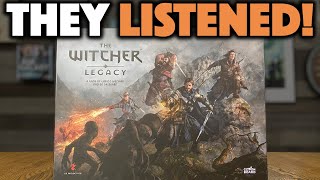
- gives you so much more narrative
- much more curated, narrated experience
- real campaign experience
- ticks a lot of legacy boxes
- giving you more of that [Witcher world]
- so many more different ways to play in the world of The Witcher
- adventure
- guided story
- The Witcher Old World
Mechanics (from transcript analysis)
- Character progression — Characters can level up within a scenario and also have stat progression that carries over between scenarios.
- cooperative play — Players work together towards common goals, with no player-vs-player elements.
- Deckbuilding — Players can upgrade their decks with better cards as they play.
- Investigation — Mechanics encourage players to investigate locations, gather clues, and uncover information.
- legacy — Features stickers that are added and removed, cards that are upgraded or destroyed, and secret envelopes, creating a persistent campaign.
- Skill checks — Dice rolls combined with character stats are used to determine success in various skill checks presented in the storybook.
- Story Driven — The game guides players through a curated story with branching narrative paths and decisions.
Video topics + discussion points
Quotes (from this video)
- The Witcher Legacy. Uh if you watch the channel at all, you know that we are fans of The Witcher Oldw World. This has a lot in common with that. Uh but it is obviously a legacy game. It leans into the narrative aspect.
- this is a much more curated experience in terms of like really feeling like an adventure that you're going on over the course of many sessions.
- this is actually guiding you through a story.
- It definitely feels like a quest line.
- this whole scenario I think and this is how I think all of them will probably feel to some degree feels like one massive quest line with multiple layers and multiple steps.
- this game is very good at that because what it does, like especially for this first scenario, it just says, 'Hey, you've arrived at this village. People have called you. There's some monsters attacking, and you need to figure out what's going on.'
- it's purely cooperative.
- The Witcher Legacy... really turns it into a far far more curated, narrated experience.
- This is designed to be a full legacy.
- It has the stickers coming on and off. It has new cards getting added in. It has old cards getting destroyed. It has things being upgraded and like all good legacy games. Envelopes.
- This is the chronicle box. This is the box that you're going to be using to sort of carry over all the things in your game.
References (from this video)

- Uses The Witcher IP
- Waste of IP
- Generic card play
- Overpriced
- Mediocre design
- Poor narrative integration
- The Witcher
- Storytelling through card play and page flipping
- The Witcher: Old World
- Into the God's Grave
Mechanics (from transcript analysis)
- Card Drafting — Players select cards from a display to build their game state.
- cooperative play — Players work together to achieve a common goal.
- Set Collection — Players collect cards with specific symbols to achieve goals.
- Storytelling — The game progresses through a narrative presented in a book format, with choices influencing the story's direction.
Video topics + discussion points
Quotes (from this video)
- This is such a muddy looking game that it almost feels like you're you're discombobulated off off, you know, as soon as you're starting.
- The rule book was horrible
- This game feels like it was written by a 13-year-old who just learned how to cuss.
- It's a mediocre deck builder. It's amplified by being a double mediocre deck builder.
- The actual game behind this one is so exhausting to play through.
- This game feels like it was designed by AI.
- This game is so atrociously designed in both component quality, which is ass
- Their rule book does not have page numbers.
- The Witcher Path of Destiny has no redeeming qualities to me.
- this is like a $40 game all day that you made $200 because you've got playmats and plastic everywhere and all this stuff.
- This is a plastered on piece of cardboard that you're like this is just stuff. There's no nothing behind it.
References (from this video)
- No redeeming qualities
- Overpriced for its content
- PvP is weird
- Disappointing storytelling
- Storytelling focused on characters from the video game.
- The Witcher universe
- Witcher Old World
Mechanics (from transcript analysis)
- Card Play — The game is described as primarily a 'line of cards'.
- miniatures — Includes miniatures that contribute to the game's price but not its gameplay.
- PvP — Features player-versus-player combat, described as 'a little weird'.
- Trophy Collection — Players aim to collect trophies by defeating other Witchers or slaying monsters.
Video topics + discussion points
Quotes (from this video)
- This is such a muddy looking game that it almost feels like you're you're discombobulated off off, you know, as soon as you're starting.
- The rule book was horrible
- This game feels like it was written by a 13-year-old who just learned how to cuss.
- It's a mediocre deck builder. It's amplified by being a double mediocre deck builder.
- The actual game behind this one is so exhausting to play through.
- This game feels like it was designed by AI.
- This game is so atrociously designed in both component quality, which is ass
- Their rule book does not have page numbers.
- The Witcher Path of Destiny has no redeeming qualities to me.
- this is like a $40 game all day that you made $200 because you've got playmats and plastic everywhere and all this stuff.
- This is a plastered on piece of cardboard that you're like this is just stuff. There's no nothing behind it.
References (from this video)
- Licensed IP integration
- Thematic cross over with Japanese folklore
- No gameplay mechanics details discussed in the transcript
- Array
- The Witcher universe with a fantasy world
- Story-driven
Mechanics (from transcript analysis)
- character-based play — Uses Witcher characters to go through an alternate world
Video topics + discussion points
Quotes (from this video)
- "it's the 10th anniversary of Dice Tower Cruise. It's going to be a blast."
- "This is a worker placement game in 1888 London."
- "You become the most feared boss in Whack Town."
- "The Witcher characters to go through an alternate world based on Japanese folklore."
References (from this video)
- IP familiarity (The Witcher)
- No explicit mechanics described in transcript
- cooperative or solo story-driven campaign within The Witcher experience
- The Witcher world
Mechanics (from transcript analysis)
Video topics + discussion points
Quotes (from this video)
- I'm not an RPG person.
- It's DC, Justice League, all those things are great.
- I like Mindbug. I like Mindbug a lot.
- The unique theme, the presentation designed by Danny Garcia, it definitely has me interested.
- Alterra from IV Studios. Set in the world of 10.
- I am very interested. Again, I have no idea whether this game will land for me or not.
References (from this video)
- The Witcher universe
- cooperative story-driven campaign
Mechanics (from transcript analysis)
- cooperative storytelling / scenario-based progression — Players cooperate through a shared story, upgrading abilities and influencing outcomes based on a narrative book.
Video topics + discussion points
Quotes (from this video)
- This is 10 through 1. This is not easy.
- Logic and Lore is a two-player logical game with tons of variants.
- Shout out to Puerto Rico. That would have been my number one.
- Flamecraft DS is a two-player head-to-head where you are placing out these different dragon tile chips.
- Zenith is absolutely delightful.
- Amber Leaf is my number one game from 2025.