The Witcher Legacy - They're Listening!
Games in This Video
1 game is featured in this video — it unlocks as you watch.
Transcript
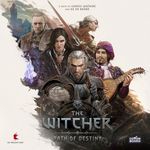
The Witcher is back and this time it is The Witcher Legacy. Uh if you watch the channel at all, you know that we are fans of The Witcher Oldw World. This has a lot in common with that. Uh but it is obviously a legacy game. It leans into the narrative aspect. To say quite a bit more is putting it mildly. Uh because this is a much more curated experience in terms of like really feeling like an adventure that you're going on over the course of many sessions. We've got it here on the table. We're going to give you today a preview and you don't have to worry. We're not going to spoil anything. We actually have a fresh map here for what we think is the first scenario.
The first scenario for a handful of coppers.
Yeah. We haven't done anything to it. We do have the map that we actually used to play underneath it. Uh that has some stickers on it. It also has some stickers that were taken off of it.
Yeah. So, I think the first thing you're going to recognize when you're looking at this uh is it's a different board. I mean, it's it's completely everything looks a little different, but it's a completely different board every time you play a scenario. You're going to see like we have the scenario book and I have this for scenario one, which we just mentioned. It also comes with a box and all the components you need to play that scenario are in the box. So, already if you're a fan of Witch of the Old World, you know, you play the same map every time. And while stories might come out organically and I know after we play Witcher of the Old World, we're like, "Oh, that was cool how I did this and then this and then this." Well, this is actually guiding you through a story. It isn't like handholding you through it. I mean, you are going to be making your own decisions and you are going to be moving through it at your own pace. And there are many times in the game where it's going to force you to kind of go in one direction or the other, which again, that kind of hearkens back more to like even the video game experience of playing through like a quest line.
Yeah, it definitely feels like a quest line. In fact, if you've played uh Oldw World, the quest lines in that there are some that have like multi-step quest lines, and even those are just like maybe a couple steps. Sure. Like go here then here.
This whole scenario I think and this is how I think all of them will probably feel to some degree feels like one massive quest line with multiple layers and multiple steps. Now with that said, like Ryan alluded to, it's not A to B to C to D necessarily because along the way you will make some decisions and you might branch off. And in fact, from what we were told, this could ultimately lead to different endings for players as they play through the whole situation.
Yeah. And that storyline uh applies like on a giant scale to the whole, but also to the each individual map because one thing that I think is really different between the the first game and this game is the sense of investigation. You know, the the old world was all about gearing up and fighting the monster, which is one thing that The Witcher is very good at. But if you read the books, if you've played the video game, you know, there's a lot more like detective work. There's investigation. And this game is very good at that because what it does, like especially for this first scenario, it just says, "Hey, you've arrived at this village. People have called you. There's some monsters attacking, and you need to figure out what's going on." That's all the information you've got. Everything else you had to have to discover, including like even your objective. You don't even necessarily know what you're trying to do when you first get onto this map, but all of that is going to become clear as you visit locations, talk to people, have different dialogues, pursue different leads, and it does come together, I think, like all the stuff that you're kind of learning is coming together to get you to the end of this scenario.
Yeah. And what that leads to, again, if you're familiar with the original game, is different motivations to go to these different locations. I think when we play the original game, a lot of your motivations are often related to the action that you can take at that space. And that is still the case here. There are going to be actions that you see like, oh, I want to go do that so I can raise this stat. But what I found is that as you're playing this, more of your motivation is coming from the story that's unfolding. And like Ryan said, some of the investigation because it's not just like, hey, you should go to this location next. It's oh, they give you a little clue and say it might be you might have more luck finding this in the forest. And then you're actually looking at this map and kind of going okay well that's not over here then most likely it's going to be in this area here at one of these locations. I can't remember exactly what it was but like there was going to be a couple locations where we could find something related to the monsters and it was going to be more related to the forest. Oh, they're nests I think. and we used that motivation to kind of go in that route. Plus, we were kind of splitting up. We didn't mention this. This is a cooperative game.
I was going to mention that in a second because they did like when we're talking about this narrative, I wanted to say they have made some changes to the game. They have streamlined a lot of things. I guess this is a good time to talk about that. The first thing they've done is take out all the PvP elements of the game. So, it is it is purely cooperative. That means there is no more Witcher dice. You're not betting poker against the other players. You're not fighting the other players. You're not chasing other players down and you're not necessarily racing for the monsters either. You are working together cooperatively to decide what you want to do because this gives you it gives you so much more narrative. Like the original game was you stop at a location, you're going to draw a card and it might be a one and done or what David said earlier, it might take you to another location. That is the whole game here. So they really wanted to bring the focus in on that and like okay well you don't necessarily know what's going to happen when you get to a specific location but there's this level of table talk of like well David I see you've been working on your combat. you're you're better. You've got some potions.
You've got some cards that are better for combat. Maybe you should go do the nest. Meanwhile, I'm going to go over here investigate something.
And I go investigate something. Oh, but then the monsters are there and now I'm being attacked. And I'm like, David, come help. Like, you need to come over here and fight these monsters because I'm not really in a position to do that. And I think that leads to some interesting dynamics at the table where you maybe you want to like assign things, but at the end of the day, like there's more to do on this map than you're going to be able to do.
Yeah. And Ryan mentioned that some things had been streamlined. Some of those things,
they're not going to make aspects of what your experience was playing the old world wildly different, but a little bit different. The way some of the cards work, the way the combat works is just a little bit different, but again, extraordinarily familiar. Uh the phases of the game, there is no sort of structured phases like uh we had in Old World. Now, there is rounds that you'll go through and you will draw up and you'll get new cards, but it is a more of a sort of upkeep sort of scenario in this game. So, there's a little bit of deck building, uh, but largely this game takes everything you loved about The Witcher Old World and really turns it into a far far more curated, narrated experience. Uh, it should be also said that the locations, they don't only just have those actions that I was referencing that might motivate you to go there, but as you investigate, the locations have stickers already on them.
And this is an interesting aspect that we weren't expecting when we sat down to play it is that you're not only stickering things, but you're unstickering things. And a lot of these locations, we'll look at one here. And again, I won't we'll try to choose things that doesn't spoil things, but one of the locations as you see it when you would start this is graveyard with a chapel. You'll notice right away it's not called it's not like an established location. It's called a graveyard or graveyard with a chapel. So you can already sense that sort of investigative sort of like flavor to the names of that. So if you might have read or talked to someone that has said something that makes us think like, oh that chapel at the graveyard, maybe this is where we should go. It's going to bring you there. But then you've got one, two, three more stickers that are at that location. So that when you go there, you can use one action to investigate this bottom part. Oftent times that's another action you can take or maybe a bonus
or a clue
or a clue. And then down the right hand side of the location, there's this long sticker and a small sticker underneath it. There are going to be things that happen when you go to that story book that will generally tell you that you could reveal the long sticker from that location. And then once you do, that effectively unlocks your ability to take a look at that small sticker. So there's all these steps in these processes of really fleshing out all of these locations.
Yeah. But that's what we say when it leans into the investigation because like these eye the eye markers that you see here, this is like the investigation marker. And anytime you go to a location, you're getting to do the action, but you're also getting to investigate. And a lot of times it is just like gaining some like you investigated. What do you get? You find like an herb or you find, you know, some kind of bonus or whatever. But then sometimes you're finding clues. And every clue that you're going to find is going to take you to an entry. And most of these entries are going to end with a decision. And based on that decision, it might say, "Okay, well, remove the sticker on six or remove the sticker on seven." You're not doing both. That means this game you've decided like you're chasing somebody, chasing this guy or that guy. Which way are they going? You can only chase one. And a lot of times you don't ever get to do the other thing. No. So, you're just kind of, you know, letting that go by. And the way the game tracks that is interesting as well. You kind of have like this sticker booklet and as you're making decisions in the game, it's having you like add these stickers to your journal and you're kind of creating like a journal that tracks all of your decisions through the game.
Yeah. This is what that sticker book looks like at first. And you can see there's all these little rectangles here. And I you this
give it a little flash. Don't pause it if you don't want to pause it.
Don't pause and zoom in if you don't want it spoiled. But this is what it looks like otherwise. You'll see there's all these stickers in here. One of the things I want to mention here is obviously these stickers will give you information. Some of these stickers will tell you to do things, but a lot of what these stickers do too is bring into that or lean into that investigative nature of the game because later in a scenario after you've played quite a bit and the scenarios can I mean when we played this scenario lasted over two hours, probably two to three hours.
Um there's going to be decisions you need to make that aren't of the moment. They are kind of like more broad decisions and you want to take into consideration things that you've learned while you played. There are stick stickers in there that that are basically going to be little bits and pieces of information where you're like, "Oh, wait a minute. But this person, remember they said this way back when, but this person just now said this. Which one of those people do we trust more? Which one do we feel more alied with? Let's go with this guy." And that helps us form our decision for sort of the next ultimate decision we're making.
Yeah. And that goes beyond just the the scenario you're playing. Like this this journal is tracking some of your decisions. So you might be on the third, fourth, fifth scenario thinking back to like I kind of remember that we found something in scenario two. What was it? We could go back to our journal and you see all your stickers that that track your path. So the paths can diverge. Now we've only gotten to experience the first scenario, so we don't know like how far back and like how broad this is going to be. But like David said, they did tell us there will be different endings that you can reach based on these cascading decisions that you're making throughout the games. Uh, which is very interesting, I think. And also the fact that like you're playing a different scenario. You're playing a different map. You're putting out all these cards kind of came with this scenario. And if you can't see the giant pile of trashed stuff up in front of us, as you go through, you're ripping up some things and adding them to your trash pile and getting new things. So like you might have a very specific objective. you get part of the way through this and you realize this is our objective, you complete it. The game might give you like now if you did it this way or this way, take this new objective and then rip the old one up, right? So, it's always changing. It feels more like living and dynamic, I think, even than the old world did because of that system.
Yeah. And speaking of living and dynamic, too, one of the things they've done compared to the original game is given you new reasons to use your stats. Uh, a lot of the stats that you have in this game do have very similar, if not the same effect that they have in the Witcher old world. But there's also a lot of skill checks in this. So, as you're going through the story book, there's going to be things that happen. Some of those decisions that Ryan alluded to might have skill checks in innate in them. So, there are dice. We don't use them PvP style, but you're going to use dice along with whatever your skill is to determine how well you do at potential different skill checks. And that's another thing you're going to consider cooperatively as you're breaking things up. You're going to be thinking, "Okay, maybe David should go do this because his his stat is way up high." And again, they're going to be things you do during the scenario and that go from scenario to scenario that really have some impact on what your character looks like as you progress through things. We've got some spaces here on our player boards that are filled in with cardboard pieces that you can take out and now you have a higher cap to a lot of those stats that you don't have initially at the beginning of the game.
Yeah, there there's definitely character progression there. Of course, there's character progression within a scenario. You're going to be leveling up your character like in Old World. You're going to be getting bombs. You're going to be getting those mutagens that actually like increase your character abilities for that particular scenario. You're going to be upgrading your deck with better cards as you play. But when you get to the end, you're almost like scored. Like, yeah, you're you're collecting we're collecting like all of these tokens and like a lot of times in the game, it's going to tell you to like, oh, you found you got a success add a success token up here. At least in the first scenario, it kind of judged us based on how many success tokens we had determined how well we did in that scenario. That could determine some of the rewards you're getting in between like scenario one and two. But you're going to go into scenario two, not with everything. You're going to reset a lot of stuff, but some of the things that the book tells you to keep, you're going to be able to keep. And of course, that stat progression is going to carry over throughout the game as well.
Yeah, get that box. There's a big box called the chronicle box. This is the box that you're going to be using to sort of carry over all the things in your game. And each character you have, you start with a box that has your starting components as your starting deck. Uh, so everyone's going to have these nice boxes to sort of keep everything in as you go through the journey. And then we'll flash that sticker sheet.
Oh, you can flash it.
I'm going to flash this. There's a sticker sheet here. One of the things that I wanted to at least mention is that when you do go from scenario to scenario and maybe even within scenarios, like we said, we just played the first one, some of the stickers you get actually go on your cards. So, you're actually improving some of the cards. So, for instance, if you've played the original Old World, there are cards that will combo into other cards. You might be able to take a card that doesn't combo into certain colors and now make it so that it does combo into certain colors. and even sometimes has a special ability
or has new abilities, things like that. So, it takes a lot of what, like I said before, it takes a lot of what I think a lot of people liked about the old old world game and makes it more narrative, uh, more curated, but also gives you that experience of playing a real campaign. Even though they had some campaign light elements in Old World that you could play, this one definitely pays off.
This is designed to be a full legacy. Like, this has all the legacy stuff, if you couldn't tell. It has the stickers coming on and off. It has new cards getting added in. It has old cards getting destroyed. It has things being upgraded and like all good legacy games.
Oh yeah.
Envelopes.
Look at this. This is the secret envelope. You don't even get to look at this envelope until the game tells you. I don't even know what's in this secret envelope to be honest with you.
I mean, any good legacy game has something like that. We won't open these and show you right now what's in it.
Not at all.
But yeah, it does a lot of really cool things legacy style. And what I'm about to say, I don't want to say too much because I don't want to spoil anything that they're not sharing on the campaign page themselves, but the scenarios Ryan alluded to the fact that they're very different. They can be very different.
I think that's worth noting. They're not
You're not going to see maps that necessarily always look like just this big overworld map. I'll just leave it at that. They showed us a glimpse of some of those. We didn't have the pieces in front of us, but they showed us imagery and some of that was the stuff that made me go, "Oh, that's interesting."
And and one one thing that they okay us to say, just in case anyone's It's not always going to be get to a place, oh, there's monsters, go fight the monsters. Like, these scenarios are going to have very different goals. Some of them are going to be more narrative. Some of them might be more combat heavy. Some of them might be a good mix of both. So, you don't really ever know what you're going to get when you when you get to the next scenario. So, I think that's something that if you were a fan of the old world, this is just this is giving you more of that. It's giving you so many more different ways to play in the world of The Witcher. But if you're not if you've never played the Old World and you're just a big legacy fan, I think this ticks a lot of legacy boxes, too.
Yeah. I think if you're one of those people and you play this, you might end up wanting to get the old one.
Yeah, you might. They are different exper and I think they are different experiences enough so that both can exist. If you just want to play a one and done, especially if you really enjoy like I want to just do a monster hunt, that's, you know, old world still exists for that.
Yeah, for sure. If you have any questions about this or if you have questions about the old world, we'll get down there, too. Get down in the comments and let us know. We'll get down there and answer whatever we can. Until next time, though, make sure everyone has front of the table and we'll see you then.