


The Witness Deep Dive
What the Community Thinks About The Witness
The Witness is a cooperative deduction game that reviewers describe as one of the most unusual and memorable tabletop experiences they own. Adam Porter, who runs the Adam in Wales - Board Game Design channel, placed it fourth on a personal top 10 list and called it a game Porter loves, with an emotional attachment that goes beyond its mechanics. The Before You Play channel went further, calling it one of its favorite games ever and recalling that it had ranked near the top of its own top 50 list.
Both channels agree that The Witness is not for everyone, and both stress that its availability has been a problem. Adam Porter noted that the game was out of print for a long stretch and that people soon struggled to find copies. Before You Play explained that its earlier copy had been out of print for a very long time, and that at Gen Con 2024 another publisher released a new edition. That reprint is card based rather than booklet based, with three boxes of eight cases each, some newly written cases, and more narrative material than the original, which contained 64 cases. Reviewers therefore frame The Witness as a game that is back in circulation, but one whose appeal still depends on finding a copy and assembling the right group.
Core Mechanics That Define The Witness
Limited Communication Relay
The defining mechanic of The Witness is a relay of private information. Each player holds clues that no one else can see, and must whisper them to another player, who combines what they heard with their own information and passes it along again. Before You Play described this as a telephone game, and Adam Porter in the Adam in Wales - Board Game Design analysis called the game a cooperative puzzle where teammates must whisper clues to each other and remember what they have heard. Because the clues are written to sound alike, the relay produces mishearings and misremembered details that the group must untangle. Players are also barred from taking notes while the clues circulate, so the relay depends entirely on memory and clear speech.
Logical Deduction Under Pressure
Once the clue rounds finish, players are allowed to write down what they remember on a notepad. Only then are the case questions revealed, so the group does not know in advance which details will matter. Every player answers each question, and the group succeeds or fails together. Adam Porter emphasized that the challenge is tough and that mistakes are easy to make, which means one player's misremembered clue can cost the whole team points. The deduction is therefore less about solving a fixed puzzle than about reconstructing a shared picture of the case from fragments that have passed through several sets of ears.
The Witness Experience
Comedic Telephone Chaos
Reviewers consistently describe the relay as the source of the game's humor. Before You Play called the experience very silly and said the group had a good time with it, while acknowledging that the outcome depends on the group. Questions about what was said often turn into arguments about which detail was passed along, and the clues can blur into near tongue twisters once a player has to repeat one while receiving another. Before You Play also noted that the group was not skilled at the game, a self-deprecating admission that reflects how the chaos of the relay can turn even a good memory into a laugh.
Strong Thematic Immersion
Adam Porter singled out the sense of role as the reason the game works. Each player knows their role, and whispering clues and solving conundrums make the player feel like the spy they are meant to be. Reviewers also highlight the reliance on teammates, since success requires each player to trust the others to relay accurately. This combination of defined role and shared responsibility gives the game a strong sense of place, and it is why the Blake and Mortimer license matters so much to the way the game feels at the table.
What Makes The Witness Stand Out
Belgian Comic Artwork and the Blake and Mortimer License
Adam Porter described the illustration as fantastic and said it resembles Belgian comics in the same style as Tintin. The game holds a license from the Blake and Mortimer series, a choice that reinforces the spy theme and gives the case files a distinctive visual identity. Before You Play also praised the look of the game, describing the art as a central part of its appeal and the reason many players remember it.
A Genuinely Unusual Four-Player Design
Both channels describe The Witness as a real oddity in a hobby full of familiar formats. Adam Porter called it unusual and said the puzzles are great, while Before You Play described it as one of the rare cooperative deduction games built around spoken communication rather than notes or open information. The strict four-player design is part of that identity: the relay needs exactly four people in a circle, and the cases are built around four perspectives. Reviewers see that rigidity as a deliberate choice that makes the game memorable precisely because so few tables can host it.
Potential Drawbacks
A Strict Four-Player Requirement
The most consistent criticism comes from Adam Porter, who identified the four-player requirement as the main downside. The game cannot be played with two, three, or five players, which makes it difficult to schedule and limits how often it reaches the table. Adam Porter also said it is not a game that suits everybody, and that limitation is part of why the channel doubts a title like this would sell in large numbers. Groups that do not usually gather in fours will need to plan around this constraint before buying.
Scarcity and Limited Feedback
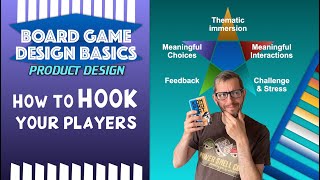
Adam Porter wished the game had remained in print, noting that it sold out quickly and that copies later became hard to find at reasonable prices. Before You Play framed the reprint as a welcome chance for players who had wanted the game for years. In a separate analysis of engagement, Adam Porter argued that The Witness offers relatively few meaningful choices, since the outcome depends on the relay rather than on decisions a player makes, and that feedback is not immediate because points are assigned only at the end of the game. Players who want frequent decisions and quick rewards may find the experience thin, even though the relay and deduction remain engaging.
If You Enjoy The Witness
The Witness suits players who enjoy narrative deduction and who want a cooperative puzzle built around communication rather than hidden information on a board. Groups that always have exactly four players and value a memorable, silly, and tense session will likely get the most from it. It also appeals to fans of licensed comic-themed games, since the Blake and Mortimer artwork and the spy framing are central to the experience. Players who prefer open information, flexible player counts, or constant decision making should approach it with caution, because the relay and the lack of notes define the game more than any single choice does.
What Reviewers Are Saying
"The brilliant part of it is of course that um, you know, that telephone system where information that you're you're giving to somebody gets changed as it goes around, as people are whispering to each other and they've misheard or misremembered what they've been told, or they've misunderstood. As a result, it's really funny."
— Adam in Wales - Board Game Design
"The challenge comes in when you're trying to remember what you know, uh, you're trying to remember what was just told to you, and now that two pieces of information would sound kind of like almost like a tongue twister. You have to now relay that to somebody else, yes, all while getting also information back to you."
— Before You Play
"Witness is a game that I really really love. I have that emotional attachment to it. It's not going to be for everybody, but if you're interested and if you can find a copy at a decent price, definitely worth picking up."
— Adam in Wales - Board Game Design