/pic6526108.png)











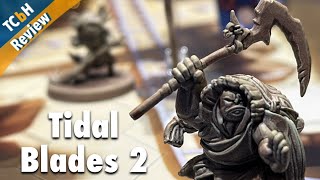


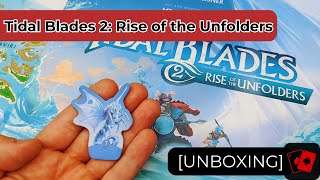



Tidal Blades 2: Rise of the Unfolders Deep Dive
What the Community Thinks About Tidal Blades 2: Rise of the Unfolders
Tidal Blades 2 has earned widespread acclaim from board game reviewers and players alike. After the divisive reception of the original Tidal Blades, this sequel represents a dramatic shift that resonates with the gaming community. Reviewers consistently praise it as one of the finest cooperative dungeon crawlers available, standing alongside and sometimes exceeding Gloomhaven in accessibility and engagement. The game struck a particular chord because it delivers on the visual promise of its predecessor while fundamentally reimagining the mechanical experience into something fresh and compelling.
Core Mechanics That Define Tidal Blades 2: Rise of the Unfolders
The 3x3 Grid Action System
The standout mechanical innovation is the grid-based tableau where players place cards and activate either the row or column containing their played card. This system eliminates the dead turns common in dungeon crawlers, where you might accomplish very little. Instead, each turn presents a compelling puzzle of placement and timing. Players can play a single card and trigger the existing row or column for immediate effects, or build up the grid strategically before clearing rows to activate three powerful card effects at once. This creates moments of genuine agency and satisfaction as you see your plans unfold with each card play. The elegance lies in how simply this rule generates both meaningful tactical decisions and engaging turn variety that keeps players invested throughout scenarios.
Character Progression Through Unique Decks
Each character brings their own thematic deck of cards, making them feel substantially different from one another. Characters excel in distinct areas, some specializing in ranged attacks while others focus on movement or tank-like resilience. As you progress through the campaign, you unlock additional cards tailored to your character, allowing you to build on their established playstyle rather than reinventing it. This progression feels natural and rewarding. The game respects your learning curve by letting your character sheet grow as you grow into the game, creating a sense of genuine mastery over time rather than overwhelming you with choices from the start.
The Tidal Blades 2: Rise of the Unfolders Experience
Whimsical Fantasy World With Vibrant Production
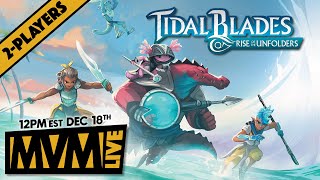
Tidal Blades 2 immerses you in Naviri, a tropical fantasy realm filled with vivid colors, fantastical creatures, and exotic settings. The miniatures carry personality despite their compact scale, and the scenario booklets feature striking, varied environments that transport you into this world. Importantly, the game avoids static boards by using booklets for maps, allowing scenario-specific alterations that make each location feel organic and alive. The art style is immediately distinctive, standing apart from every other tabletop adventure game currently available. This visual coherence elevates the entire experience, making you genuinely want to visit and explore this setting again and again.
Quick Pacing With No Filler Content
The campaign moves at a brisk pace without sacrificing meaningful scenario design. Reviewers noted that scenarios go beyond the typical fetch quests, instead presenting varied objectives that feel tied to the unfolding narrative. There is no bloat here; every mission has purpose. The game respects your time investment while still delivering substantial play. You can complete scenarios in a focused session without the grinding that plagues some campaign games. This tightness of design extends to rules complexity, which remains notably more accessible than Gloomhaven while still offering depth for those who seek it.
What Makes Tidal Blades 2: Rise of the Unfolders Stand Out
Multi-Tiered Scenario Objectives
Rather than simply winning or losing, scenarios offer multiple completion levels. You can achieve the base objective for story progression, or pursue bonus objectives for additional rewards and narrative moments. This design allows strategic considerations beyond pure survival: do you push for the optional goal, or play conservatively? The flexibility encourages replayability and ensures that different playstyles are rewarded. This mechanic, common in video games, rarely appears in tabletop adventures with such polish, making it a genuinely fresh contribution to campaign game design.
Discovery-Driven Campaign Structure
The campaign reveals its narrative gradually as you progress. The world itself unfolds, with scenarios branching and converging in ways that feel organic rather than prescriptive. Character interactions and story beats emerge from gameplay rather than being delivered through walls of text. As the rift opens and you venture deeper, the sense of discovery intensifies. Reviewers found themselves genuinely curious about what came next, not just mechanically but narratively. The game manages to be narratively engaging without resorting to heavy-handed exposition, striking a balance that many campaign games struggle to achieve.
Potential Drawbacks
Narrative Execution
While the campaign structure impresses, the actual writing occasionally falters. Some reviewers found the tone inconsistently whimsical, attempting a Saturday morning cartoon vibe without fully committing to it. Dialogue and flavor text can feel uneven, sometimes pulling you out of the experience when you just want to move forward. The story premises are intriguing, but the execution does not always match the quality of the mechanical design. This is a minor blemish on an otherwise polished package, but one that fantasy-focused players might notice.
Enemy Behavior Complexity
The fully cooperative card-driven enemy system is ambitious, but it introduces a noticeable complexity gap between player actions and enemy behavior. Tracking enemy health, behavior cards, and status effects can feel dense and busy compared to the relatively streamlined player experience. While this design choice serves the mechanics well, it occasionally creates moments where the elegance of the card tableau is contrasted against a more labyrinthine enemy automation system. Some players found this imbalance distracting, though others appreciated the mechanical depth it provided.
If You Enjoy Tidal Blades 2: Rise of the Unfolders
Consider exploring other cooperative campaign adventures. Gloomhaven and its variants offer similar progression systems but with denser rules. Forgotten Waters captures a lighter, personality-driven narrative experience. Frosthaven offers extended campaign depth for those seeking more playtime. Gloomhaven: Jaws of the Lion serves as a more compact entry point to the dungeon crawling genre. Marvel United delivers accessible combat with unique character abilities. If you appreciate the tropical setting and whimsy, Rooftops of Paris and The Grand Carnival offer thematic alternatives.
What Reviewers Are Saying
"It's such a clever system. It's such a welcoming world. It's a lovely world, vibrant, filled with fantastical creatures, but the combat and what you're doing in the game is incredibly approachable, and I love that."
— The Dice Tower
"The grid-based system gives you a lot of options because you're not defining where a card is put into one of your slots until your character's turn comes up in initiative. But what I really like is that the game does take advantage of the sort of game design elements that this leaves the opportunity to be played with."
— The Cardboard Herald
"I have played a lot of these types of games and this is one of the best first impressions I've had in a while. We nearly played a third scenario way past our old people bedtime. The fact that we got two games in one single night was pretty indicative of our enjoyment of it."
— The Cardboard Herald