
Time of War Deep Dive
What the Community Thinks About Time of War
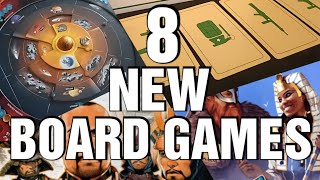
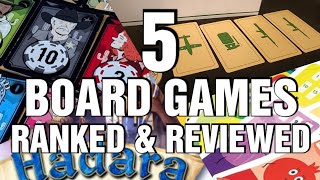
Time of War is a self-published strategy game from Zombiegirl Games, and the reviewer coverage so far comes from the Chairman of the Board channel. In a ranking of five newly played games, Time of War landed at number three. The reviewer said the publisher had reached out to cover it, that they went in completely blind after reading the rulebook, and that they had expected it either to tank or to work well. The verdict was that it worked well, and that everyone at the table had a better time than expected.
A separate roundup of recent purchases, rather than a full review, presented Time of War as a negotiation and auction game that the designer had sent over directly. That coverage flagged its minimalist art style and described it as a homemade product, but withheld a full verdict and said only that there were some positive things to say about it. Taken together, the coverage paints a picture of an unusual design that surprises people more than it disappoints them.
Core Mechanics That Define Time of War
Free-Flow Bidding
Bidding is the engine that reviewers return to most often. Players move their markers up and down on grids to set how much they are bidding, and the Chairman of the Board reviewer described the result as "really dynamic because it's a free flow system." Outbidding an opponent lets that opponent move their own markers somewhere else, so the auction keeps shifting as the round goes on. The things being bid for are victory points, item cards that score bonuses when collected in sets, banks that raise income, cities that add troops, and special ability cards. Reviewers stressed that none of these fields can be safely ignored, because a player without troops invites attacks that can steal their money or item cards.
Negotiation and Hidden Voting
The negotiation layer is, in the first video's words, more interesting than it looks at first. Players can conspire to split their bids, for example agreeing to share the cost of taking troops and then divide the troops afterward. That kind of cooperation lets trailing players work together to catch up with the leader. A fixed phase adds another twist: every player ranks the others by how strong they appear, and whoever receives the fewest votes is rewarded with extra resources, while the player voted strongest gets nothing. The reviewer noted that much of the information stays hidden behind player screens, so everyone has to keep a mental tab on how the others are doing.
The Time of War Experience
Quirky and Off-Kilter
The Chairman of the Board coverage keeps returning to the game's oddness. The first reviewer called it "definitely a quirky game" and "quite a weird one," describing it as a hybrid of bidding with a bit of wargame antics. The second described its art as very minimalist and its overall feel as quite strange. The sense from both is of a game that prioritizes being different at the table over the visual polish of a mainstream release.
A Tense Balancing Act
The game asks players to juggle several priorities at once, and reviewers describe that juggling as the core tension. The first video's reviewer explained that striking the right balance between troops and money is the point, because income lets you outbid rivals for victory points while troops keep you from being raided. Because the fields are interlinked, a player who focuses too narrowly on one of them tends to fall behind. The result, according to the reviewer, is a steady pressure to keep every part of the economy in step, which turns each round into a careful calculation rather than a single decisive move.
What Makes Time of War Stand Out
A Self-Published Passion Project
Reviewers consistently point to Time of War's self-published origins as part of its appeal. The second Chairman of the Board video called it "definitely a homemade product" and said that being self-published is always a cool thing to see. The first video added that the publisher reached out to have the channel cover it, and the reviewer admitted knowing nothing about the game beforehand. For players who enjoy supporting small publishers and independent designs, that background is part of the attraction.
Dice Combat That Keeps the Pace Moving
The first reviewer praised the decision to resolve combat with dice rather than a deterministic system. In combat, the attacker commits troops against the defender's army, both sides pair their units from highest to highest, and the attacker who wins steals the resource they targeted. The reviewer felt this was one of the rare occasions where luck-driven combat was the right choice, because it keeps the game ticking along at a good pace and leaves the thinking to the auctioning and negotiation. The reviewer also noted that investing in a stronger army can mitigate the odds, which level out as the game goes on.
Potential Drawbacks
Basic Graphic Design
The most consistent criticism is presentation. The first Chairman of the Board reviewer said the graphic design is "very basic" and almost like clip art in style. The reviewer did not hate it, however, because the presentation never got in the way of the mechanisms or the fun. The reviewer also pointed out a few nice little components, such as small army pieces, which suggests that the physical production has some charm even where the artwork is plain.
Luck in Combat as a Double-Edged Sword
The same dice that speed up the game also introduce randomness that some players will resent. The first reviewer described the combat as quite luck driven, and while they defended that choice, they acknowledged that the randomness is genuinely present in every battle. Players who prefer deterministic fights may find that the dice undercut the precision they expect from the rest of the design, even though the reviewer argued that the game's thinking-heavy systems compensate for it.
If You Enjoy Time of War
Because no direct comparison titles were identified in the coverage, the best guide is the game's own qualities as reviewers describe them. If you enjoy negotiation games and want something a little out there, the first Chairman of the Board reviewer recommended giving Time of War a look and seeing whether it suits you. If the appeal is trying to read other players, anticipate their bids, and counter them, the free-flow bidding is built around exactly that kind of guessing and reacting. If you value offbeat, self-published designs over polished mainstream releases, the game's quirky character and homemade feel are its strongest selling points. Players who like a tense balancing act between income, troops, and victory points will find the interlinked fields rewarding, while those who want predictable combat may want to temper their expectations.
What Reviewers Are Saying
"Rather than being a really deterministic brain burner, combat in this game said, let's just make it a dice roll and then we'll put the more thinky mechanisms with the auctioning and the negotiation instead, and I thought that was a really good choice."
— Chairman of the Board
"It is self-published so the graphic design is very basic. This is almost like clip art style, but I didn't hate it because the graphic design didn't get in the way of the mechanisms or the fun of the game."
— Chairman of the Board
"This is a kind of a negotiation auction game, quite strange, it has this kind of a very very minimalist art style, and this is definitely a homemade product, definitely self-published, which I think is always cool."
— Chairman of the Board