/pic6870090.jpg)
/pic8758132.jpg)

/pic6870090.jpg)


















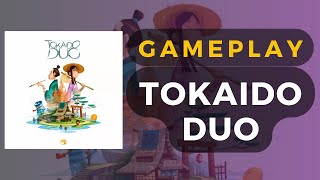
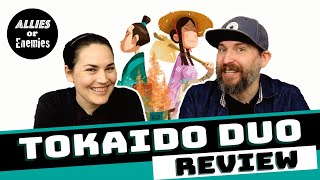




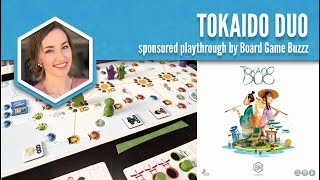

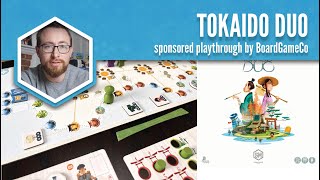

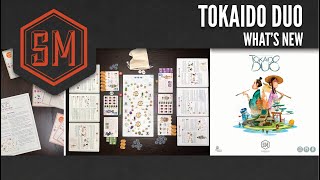






Tokaido Duo Deep Dive
What the Community Thinks About Tokaido Duo
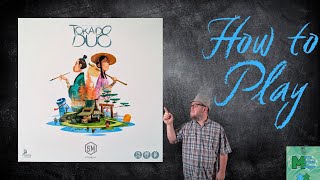
Tokaido Duo has earned significant praise from the board gaming community as a standout two-player experience. Reviewers consistently highlight the game's elegant design, beautiful presentation, and surprising strategic depth. The consensus is that while it shares the Tokaido universe with its predecessor, this dice-drafting adaptation creates something distinctly its own: a compact, engaging game that delivers meaningful decision-making in a short playtime. Players appreciate that the game feels both accessible and mechanically sophisticated, making it suitable for newcomers and hobbyists alike.
Core Mechanics That Define Tokaido Duo
Dice Drafting with Asymmetric Turn Order
The heart of Tokaido Duo lies in its dice-drafting system, which creates tension through asymmetric player choices. Each round, three dice are rolled, and players take turns selecting them. The first player chooses two dice and the second player chooses one, but on the next round, roles reverse. This mechanism forces players to think strategically about denying opponents the dice they want rather than simply pursuing their own agenda. Reviewers note that the game plays "meaner than expected" because of this dynamic. The magic emerges when the second player can identify which die will be useless to the first player and leave it as the remaining choice, creating a fascinating puzzle where you must balance personal advancement against opponent disruption. This single mechanic drives nearly all tactical decision-making in the game.
Multi-Track Scoring with Variable Endgame Triggers
Tokaido Duo stands apart through its three independent character tracks, each offering different paths to victory. Players work on the Pilgrim track (which multiplies two separate values for end-game scoring), the Merchant track (converting coins to gold slabs for points), and the Artist track (gifting paintings worth victory points). The endgame is triggered when any player completes one of their three character boards, forcing meaningful tension around when to push for victory versus when to stretch the game out for more scoring opportunities. This endgame design encourages sophisticated play because you must consider not just your own progress but whether your opponent is scoring more efficiently than you, adding a layer of timing strategy often absent in simpler games.
The Tokaido Duo Experience
Competitive Yet Intimate Intensity
Tokaido Duo delivers a distinctly competitive two-player experience wrapped in a beautiful, serene aesthetic. Reviewers emphasize that every single action matters because players are always invested in both where their opponents move and which dice they select. The game generates "fist pump moments" when clever play pays off, but the competition never feels mean-spirited due to the game's elegant presentation and meditative theme. The constant interaction, from blocking movement to denying resources, creates engagement that persists throughout every turn. One reviewer noted being impressed by how genuinely competitive the game is while maintaining such a pretty, inviting presentation, making it feel like you and your opponent are having a genuine battle of wits without hostility.
Fast-Paced with Weighty Decisions
Despite its relatively short playtime, Tokaido Duo packs substantial strategic decisions into each turn. Individual actions are tiny and quick, moving a character, selecting a die, trading goods, but the accumulation of decisions creates surprising depth. Players report that even though turns move quickly, the amount of thinking required never leaves you disengaged from what your opponent is doing. The game maintains momentum while rewarding thoughtful planning, making it feel neither tedious nor random. Reviewers appreciate that the straightforward turn structure makes it accessible for newer players while the strategic layers ensure experienced players stay intellectually engaged.
What Makes Tokaido Duo Stand Out
Elegant System Design Distinct from Original Tokaido
While Tokaido Duo shares the aesthetic and theme of the original Tokaido, the mechanical distance between the games is substantial. The original features a ratchet system where players move along the shared path making five different action choices. Tokaido Duo abandons this entirely in favor of three separate character tracks with dice drafting and variable endgame triggers. Reviewers compare it to the relationship between Seven Wonders and Seven Wonders Duel: both share a universe but operate under fundamentally different systems. This is actually a strength: the game doesn't feel constrained by its predecessor, instead offering a refined experience optimized specifically for two players. The system is more elegant than the original, with clearer strategic vectors and tighter mechanical integration.
Beautiful Production and Clarity Refinements
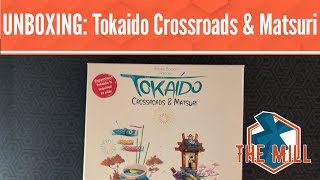
The Stonemaier Games edition of Tokaido Duo received particular praise for its component quality and rule clarity improvements. The boards are clear and well-organized, with punched-out tokens that make gameplay straightforward. Character reference cards for each player reduce the need to constantly consult the rulebook, addressing a pain point from earlier editions. The artwork is executed by the same talented artist as the original Tokaido, lending visual cohesion while actually achieving greater clarity in the two-player format. Reviewers appreciated that the game didn't muddy its elegant design with unnecessary production choices, instead focusing components on maximizing playability and aesthetic appeal.
Potential Drawbacks
Limited Player Count Flexibility
Tokaido Duo is purpose-built for two players and lacks the multiplayer versatility of other family games. While a solo mode is included in newer editions, the game is not designed to scale to larger player counts. For gaming groups that primarily play with three or more people, this two-player specificity is a genuine limitation. That said, reviewers noted this is actually appropriate for the design, the game wouldn't function well with more players because the dice-drafting mechanic relies on the specific turn structure and the ability to deny opponents through meaningful choices. This is less a flaw and more a matter of whether the game fits your needs.
Theme-Mechanics Disconnect
While the visual presentation is consistently praised, some reviewers note that the game's elegant mechanics don't require the Tokaido theme to work. The theme serves as window dressing rather than creating mechanical integration: you could replace the Pilgrim, Merchant, and Artist with entirely different concepts and the core system would function identically. This doesn't diminish the game, as the art and presentation are genuinely beautiful, but it means the experience is more about abstract competition than thematic immersion. Players seeking a game where the theme drives the decision-making may find Tokaido Duo feels slightly disconnected, though most reviewers found the beautiful artwork justified the aesthetic experience regardless.
If You Enjoy Tokaido Duo
Players who love Tokaido Duo should explore Seven Wonders Duel, which shares a similar philosophy of creating a distinct two-player experience using a refined system distinct from its larger predecessor. The card-drafting mechanics and balanced asymmetry create comparable depth. Between Two Castles offers another excellent two-player experience with satisfying tile-placement and spatial puzzle-solving. Wingspan appeals to players who want a beautiful, relatively quick game with elegant engine-building and visual appeal. For those intrigued by the dice-drafting core, Duel for Middle-earth offers a more combative take on the mechanic. Finally, anyone drawn to Tokaido Duo's serene aesthetic and competitive-yet-elegant feel should revisit the original Tokaido, which offers a very different but equally beautiful gaming experience.
What Reviewers Are Saying
"The magic of this game is how do I take something that is going to give them nothing, and you can do that more than you expect, especially with the merchant."
— Allies or Enemies
"The damage control aspect of it is really interesting. I also can't believe I kept forgetting to hand in the merchant tiles. But it wasn't affecting our gameplay because I remembered before we would draw."
— kovray
"I'm 100% impressed by how genuinely competitive it is while maintaining such a pretty, inviting presentation. You're having a genuine battle of wits without it feeling mean-spirited."
— DaniCha