


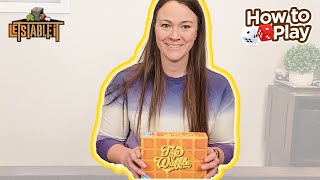

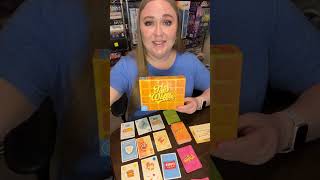
Top Waffle Deep Dive
What the Community Thinks About Top Waffle
Top Waffle is a light order fulfillment game from Lovemore Games, designed by Zach Loveless, in which players run a waffle kitchen and try to sell their creations for the highest price by stacking the most toppings. Reviewers consistently place it firmly in the family and light party space. The Let's Table It family review describes it as a fun family weight order fulfillment game, and the channel's reviewers agree that it lands at the lightweight end of the table. Jamie of Tabletoptiktok frames it as a recipe fulfillment game that is easy to pull out with almost any group, and calls it a great game for two to six players.
The praise centers on three things: the bright, appetizing art, the way every player works on a similar recipe puzzle, and the item cards that keep the game from feeling purely random. The family reviewers also noted that the first game can feel frustrating, but that the experience improves once players learn which item cards are worth chasing. Criticism is measured rather than harsh. Reviewers worry about the amount of luck in the topping market, the way a round can stall when nothing useful appears, and the sting of losing an order to another player. Most of the critical comments are offered as caveats rather than dealbreakers, and the overall verdict is that Top Waffle rewards repeat plays.
Core Mechanics That Define Top Waffle
Set Collection
The heart of Top Waffle is gathering the right combination of topping cards to satisfy an order card. Each order lists the toppings it requires, the finished product, and the dollar value the player scores when the order is completed. Jamie of Tabletoptiktok points out that the most valuable orders can demand four different toppings and be worth eight points, while a simpler order with only two toppings may be worth just two. That spread forces a constant choice between chasing a rich recipe that requires a broad collection and settling for a quicker, safer order. Several toppings also count as two ingredients or carry bonus points, which the Let's Table It how-to-play video describes as a way to stretch a set further. Players keep completed orders in a points area, so the collection built over the game is scored at the end rather than cashed in immediately.
Hand Management
Every turn asks players to take either two topping cards or one item card, and the decision about what to hold is where Top Waffle gets its tension. Topping cards left in hand at the end of a round go to the trash and count as negative points, so a player who hoards ingredients for an order that never arrives is penalized. Reviewers from Let's Table It describe this as the central planning question: whether there is time to fulfill the remaining orders, or whether it is better to save items instead of committing to toppings that will cost points. Item cards are the exception, because they can be kept from round to round. That asymmetry means hand management is less about holding everything and more about deciding which resources are worth converting into points before the round ends.
The Top Waffle Experience
A Feeling of Control Grows With Replays
On a first play, Top Waffle can feel like a game driven by the market. Reviewers describe drawing for the topping that is needed and missing it for several turns in a row. One Let's Table It reviewer admitted that the first game was frustrating after going heavy on toppings and fulfilling very few orders. The second game changed the reviewer's view entirely. By taking toppings only when a completed order was realistic and leaning into item cards, the same player found that the game "didn't feel as lucky it felt like I had control over what was going on." The reviewers conclude that the quick, light surface hides a set of strategies that emerge once players understand how the item cards combine with the order deck.
Friendly Competition Over Shared Orders
The second feeling that reviewers return to is the friction of a shared market. Because the open orders are visible to everyone, another player can complete an order a player has been building toward. The Let's Table It family members admitted that their household struggles with taking something someone else has been saving for, and that the game asks them to set that discomfort aside. Their conclusion was that a lost order is not personal, and that the game offers a useful lesson in accepting that another player simply got there first. The tension is competitive without being hostile, and it gives the table a steady sense of racing toward the same finish line.
What Makes Top Waffle Stand Out
Item Cards That Soften the Luck of the Draw
Reviewers repeatedly single out the item cards as the feature that makes Top Waffle work. Wild cards are worth one topping of the player's choice, but pairing one with the Recycling Bin upgrade lets a player take three toppings. Grocery Bags let a player look at the top three topping cards and keep one or two, and the upgraded version reveals five. The Wrench, Blender, and Megaphone each convert a limited action into a more powerful one when paired with the correct card. Let's Table It describes the items as the reason the game is not "all about the luck of the draw," because a player who misses a topping can still build a waffle through a well-timed item. The items also introduce the strategic depth that reviewers find on replays, since the best combinations are discovered rather than announced.
Bright Art and Appetite Appeal
The presentation is the other standout. The Let's Table It family review calls the art cute, bright, and fun, and notes that the colorful toppings make players hungry as they browse the market. Jamie of Tabletoptiktok also highlights the illustrations and the playful theme, in which the waffles are the focus of a recipe fulfillment game. For families and casual groups, that visual appeal is a strong reason to bring the game to the table, because the components themselves invite conversation about favorite toppings and imagined orders.
Potential Drawbacks
Luck in the Topping Market
The most common caution is that the open market and deck draws introduce real randomness. Reviewers note that a player going for specific toppings can be left empty-handed for several turns, and that the game can feel lucky when a needed ingredient never appears. Even reviewers who enjoyed the game recommend that players accept this from the start. The item cards reduce the problem but do not eliminate it, which is why Let's Table It suggests that new players approach the first game as a learning session rather than a fair test of skill.
Length Relative to Its Luck
The second concern is the running time. The box lists 30 to 45 minutes, and the Let's Table It how-to-play video says that estimate is accurate in practice. One reviewer argued that a game built on luck should be shorter, suggesting that a lucky game should run closer to 10 to 15 minutes so that a bad round does not drag on. Rounds where nothing useful comes up can feel draggy, and resetting for a rematch is harder for families when a session runs that long. Reviewers who played more than once found that item cards help offset this feeling, but the length remains the main reason some groups may prefer a faster filler.
If You Enjoy Top Waffle
Neither reviewer names a direct comparison title, so the clearest guide to who will enjoy Top Waffle comes from how each described their own table. Jamie of Tabletoptiktok frames it as a game to "pull out and play with anyone," which points to groups who want something they can teach in a few minutes without a rules explanation getting in the way. The Let's Table It family's account of their second game, where learning the Wild cards and Grocery Bags upgrades turned a frustrating first session into one where they felt in control, suggests the game rewards players willing to sit through an uneven first play in exchange for a sharper second one. Players who want a two-to-six-player market game they can bring to a family table, and who do not mind some early-game luck while they learn which item cards to chase, are the audience both channels describe.
What Reviewers Are Saying
"it didn't feel as lucky it felt like I had control over what was going on"
— Let's Table It
"So, you have to decide, do I want to risk getting caught with a bunch of toppings or do I want to go for the easier ones?"
— Jamie, Tabletoptiktok
"the play time on the box says 30 to 45 minutes which we have found is pretty accurate"
— Let's Table It