


Tricky Tides Deep Dive
What the Community Thinks About Tricky Tides
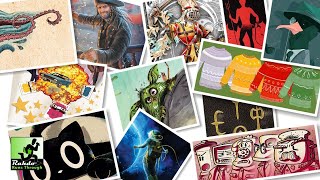
Tricky Tides has a small but enthusiastic following among reviewers who came to it for its card play. Rahdo Runs Through featured it as its number seven pick in a countdown of games, and the host recommended it to anyone who likes trick-taking. The Board Game Garden mention is shorter: reviewer Jenna Beasley picked up a copy at a board game convention and described it as a trick taking, pickup and deliver game Beasley was excited to look into. Both reviewers come at the game from a place of curiosity rather than skepticism, and the overall picture is warm, with a few honest caveats about how much chaos the game brings to the table.
What stands out in the Rahdo Runs Through segment is how the host frames the game as a surprise. Rahdo Runs Through was introduced to Tricky Tides years ago, at a point where the only trick-taking game played before it was Hearts, and describes the experience of seeing tricks move a ship around a map as mind-blowing. That reaction credits the design with bringing something genuinely new to a genre the host otherwise associates with games like Hearts.
Core Mechanics That Define Tricky Tides
Trick-Taking With a Spatial Twist
The most discussed mechanic is the trick-taking system. Rahdo Runs Through explains that each card carries movement directions, such as north, west, southeast, and the other diagonals, and that a trick is played every round. The winner of each trick moves their ship first, so the card you win matters for where you end up on the map. The host points out that this is not a typical use of trick-taking, noting that the design has not been seen in other trick-takers, where winning a trick physically moves a piece through a space.
The decisions around this are where the host sees the most depth. A player may need a particular direction, but the only card that offers it is a high-value card they would rather keep. The host also notes that you can deliberately lose a trick to set up a later move, since you can see where opponents are heading and choose a card that positions your ship for a future turn. These choices are described as "really neat," and the trick-taking rules feel fresh because the results affect the board directly.
Pick-Up and Deliver Routes and Contracts
The other half of the design is pick-up-and-deliver. Rahdo describes the goal as collecting resources from islands and delivering them according to the contracts each player holds. The islands sit on a 3x4 grid of cards that the ships travel across, and players are racing their rivals to reach the right resources and the right islands first. The host also highlights the scoring from set collection: the more of a certain resource type a player gathers, the more points that type is worth. Secret missions add a hidden layer to the routes, so players are never fully sure which deliveries will pay off the most.
Rahdo calls the combination of these systems "a little mish mash," and the host is clear that this is meant as praise. Pick-up-and-deliver supplies the goal, trick-taking supplies the movement, and set collection and secret missions give players reasons to make varied decisions. Tricky Tides asks a player to hold several plans in mind at the same time, but the design stays manageable because each card play does a lot of work.
The Tricky Tides Experience
Clever Decisions in a Compact Package
The feeling Rahdo Runs Through returns to most often is that Tricky Tides packs a lot of thinking into a short session. The host gives the game's length as roughly 30 to 45 minutes, and frames that as a strength: each trick brings a small decision, and those decisions add up to nice little moments of choice in a small package. The conclusion is that the game delivers satisfying tactical play without demanding a long commitment, which is why the host recommends it so directly.
A Familiar Genre Turned Playful
The second feeling is one of surprise and delight at a familiar format being bent in a new direction. The host describes the first time playing it as mind-blowing, having previously only played trick-taking games like Hearts, and this one made the tricks matter for movement across a map. Rahdo also enjoys the light, playful tone of the game: the monsters and event cards mess up a player's plans in a way that feels more like a shrug than a grudge, which keeps the atmosphere friendly even when a rival gets ahead.
What Makes Tricky Tides Stand Out
Winning Tricks Moves Your Ship
The clearest standout in the Rahdo Runs Through segment is the link between tricks and the board. The direction printed on each card is the element that separates the game from other trick-takers. When the host says that anyone who enjoys trick-taking will enjoy Tricky Tides, that design choice is the reason. The cards are not just scoring points in a trick; they are the movement system that determines where your ship can go next.
Monsters and Event Cards That Shake Up the Map
The second standout is the way the game introduces disruption. Rahdo describes monsters that appear on the 3x4 grid and either add resources to a location or take them away, along with event cards that can interfere with players. This is treated as clever because it turns the race for resources into a more unpredictable contest. The host notes that the monsters are not a direct attack on opponents, so the effect is often "too bad the monster screwed you up" rather than a targeted hit. That gentle chaos gives the game a sense of humor and keeps each session from feeling too set in its routes.
Potential Drawbacks
Chaos Can Undo a Careful Plan
The monsters and event cards cut both ways. The same randomness that gives the game its sense of humor can also wreck a route a player has planned carefully, since the 3x4 grid can shift in ways no one at the table controls. A player who spends several turns positioning a ship for a specific delivery can watch a monster or event card erase that setup in a single round. Players who prefer tight, predictable plans may find these swings harder to accept than a looser, go-with-it approach to the game.
Four Systems Stacked Into One Box
The second concern is how much the design asks a new player to track at once. Trick-taking sets the movement, pick-up-and-deliver sets the goal, set collection prices the resources, and secret missions add a hidden layer on top of all three. Rahdo Runs Through frames the combination as a "mishmash" in a positive sense, but that same stacking means a first-time player has to hold several systems in mind simultaneously before any of them become second nature. Players who prefer a design built around one clear mechanic rather than several layered together may find the opening plays busier than they expect.
If You Enjoy Tricky Tides
The clearest comparison is to Hearts. Rahdo Runs Through describes having only played Hearts before encountering Tricky Tides, and finding it mind-blowing that a trick-taking game could also move pieces around a map. Players who grew up on Hearts and want to see the same card mechanics put to a different purpose have a natural next step here.
Beyond that direct comparison, the host's blanket recommendation, that anyone who enjoys trick-taking will enjoy Tricky Tides, points toward other trick-takers generally as the audience most likely to appreciate it. Fans of pick-up-and-deliver routes and set collection scoring will also recognize familiar goals layered under the card play.
What Reviewers Are Saying
"It's a mishmash of like pick up and deliver, trick taking, set collection, and also you got a couple little secret missions as well."
— Rahdo Runs Through
"It's only about a 30 to 45 minute game. So you get these nice little moments of decisions and stuff like that in a small package. So definitely recommend this one."
— Rahdo Runs Through
"I also got Tricky Tides, which is a trick taking, pickup and deliver game, which I'm pretty excited to look into that."
— The Board Game Garden