




Twittens Deep Dive
What the Community Thinks About Twittens
Board game reviewers are enthusiastic about Twittens, finding it a cleverly deceptive title from Bedsit Games that presents a gentle premise but delivers substantial puzzle depth. The game draws consistent praise for transforming the cozy theme of English alleyways into something genuinely thinky and tense. Crimsonboardgames loves the tile placement and appreciates Paul Stapleton's design craftsmanship, while Sir Thecos awards it a Silver Ace of Games Award, praising how it "turns this really gentle idea of wandering through little neighborhood paths into an actual puzzle with different seasons changing goals." Meeple University slots it into their anticipated titles at major conventions, recognizing it as a well-crafted puzzle game worthy of demos and demos. The recurring sentiment is that Twittens surprises players who judge it by its charming cover: something small and cozy masks a genuinely thinky experience.
Core Mechanics That Define Twittens
Tile Placement and Hand Management
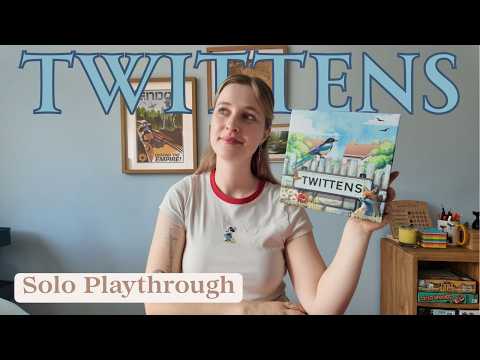
At its core, Twittens is a tile placement game where players build little neighborhoods piece by piece. Each turn, players choose tiles from a visible market (two face-up piles plus the option to draw from the top of the deck) and place them into their personal twitten, an ever-growing grid of alleyways and houses. The designer, Paul Stapleton, pairs this mechanism with a clever hand-limit system: players may accumulate only seven houses in their twitten before they must "go home for tea" and end their turn. Special building tiles called substations raise this limit to eight. This creates tension because players must constantly evaluate risk. Drawing new tiles can force them over the limit, costing them points for houses entirely. As Crimsonboardgames notes during gameplay, "it's a push your luck element where we can only have seven houses in our twitten. Once we've reached seven houses, if we go over that, so if we draw two tiles and they both have a house and we're already at seven, meaning that would make it eight houses, then you bust."
Seasonal Objectives and Bimble Cards
Twittens layers tile placement with an objective system using cards called bimbles, a charming touch that plays on the game's subtitle (a bimble is an old English word for a purposeless wander). During solo play, players draw bimble cards that define specific scoring goals: perhaps needing six tiles with no scrubland, or requiring three houses each adjacent to different features (tree, pond, scrub). Scoring these objectives nets bonus points; failing to complete them by game end costs points equal to their value. Schools allow players to draw additional bimble cards and choose one. The campaign structure spans all four seasons, with increasingly difficult monthly targets (35 points in March, progressing to higher thresholds in subsequent months), creating a long-form narrative arc across the solo experience.
The Twittens Experience
Cozy Aesthetic, Tense Puzzle
Reviewers consistently describe a jarring contrast: the game looks soft and inviting but plays tense and demanding. The art by Tristan Rosen depicts quaint English suburbs with houses, trees, and friendly animals. The thematic language of "twittens" and "bimbles" adds charm. Yet gameplay forces constant trade-offs that make players anxious. Sir Thecos articulates this explicitly: "This looks like a very, very cozy game, but boy is it thinky. Really, really thinky. Despite its charming and cozy vibe into a very thinky puzzle full of tension to keep all your decisions interesting." The push-your-luck house limit means drawing tiles is never simple, and the multiple scoring pathways create genuine strategic puzzles with no obvious right answer.
Push-Your-Luck Decision-Making
The seven-house limit is the core tension generator. Reviewers emphasize how this single rule transforms the whole game. Players must decide each turn whether to play safely (taking known tiles) or gamble (drawing new tiles and hoping they do not exceed the house cap). This decision repeats throughout the game, keeping pressure steady. When players bust, they lose all house-scoring points, which can devastate a turn. Crimsonboardgames describes being nervous about drawing: "It's a gamble, right? It's a gamble because it could just have two houses. Both of them could have two houses and then we'd be at seven, which doesn't mean we have to stop, but it makes it scarier, of course."
What Makes Twittens Stand Out
The "Go Home for Tea" Mechanic and Solo Campaign
Twittens differs fundamentally from most tile-laying games by anchoring solo play to a multi-month campaign structure. Rather than playing a single round, players complete three months per season across four seasons, playing 12 short games in one sitting if they commit to the full year. The "go home for tea" stopping point (when the player exceeds the house limit or cannot place a tile) creates narrative momentum: players stop voluntarily or are forced out, and the Wanderer opponent also "goes home," naturally ending the month. This seasonal structure gives the solo mode identity separate from multiplayer, offering a progression system that rewards replay and mastery. Sir Thecos notes it as a distinctive feature that justifies the solo investment.
Animals and Dynamic Draw Options
The solo mode includes three animals (bird, fox, and newt/lizard) that offer special abilities exclusive to the campaign: the bird allows drawing four tiles and choosing one (versus the standard two), the fox lets players redraw after placing tiles on the discard piles, and the lizard helps with struggling bimble cards. These creatures reset at the end of each month, adding a resource-management layer atop tile placement. Reviewers appreciate how the animals create "a bit more of like a reset," making desperate situations recoverable and giving agency when options feel thin.
Potential Drawbacks
Difficulty Balancing Multiple Scoring Paths
The game's strength is also its challenge: too many scoring options creates decision paralysis and tension. Reviewers note that scoring requires attention to houses, trees, street lights, roads, railways, playgrounds, allotments, schools, and bimble objectives simultaneously. Crimsonboardgames explicitly calls this out: "it's just difficult to do everything. But you're trying to obviously pay attention to the houses, to your bimbo cards, and it's just difficult to do everything." Misallocating space or luck can result in surprisingly low scores, as Crimsonboardgames discovered when finishing with only 21 points in a month targeting 35, describing it as "horrendous." Players must decide which scoring paths matter and accept that maximizing all of them is nearly impossible.
Solo Mode Differs Significantly from Multiplayer
Reviewers observe that the solo campaign, while excellent, plays differently from multiplayer. The Wanderer does not score and simply simulates another player taking tiles; the real challenge comes from monthly point targets and bimble cards. Multiplayer play involves direct player-versus-player competition and different end-round triggering. Players interested in both solo and multiplayer experiences are essentially playing two different games under the same skin, each requiring separate rule mastery. This distinction means the solo campaign may not fully prepare players for the social multiplayer experience or vice versa.
If You Enjoy Twittens
Players who love Twittens should explore Cascadia and Sea Salt & Paper, both of which share the tile-placement foundation and thoughtful puzzle feel. Sir Thecos compares Twittens directly to Cascadia, noting Twittens "is clever, charming, easy to enjoy, and much more thoughtful than it may look at first glance" while acknowledging Cascadia reaches greater heights. Sea Salt & Paper shares similar drawing mechanics and a cozy aesthetic, with players selecting tiles strategically from limited market options. Both games offer approachable entry points for newer players while rewarding strategic depth, much like Twittens does.
What Reviewers Are Saying
"This looks like a very, very cozy game, but boy is it thinky. Really, really thinky. So, looking forward to showing you that. Despite its charming and cozy vibe into a very thinky puzzle full of tension to keep all your decisions interesting."
— Sir Thecos
"I absolutely love this game. I think it's so great. I love the tile placement. There's so many different scoring options. But you're trying to obviously pay attention to the houses, to your bimbo cards, and it's just difficult to do everything. But it is very fun and I really enjoy the artwork, the way it plays. I think it's a wonderful, wonderful game."
— Crimsonboardgames
"I think this will stay in my collection for quite a while. Because I like the game that much, I have decided to awarded my silver surfers ace of games award. This is a really lovely Thailand game. I like how it turns this really gentle idea of like wandering through little neighborhood path into an actual puzzle with different seasons changing goals and it is clever, charming, easy to enjoy, and much more thoughtful than it may look at first glance."
— Sir Thecos