

Typewriter Deep Dive
What the Community Thinks About Typewriter
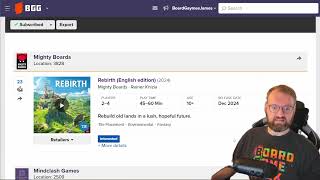
Early coverage of Typewriter places it in the same family as Paperback and Hardback, the word-game line that Tabletop Tokki identifies as its lineage. The reviewers so far are mostly giving first impressions, and they have not settled on where the game ranks within that family. The clearest praise is directed at the physical production. Tabletop Tokki described the components as a genuine highlight during its unboxing, and Board Gaymes James, previewing new releases ahead of Packs Unplugged, chose the game because its chunky pieces looked so appealing. Gameplay judgment is more tentative. In an August roundup of new releases, Tabletop Tokki said Typewriter played very similarly to its predecessors, with plenty of back and forth as players build words, score them, buy new tiles, and use abilities, but the reviewer still preferred Hardback as a game. Typewriter has strong tactile appeal and a recognizable design, but it has not yet unseated Hardback for the reviewers who know the line best.
Core Mechanics That Define Typewriter
Word Building With Flipping Keys
Each turn revolves around spelling a word with the letter keys in front of you. Reviewers emphasized that the word itself is only part of the decision. Once a word is spelled, its keys flip over and reveal new letters and new functions, so a player has to think about what those keys will become before committing. In the unboxing on Tabletop Tokki, the reviewer summarized the core tension as planning ahead, because every key used in a word will flip. The result is a word game where the puzzle changes as you play. Players start with a shared set of four starting keys, whose two sides carry different effects, and they gradually add more keys to their collection. Reviewers noted that these keys are not always used in the same way, which gives each new key a different role in later turns.
The Meter and Key Abilities
The second core system is the player board, which functions as a meter. Tabletop Tokki described the flow as spelling a word, filling the meter, spending the meter, flipping a word, and gaining a key, with bonuses unlocked at certain meter thresholds. Keys carry different abilities: some add to the meter or let you take other actions, some are marked as point keys with distinctive bands, and some black keys can become wild. Tabletop Tokki compared this to Hardback at the table, noting that the red keys that feed the meter felt very familiar. The design rewards players who understand which abilities they can recharge or trigger, and it links word construction to resource management.
The Typewriter Experience
Tactile, Chunky Play
Typewriter feels deliberately physical. Tabletop Tokki built a sizable part of its unboxing around the keys, handling the starting keys, sorting the letter keys into bags, and commenting on their weight and finish. The reviewer described the keys as cute and questioned whether they were acrylic or a plastic. Board Gaymes James described the components as very chunky and visually striking. This combination of heft and presentation shapes the experience. Players are constantly picking up, flipping, and rearranging keys, so the game is as much about handling tiles as it is about reading words.
Back and Forth Word Pressure
Reviewers describe a steady sense of tension rather than a slow build. In the August roundup, Tabletop Tokki said the game had quite a bit of back and forth, with each player's choices affecting how they can respond on later turns. Because spelling flips the keys that were used, a word that was ideal for one turn can leave a player with a less useful set of keys afterward. The feeling is one of deliberate, competitive word crafting, where a good turn sets up the next one. Reviewers who enjoy word games in general find this structure engaging because the decisions are visible and the consequences arrive quickly.
What Makes Typewriter Stand Out
Component Quality
The most consistent praise concerns the components. Tabletop Tokki said the components were genuinely appealing and singled them out even while holding back on a verdict about the game. Board Gaymes James chose to feature the game in a preview largely because the pieces looked so impressive. Typewriter's keys, shaped like typewriter keys and printed with letters, give the game a distinctive identity that reviewers find memorable on sight.
A Familiar Lineage in the Word Game Line
Typewriter is consistently described as part of the same line as Paperback and Hardback. Tabletop Tokki said it liked Paperback and loved Hardback, and it immediately recognized the Hardback-style meter and ability keys when unboxing Typewriter. For players who already enjoy that line, the lineage gives Typewriter an approachable starting point. Reviewers describe its word-building and turnover mechanics as recognizable, so the learning curve feels smaller for anyone who has played the earlier games.
Potential Drawbacks
Loses the Direct Comparison With Hardback
The most direct criticism is that Typewriter has not overtaken Hardback for the reviewer most familiar with both. In the August roundup, Tabletop Tokki said it preferred Hardback as a game, even after acknowledging that far more plays of Hardback than Typewriter could be skewing that preference. For a design built on the same word-building and key-flipping ideas as its sibling, losing that direct comparison is a real mark against it, not just an artifact of newness. Players who already own and enjoy Hardback should weigh whether Typewriter's component upgrade is enough to justify picking it up alongside, rather than instead of, the earlier game.
Setup and Sorting Takes Effort
The unboxing on Tabletop Tokki showed that Typewriter involves a considerable amount of sorting before play. The reviewer separated starting keys from the rest, moved the 75 letter keys into a shop bag, and sorted points, meter keys, and wild keys into separate groupings. The reviewer also noted that some bags were close in size but not identical, which made organizing the components more fiddly than expected. Players who prefer a quick, low-effort setup may find the initial organization time noticeable, though it is also the kind of work that a dedicated storage routine can reduce.
If You Enjoy Typewriter
Reviewers consistently place Typewriter alongside its own lineage. Tabletop Tokki reaches for Hardback as the clearest companion. The channel described it as a favorite and noted that its meter and ability keys share a similar structure with Typewriter, so players who enjoy the meter-driven flow of Typewriter will likely find Hardback familiar. Paperback is the other title in the line that Tabletop Tokki mentioned with clear affection. It offers the same word-building foundation, which makes it a natural next step for players who want to explore the series in its original form. Together, these two titles help define the feel of the line: a tactile word game where spelling a word also changes the tools you will use next.
What Reviewers Are Saying
"This is reminding me quite a bit of Hardback so far. We have these ones that add to your meter or let you do other things."
— Tabletop Tokki
"While I did like the components themselves, I think I prefer Hardback as a game, but I've played it a lot more than Typewriter. So, we'll see how that plays out in subsequent plays."
— Tabletop Tokki
"This has a lot of really cool chunky components, and so I just want to look at it because the components look so freaking cool."
— Board Gaymes James