





Undaunted: Reinforcements Deep Dive
What the Community Thinks About Undaunted: Reinforcements
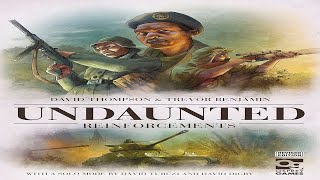
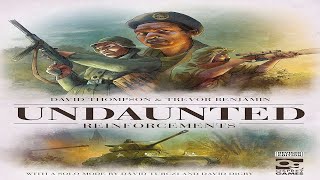
Undaunted: Reinforcements arrives as a thoughtful companion to either Undaunted: Normandy or Undaunted: North Africa, transforming what was a two-player competitive experience into a solo wargaming experience that has earned genuine respect from the tabletop community. Reviewers recognize this expansion as solving a problem many faced with the base games: the desire to replay scenarios and experiment with strategy without needing a human opponent. Most regard the solo system as an impressive feat of design, though opinions diverge on whether the dice-driven combat mechanics serve the overall experience. Those drawn to wargaming for narrative and emergent story find deep satisfaction here. Those frustrated by randomness acknowledge the expansion does nothing to resolve the core mechanical frustration, though it remains the cleanest way to experience the game alone. Across all perspectives, there is consensus that the solo bot system itself is exceptionally well implemented, and that the expansion's design shows the influence of community feedback refined into polished mechanics.
Core Mechanics That Define Undaunted: Reinforcements
Solo Bot System and Automated Opponent
The expansion introduces an ingenious automata system, designed by David Turczi, that runs an opponent without human control. Rather than applying complex AI flowcharts, the system uses straightforward card activation logic: each enemy unit has a card that specifies decision trees based on the board state. The bot draws its own deck and decides actions based on simple conditions printed on each unit card. If a scout sees unscouted terrain, it reconnoiters and moves. If an engineer stands on an objective structure, it attempts demolition. The system is transparent enough that players can see exactly how the enemy will behave, yet the randomization of deck draws and die rolls keeps each scenario unpredictable. This design elegance means players engage with authentic tactical decisions without waiting for an automated system to process dozens of conditions. Players effectively play both sides in terms of mechanics, but only plan and execute strategy for one, making solo play feel like a genuine skirmish rather than a puzzle with a correct solution.
New Units and Expanded Theater Mechanics
Undaunted: Reinforcements adds distinct units that reshape tactical possibility, particularly in the North Africa theater. Vehicles like medium tanks occupy board space with crew and driver slots, creating puzzle-like configuration choices. A driver moves and attacks from within armor, a crew member can repair damage, and soldiers ride along providing firepower. This layered approach to unit composition forces richer decision-making than the base game's straightforward squads. Mines create defensive anchors that punish aggressive movement. Assault aircraft deliver strikes from off-board, adding asymmetry between scenarios. The sniper unit, in particular, has earned comment from multiple players as unusually potent, capable of eliminating specialists who are irreplaceable for certain objectives. These mechanics do not radically change how Undaunted plays, but they expand the toolkit in ways that encourage different tactical approaches across multiple replays.
The Undaunted: Reinforcements Experience
Narrative Emergence and Tactical Storytelling
Reviewers consistently emphasize the narrative texture that good tactical games generate. Each scenario becomes a story: a scout gets pinned down by sniper fire, forcing a difficult choice about whether to risk moving the unit or leaving it trapped. A tank takes fire from an anti-tank gun and the player must decide whether to repair it or press forward. These choices cascade into emergent narratives that feel grounded in the historical setting and unit roles. The solo bot makes no cinematic decisions, but its logical actions create genuine tension because its deck draws and die rolls cannot be predicted. The result is a game that rewards rereading after failure, examining where small decisions might have changed the outcome. Players report replaying scenarios multiple times and experiencing different stories each time, the narrative shaped by both their choices and the bot's chance rolls.
Satisfying Puzzle-Like Mastery
Mastering Undaunted: Reinforcements requires learning scenario layouts, unit capabilities, and bot behavior. The first time through, teaching the rules takes roughly fifteen minutes of play. By the end of a scenario, the mechanical rhythms become clear. Subsequent playthroughs become exercises in optimization and strategic depth. Players experiment with different approaches to the same scenario, testing whether an aggressive push works better than a patient defensive stance. This iterative refinement creates the satisfaction of solved puzzles alongside the unpredictability of cards and dice. The base game's deck-building elements, acquiring new unit cards as the scenario progresses, mean no two playthroughs follow identical resource curves, preserving freshness even as mastery deepens.
What Makes Undaunted: Reinforcements Stand Out
Comprehensive Solo Integration Across Two Games
This expansion does something unusual: it provides working solo variants for every scenario in both Undaunted: Normandy and Undaunted: North Africa. That scope alone distinguishes it from typical solo expansions, which often add a single mode. A single box unlocks solo play across two complete games' worth of content. The expansion also functions as a storage solution, with the box designed to hold components from both base games. This dual function matters practically: players are not accumulating expansion boxes that occupy shelf space, but consolidating a collection while unlocking new play modes. The scenarios themselves receive new variants and unit compositions, extending gameplay variety beyond what the base games alone offer.
Clean Accessibility for Wargaming Newcomers
Multiple reviewers identify Undaunted as their introduction to wargaming for new players, and the solo expansion preserves this strength. A scenario teaches in under thirty minutes from setup to understanding mechanics. Play time for a scenario runs roughly one hour. The rules are logical and consistent without requiring reference to subsections or special cases. The design scales gracefully: complex decisions are present, but they emerge naturally from positioning and unit capabilities rather than from baroque rules interactions. This accessibility matters because it opens wargaming to audiences who might find heavier simulation-style systems forbidding. Solo play removes the social requirement of finding an opponent willing to engage in tactical depth, lowering the barrier further.
Potential Drawbacks
Unresolved Dice and Deck Randomness
The expansion does not alter the base game's reliance on dice rolls and card draws for success and failure. A poor roll in a critical moment means a miss. If the deck fails to provide a needed specialist, that specialist cannot simply be recovered. One reviewer articulated this frustration directly: the entire playthrough can feel determined by chance, leaving strategy feeling illusory. The sniper unit, in particular, can roll favorably against all of a player's defense values and eliminate key personnel almost by chance. This is not a flaw unique to the solo expansion; it is inherent to how Undaunted resolves combat. But it is worth noting that if dice-driven resolution frustrates a player in two-player games, the solo variant will not resolve that frustration, since the automated opponent also relies on dice, and the feeling of loss to randomness remains intact.
Requires Ownership of a Base Game
Undaunted: Reinforcements is explicitly a modular expansion that requires either Undaunted: Normandy or Undaunted: North Africa to play. The box does not teach either base ruleset from scratch; players must own and understand at least one base game. For players interested in the solo modes but without a base game, the entry cost is the base game plus the expansion. Some reviewers note that while the expansion unlocks solo play for scenarios in both base games, fully experiencing all content means potentially acquiring both Normandy and North Africa. This is not a design flaw but a practical consideration: the solo modes are add-ons, not standalone experiences, which may affect how accessible the product feels to curious newcomers.
If You Enjoy Undaunted: Reinforcements
Start with Undaunted: Normandy or Undaunted: North Africa, which are the foundation this expansion builds on. Players who prefer the World War II Western European theater will find Normandy the standard entry point, while those who want varied unit compositions and new mechanics like vehicles will find North Africa paired with this expansion the richer experience. For players drawn to other tactical wargames with strong solo modes, consider Mage Knight, Mythic Battles: Pantheon Ragnarok, or Memoir 44. The Imperium series also features notable solo design. Players who want tactical depth without Undaunted's card-deck randomness may find Mage Knight offers a heavier puzzle with more direct player agency.
What Reviewers Are Saying
"It turns every single mission from the two core games, and on a Normandy and undone in North Africa, and you can play every single one of those missions plus the new missions that come in this box as a solo experience, David Turczi's solo game with the AI and all that stuff."
— Board Games UnLocked
"A system that is way better than it really has any right to be. This is not how Undaunted was designed, with this solo mode in mind, and having it work this well and this interesting, and making it so that you could play Undaunted feasibly entirely solo. This is just beautiful."
— The Cardboard Herald
"I use this for people who haven't played war games before. Thing I really like about it is you can teach it in a half an hour, play it in an hour. People have had a great experience, and within 10 to 15 minutes once you get the game going, people know what they're doing."
— Zilla Blitz