/pic4717882.jpg)
/pic5561163.jpg)
/pic4717882.jpg)


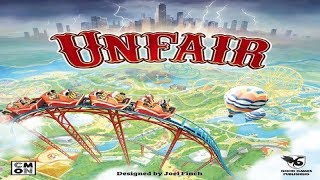
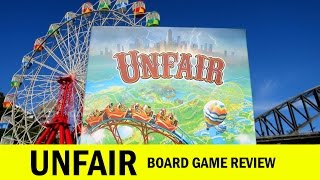











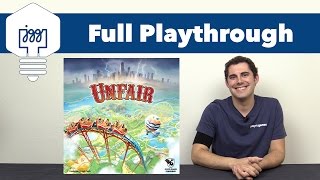







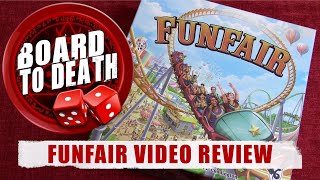




Unfair Deep Dive
What the Community Thinks About Unfair
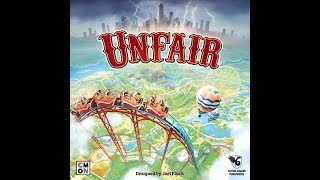
Reviewers consistently praise Unfair as a standout park-building game with devilish charm. Channels like Getting Games and Tabletop Turtle highlight how it balances construction and chaos, letting players build intricate amusement parks while disrupting opponents' grand plans. What makes Unfair special is not just the heavy take-that element, but that it stays genuinely fun even when players are ruthlessly sabotaging each other. The mean cards and disruptive events feel thematically appropriate for competing theme parks in the same market, and victims retain meaningful agency even while under attack.
Core Mechanics That Define Unfair
Tableau Building With Modular Themes
Players construct their own amusement park by placing attraction and upgrade cards in front of them, building collections of rides, restaurants, and staff that generate income and points. What sets Unfair apart is its modular theme system: each game shuffles together two or three themed decks, so a pirate park might merge with robots to create something unique. Players hunt for synergistic cards, pairing themed upgrades with their main attractions to unlock bonus effects. By the end of the game, each park is a hybrid reflecting the specific card pool available, ensuring no two games play identically despite the shared structure.
Event Cards and Calculated Disruption
Throughout the game, players draw and play event cards with two options: the top half typically benefits the player, while the bottom half damages an opponent's park. This design means players always choose between accelerating their own engine and throwing a wrench into a rival's plans. The insidious part is that some events force you to hurt someone, while others offer counter-cards that savvy players hold to block incoming attacks. That gives victims agency, since getting sabotaged feels less unfair once you realize you should have saved that defensive card rather than spending it earlier.
The Unfair Experience
Building a Park While Getting Backstabbed
The emotional core of Unfair is watching your carefully planned park crumble mid-game and then scrambling to rebuild around whatever remains. Early turns feel triumphant as players lay down core attractions and chain upgrades, and then a rival plays an inspection card and shuts down your best ride, dropping your income. The twist is that Unfair makes rebuilding possible: you can still score by completing alternate objectives or pivoting to a new attraction type. The game constantly asks whether to keep chasing your original vision or adapt to what the market now offers, and that tension is what keeps the sabotage from feeling cheap.
Parsing Which Cards Are Worth Your Scorn
A crucial skill in Unfair is reading opponents' boards to decide which card to destroy. If a player has a vampire ride with three vampire upgrades, blocking that engine hits hard. Experienced players learn to spot the secret goal cards each player holds and target the cards that satisfy those goals instead. This detective work transforms the game from mindless spite into strategic disruption. Knowing that an opponent is one card away from a huge bonus makes targeting them far more rewarding than hitting someone who is merely earning steady cash.
What Makes Unfair Stand Out
Every Game Looks and Plays Differently
Because the themed deck combinations shuffle into a new mix each game, Unfair avoids the staleness some card-driven games develop. One session might feature dinosaurs and casinos, another vampires and ninjas, and the specific upgrade pools vary wildly. A power strategy in one game becomes unplayable in another, forcing players to adapt. Reviewers found themselves returning not just for the mean interactions but because the underlying puzzle shifts with every deck combination, demanding fresh decisions and new combos to explore.
Genuinely Funny Moments Emerge From the Chaos
Players describe Unfair as frequently hilarious. When a massive coaster gets shut down for safety violations right before scoring, when a trap backfires because someone held a counter you did not expect, or when the market deals everyone terrible options and every park looks ridiculous, the moments feel earned and memorable. Reviewers stress that Unfair works because the art is cheerful, the mechanics reward clever play rather than pure spite, and the theme of competing parks justifies the conflict. Nobody feels personally attacked, because they are sabotaging fictional theme parks, not each other.
Potential Drawbacks
The Mean Cards Can Feel Overwhelming Without House Rules
Some reviewers note that Unfair includes genuinely brutal sabotage options that can wipe out a player's engine in one turn with little recourse. Without house rules to soften the harshest attacks, experienced players can lock down newcomers and run away with the game. Several reviewers mentioned a simple fix: excluding the meanest cards from the deck. That single change preserves the take-that spirit while preventing unfun kingmaking, and the game even offers it as an optional rule that some reviewers adopted as their preferred way to play.
Hand Management and Card Complexity
The dual-option cards, the need to hold defensive counters, and the choice between chasing synergies or grabbing cash all add cognitive load. Newer players sometimes freeze during their first turns, unsure whether to build now or hold cards for blocking. Reviewers reported the game hits a sweet spot around the third play, with enough experience to make quick decisions but still plenty of novel situations. Players who embraced the chaos found Unfair approachable, while those seeking puzzle perfection sometimes felt the randomness undercut their plans.
If You Enjoy Unfair
If Unfair resonates with you, explore Imperial Settlers, which offers similar tableau construction and interaction with a gentler edge, since you usually raze buildings to benefit yourself rather than purely to spite opponents. Seasons combines card drafting, tableau building, and spiteful plays in a compact package with striking components. And Evolution draws its conflict naturally from creatures competing for food and turning into predators to hunt one another, so the meanness feels organic to its survival mechanics rather than bolted on.
What Reviewers Are Saying
"Unfair plays perfectly at two players, just as well as three or four. You're building up these intricate amusement parks with all these different themes, like ninjas and dinosaurs and cowboys and gangsters, and in each game you use two or three and mush them together to make a really cool hybrid theme park."
— Allies or Enemies
"This is a take-that game where you're doing things to your opponent's park to try to stop them from winning, and it's fun. It's unfair because it's unfair. You can really take out your opponent, you can mess up the park, and I love that."
— Our Family Plays Games
"A lot of the event cards have a counter. So if Kim destroys one of my things but I had the counter card a turn or two ago and used it for something else, I feel like part of my ride being destroyed is kind of my fault as well, because I should have held on to that counter."
— Tabletop Turtle