
















Vampire Survivors Deep Dive
What the Community Thinks About Vampire Survivors
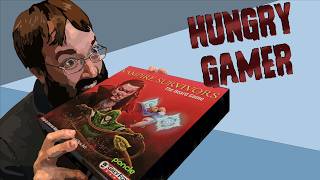
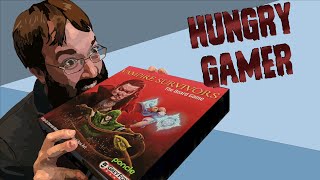
Coverage of Vampire Survivors comes from three very different angles: a first-impressions video recorded after a hands-on demo, a skeptical convention preview, and a ranked most-anticipated list. The starting premise is the same across all of them: Gray Fox Games is adapting the bullet-hell video game Vampire Survivors into a tabletop co-op where players fend off waves of monsters using a hand of multi-use cards, and the project is described as crushing it on crowdfunding, something like 2,000% funded. Hungry Gamer came away enthusiastic after being taught the game by Lance, a Gray Fox Games representative, over roughly fifteen minutes before playing it through to the end. Because Lance works for the publisher rather than for the channel, the opinions that follow belong to Hungry Gamer's own reaction to that guided session, not to Lance. BoardGameCo took the opposite stance, voicing open hesitation: the pixel-art presentation won them over, but they questioned whether a video game built around reflexes and screen-filling chaos could survive translation into cards and a board. Rahdo Runs Through landed closer to Hungry Gamer, slotting the game into a top-ten anticipated list and calling its shifting-objective structure sounds really, really cool.
Core Mechanics That Define Vampire Survivors
A Hand of Multi-Use Cards
Hungry Gamer describes each turn as working through a hand of cards that move the character, deal damage in fixed patterns, or both. Patterns cannot be rotated or turned, though characters can be upgraded to mirror a pattern instead. Every turn resets the hand to four new cards regardless of what is left over, and there is no hand limit, so a card picked up mid-turn can be played immediately. Rahdo Runs Through describes the same flexibility from the cooperative side: cards can be played for their printed move or power, or discarded simply to move, and a player can spend a card on someone else's turn to help them, at the cost of having fewer cards available on their own turn.
Waves, Objectives, and the Grim Reaper
Between turns, enemies marked with a boot symbol advance diagonally toward the nearest player while others attack at range, and a new wave spawns in from all four sides of the board, pushing the fight inward. Defeated monsters drop crystals or coins that buy new cards at the end of the round, and those purchases go straight into the player's hand. Rahdo Runs Through notes that the objective itself keeps changing: as soon as one goal is completed, a new one takes its place, constantly forcing the group to pivot. Hungry Gamer adds that survival continues until the Grim Reaper appears as a final boss players are expected to lose to, with an outright win treated as a rare, celebrated upset.
The Vampire Survivors Experience
Building Pressure Round by Round
Hungry Gamer describes a game that ratchets up from the third turn onward, moving from manageable skirmishes to moments that feel unwinnable just before the group claws its way back out. That tension sits alongside real randomness: there is no card mitigation or redraw, so a hand without a single move card can leave a player stuck doing nothing on their turn. Hungry Gamer frames this as part of the appeal, but warns that anyone averse to randomness and luck will eventually find it frustrating.
A Run You Replay to Unlock More
Hungry Gamer and Rahdo Runs Through both single out the structure that carries over between playthroughs: finishing a session, win or lose, unlocks new cards and characters for the next attempt, so the available toolkit keeps growing. Hungry Gamer likens the feeling directly to the climbing-and-unlocking loop of a video game roguelike, where a run that falls short still leaves the next attempt a little more equipped. The trade-off, raised by Hungry Gamer, is that the core loop stays the same game played over and over, which only works if that kind of replay is the appeal rather than a drawback.
What Makes Vampire Survivors Stand Out
Acrylic Standees With a Hidden Side
Hungry Gamer calls out the character standees specifically: made of acrylic, they let players see the back of a character's artwork for the first time, something fans of the video game have never had before, even though the back has no effect on play. The pixel-art presentation draws a second kind of praise from BoardGameCo, who said the adaptation is managing to capture that pixelated look from the source video game and named it as one of the reasons they remain interested despite other doubts.
Objectives and Instant Cards That Keep Players Engaged
Rahdo Runs Through highlights the shifting list of objectives as the most interesting wrinkle, since completing one immediately swaps in another and keeps the group reacting rather than running a fixed script. Hungry Gamer separately praises the instant cards that can be played on another player's turn, calling the interaction clever and saying it works really well within the game's structure.
Potential Drawbacks
An Unproven Translation
BoardGameCo's hesitation centers on the gap between the source material and the finished product: a bullet-hell video game depends on fast reflexes and constant on-screen chaos, and BoardGameCo could not see how a card-based board game would reproduce that feeling. They credit the designer's other board game work for their confidence, but say outright they will not know whether the gameplay delivers until they can actually play it.
Repetition and Randomness That Won't Suit Everyone
Hungry Gamer flags the pixel-art look as a dividing line, since some players are firmly anti-pixel-art no matter how well it is executed. The bigger concern, by their own account, is that progress depends on replaying the same game repeatedly to unlock new content, with no real narrative underneath it, so players who need a story or dislike that kind of loop may not take to it. The lack of any way to mitigate a bad draw compounds that risk, and Hungry Gamer suggests that puzzle-minded players prone to overthinking a turn could also find themselves stalling out.
If You Enjoy Vampire Survivors
Reviewers reached for existing touchstones to describe the feel. Hungry Gamer and Rahdo Runs Through both landed on the same comparison independently: Hungry Gamer's healing pickup reminded them of the floor chicken from Gauntlet, while Rahdo Runs Through called the wave-survival structure itself a modern version of Gauntlet in its original video game form. Hungry Gamer separately compared the run-to-run unlock structure to Slay the Spire, where every attempt, successful or not, leaves the next one a little more equipped.
What Reviewers Are Saying
"And I really love that there's no hand limit. You can hold on to one card until you know it's the right time to use it. Just the way to go. And because of that, it creates for a ton of fun combos."
— Hungry Gamer
"I like the art they're managing to capture that pixelated look, but the gameplay, I don't see how they could possibly capture the gameplay of the video game. So the real question becomes what gameplay are they able to capture?"
— Alex Radical, BoardGameCo
"What I'm trying to do is not just kill everything. List of objectives. As soon as we complete an objective, a new one comes out."
— Rahdo Runs Through