












Warhammer Underworlds: Beastgrave Deep Dive
What the Community Thinks About Warhammer Underworlds: Beastgrave
Reviewers tend to discuss Warhammer Underworlds: Beastgrave as a continuation of a line they already know. Rolling Dice & Taking Names places the expansion alongside Shade Spire, the earlier release, and walks through what has changed, including two new factions, lethal hexes that players can add during setup, and a reworked objective structure. Drive Thru Games presents Underworlds as the more accessible alternative to a two-player-only hex-based game, pairing miniature combat with two decks that players build beforehand. Tabletop Minions describes the series as a natural step for players coming from collectible card games, which fits its deck-driven structure. Most of the praise centers on quick play and approachability, while the criticism focuses on assembly time, rules changes, and the flat feel of hex boards without 3D terrain.
Core Mechanics That Define Warhammer Underworlds: Beastgrave
Dice
Combat is resolved by rolling dice to attack or defend, and reviewers note that this introduces real randomness into each exchange. Paula Deming points out that the game is short enough that a run of poor rolls does not decide the whole match. Because the game is decided over three rounds, a player who rolls badly still has time to score objectives and recover. Reviewers who dislike luck-heavy games tend to flag this as the element to weigh before buying in.
Modular Board
The play area is built from hex tiles that players lay out before each game. Rolling Dice & Taking Names describes how Beastgrave changes this step: at the end of setup each player can add a lethal hex to the board, which reshapes the layout and the way movement and objectives play out. The same discussion notes that the starter format uses a single board, which removes the choice of which board and which side to use. Reviewers treat the board as part of the game's identity, since the hex layout sets up each game differently.
The Warhammer Underworlds: Beastgrave Experience
Quick, Low-Pressure Tactics
Reviewers consistently describe the pace as brisk. Paula Deming contrasts Underworlds with larger Games Workshop systems and says the mental load is light, which makes it easy to play after a long day. Each player activates a small warband, plays cards to act or trigger powers, and works toward a deck of objectives. The result is a session that feels tactical without demanding a large commitment of time or attention.
A Card Game With Miniatures
Several reviewers say the game feels closer to a card game than a traditional miniatures game. Rolling Dice & Taking Names notes that the keyword system has been moved onto the cards, so players can read what a unit does without consulting the rulebook. Tabletop Minions makes a similar point by framing the series as a bridge from card games. Players who enjoy deck construction and timing decisions tend to find this the most appealing part of the experience.
What Makes Warhammer Underworlds: Beastgrave Stand Out
Approachable Entry Points
The Dread Fane introductory set is the clearest example of the series' accessibility. Rolling Dice & Taking Names describes it as a Barnes & Noble exclusive with no deck building, no neutral cards for tweaking decks, a single board, and trimmed rules. Reviewers see this as a low-cost way to learn the system before committing to a full expansion. The introduction also works for new players who would otherwise have to buy a large collection to catch up.
Hybrid and Dual Objectives
Beastgrave adds two objective types that change scoring. Hybrid objectives can be completed by meeting either of two conditions, which makes them easier to score. Dual objectives require two conditions but award substantially more glory points. Reviewers see this as a useful tension between safe and high-risk scoring, which gives each turn a clearer decision.
Potential Drawbacks
Assembly and Table Time
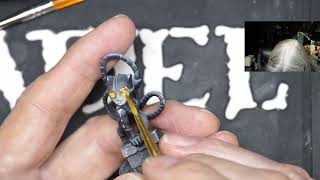
Because the miniatures need to be assembled, some reviewers note that the game can be harder to get onto the table on a given night. Snap-fit kits have made this easier, but the building step still adds time before the first game. Reviewers who enjoy painting and building generally accept this, while those who want to play on short notice see it as a real barrier.
Rules Changes and Card Phase-Outs
Rolling Dice & Taking Names raises a concern about tournament legality. The organizers plan to phase out the universal cards from older sets, so players who own them may find those cards unusable in competitive play. Reviewers acknowledge that this helps new players, who no longer need to buy the older product to be competitive. Existing players, however, are left with cards that may stop being legal, which makes the investment harder to justify.
If You Enjoy Warhammer Underworlds: Beastgrave
Reviewers most often compare Underworlds to other skirmish and miniatures games that reward tactical positioning. Paula Deming weighs it against Kill Team, Age of Sigmar, and Warhammer 40,000, and concludes that Underworlds is much simpler to learn and to play. Tabletop Minions places it alongside Zombicide, noting that both use miniatures on a grid rather than full 3D terrain. Drive Thru Games offers Underworlds as the alternative to a two-player-only hex game, pairing miniature combat with prebuilt decks. Players who like the card-driven structure of Shade Spire or the grid-based movement of these games are the audience reviewers most often recommend it to.
What Reviewers Are Saying
It's fast paced so if you end up with a bunch of bad dice you aren't stuck in a losing game for hours. It's way simpler than something like Kill Team or 40K or Age of Sigmar and I really like assembling and painting the minis and the mental load of the game really isn't too taxing.
— Paula Deming
There's no deck building in it so there's no neutral cards that you can use to tweak your deck, it just basically here's a deck for one person here's a deck for another.
— Rolling Dice & Taking Names
I used to see Warhammer underworlds as a pretty good Gateway game or Zombicide was also a pretty good one as well, both had minis but they also had hex's or grids and there was no 3D terrain and all that kind of stuff.
— Tabletop Minions