







Who Goes There? Deep Dive
What the Community Thinks About Who Goes There?
Reviewers tend to agree that Who Goes There? understands its source material. Cardboardrhino introduces the game as a tabletop adaptation of the sci-fi novel that inspired the movie The Thing, warning viewers that it might make them a bit paranoid. Board to Death TV goes further, arguing that the theme is beautifully captured and that the story takes shape through each scavenging trip, each drawn event, and each piece of equipment a player builds. That reviewer landed on a verdict of 7 out of 10, expecting the game to find an audience that enjoys its tension.
The praise is strongest for atmosphere and presentation, while the criticism centers on how well the hidden-identity design holds up once the table starts reasoning about who is infected. The Dice Tower, in a roundup of mid-ranked BoardGameGeek titles, says it really wanted to like the game and singles out its art and components. Board Game Coffee, which bought its copy on sale and had not played it at the time, guessed that it was a hidden traitor design in the spirit of The Thing. Taken together, the consensus is that Who Goes There? is a thematically strong cooperative game whose deduction is more fragile than its premise suggests.
Core Mechanics That Define Who Goes There?
Hidden Roles and the Infection Clicker
Every player starts as a human, and the central tension comes from the infection clicker that each player holds. When a character becomes vulnerable, they draw from the vulnerability deck and keep the card facedown, which Board to Death TV describes as a one in 12 chance of becoming infected. Infection then travels through contact. Players who share a location with a vulnerable character must share their clickers, and a card trade between a vulnerable player and a clean one forces the same exchange, though the receiver can roll an action die to avoid taking the clicker. Infected players act much like everyone else, but they can still attack others or launch an infection attack in the late game to muddy the table's understanding of who is carrying the infection. Dusty Crane of The Mill, who had not played the game, speculated about a hidden traitor structure based on how it was described.
The win conditions are tied directly to this hidden status. The round ends in a helicopter boarding, where players reveal their clickers as the door shuts. Humans must reach the required helicopter total with their survivors and bonuses, while an infected player aboard the helicopter can win if the humans fall short.
Trading, Building, and Stamina Dice
The cooperative survival loop depends on gathering and sharing. Players spend action cubes to move between the inside and outside, search for cards in their location or specialty decks, build items from their build menus, and trade with anyone who shares a location. Board to Death TV notes that items and stamina matter a great deal because the dice are 50/50, so equipment and food augment the odds on every red attack or blue setback event. Outside, the cold drains stamina each round, while inside the boiler room and the camp door carry their own strike tracks. Players can also feed a bonfire with discarded cards to restore stamina for everyone inside, which rewards the group for pooling resources rather than hoarding them. The result is a steady exchange of goods that the description frames as building, trading, and upgrading in preparation for what lies beyond the camp.
The Who Goes There? Experience
Paranoia Built Into Every Card Draw
Much of the dread in Who Goes There? comes from ordinary actions turning into suspicious ones. Board to Death TV says the sense of paranoia is captured extremely well by the vulnerable cards, which can quietly mark a player after a bad event, a cold night, or a poor trade. Because the infection mechanic is attached to routine actions such as sleeping, trading, and sharing a space, reviewers describe a table where every cooperative choice carries a possible cost. Cardboardrhino captures the same unease in its description of the game, which asks players to remain alert because someone may not be who they seem.
The Frozen Antarctic Camp
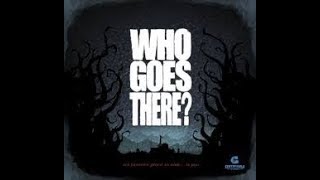
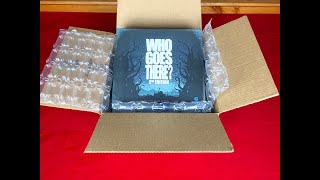
The Antarctic setting gives the game its physical and emotional pressure. Board to Death TV emphasizes that the cold is the thing's domain, so players who stay outside for too long lose stamina and risk strikes that can end a character. Reviewers praise the artistic style and graphic design, which the Board to Death reviewer says help cement the theme. The Dice Tower describes the components as phenomenal for an early Kickstarter, and the setting is reinforced by temperature drops that push the group back inside as the rounds advance. Cardboardrhino summarizes the goal as staying alive and staying human while a growing paranoia sets in, which captures the feeling of a camp slowly turning against itself.
What Makes Who Goes There? Stand Out
A Story That Emerges From Play
Reviewers consistently point to the way the narrative grows out of the actions players take rather than from a scripted sequence. Board to Death TV argues that the story evolves with every action, from what a player scavenges to which events are drawn and which equipment gets built. The Dice Tower's praise for the art and components reinforces that the game is designed as an immersive object, not just a rules set. For players who want a cooperative game where the theme lives in the decisions themselves, this is the central appeal.
A Finale That Turns on Trust
The final helicopter round is where the game's suspicion pays off. The leader decides who gets on board, and at least one human must make the trip, so the group may have to force players off the helicopter to protect its chances. Once the door shuts, the infection status is revealed, and the bonus dice and helicopter points decide the outcome. Once the boarding begins there is no turning back, which gives the ending a sharp, irreversible feel that rewards careful planning throughout the game.
Potential Drawbacks
Deduction Can Feel Like a Numbers Game
The most pointed criticism comes from Board to Death TV, which argues that the infected player behaves just like the humans and that there is no real way to signal the infection to the table. The reviewer also describes the deduction as a numbers game, where a player who draws more vulnerable cards becomes the suspect because of bad luck rather than poor play. The reviewer acknowledges that making the infection hard to identify is the point, as in the film, but suggests that the suspicion settles around misfortune more often than around deception. Players who prize bluffing and detailed reads on opponents may find this a limiting aspect of the design.
Density, Luck, and a Demanding Rulebook
The setup lays out 14 steps, seven action types, camp events, strike tracks, player assaults, and infection attacks, which makes the first few rounds feel dense. Board to Death TV also points out that the 50/50 dice introduce meaningful randomness, so a strong plan can still be undone by a poor roll during a critical event. Groups that enjoy heavy cooperative planning will likely accept the complexity, but players seeking a light, fast experience may find the setup and luck harder to justify.
If You Enjoy Who Goes There?
The Thing is the obvious touchstone. Reviewers repeatedly tie Who Goes There? to the novel and films that inspired it, and the core appeal of a camp where any ally might be the enemy comes directly from that source. Fans who enjoy the film's paranoia and the uncertainty of trust will recognize the same emotional territory, even though the game's deduction is more mechanical than the story it draws on.
The Endangered comes from the same studio, Certifiable Studios, according to The Dice Tower and Cardboardrhino. The Dice Tower describes it as the studio's big early release and notes that a second edition exists, though the reviewer found the original too hard and convoluted. Players who enjoy the studio's cooperative style and are willing to accept a demanding ruleset may find The Endangered worth exploring, particularly in its newer edition.
What Reviewers Are Saying
"I'm going to start off by saying that the theme and Who Goes There is beautifully captured, and the story evolves with every action you do, what you scavenge, what events are drawn and what equipment you build."
— Board to Death TV
"Who Goes There is a tabletop game based on the sci-fi novel that inspired the movie The Thing, and it might make you a bit paranoid."
— cardboardrhino
"Great art, amazing components. This was an early Kickstarter where the components were phenomenal."
— The Dice Tower