

Wilderness War Deep Dive
What the Community Thinks About Wilderness War
Reviewers approach Wilderness War as a game that carries a reputation before it reaches the table. The Brothers Murph put it on their list of games they are afraid to play, describing it as a folding map laid out across the table and a session that runs about three hours. Several of the presenters admit they have opened the box, started setting up the map, and packed everything away without learning a single rule. The hesitation is not dismissive. It comes from respect for a game that many of them plainly want to play.
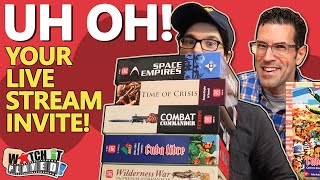
The praise is consistent when reviewers talk about the design itself. In the innovation panel hosted by Zilla Blitz, a participant describes Wilderness War as one of the first card-driven games they encountered and calls it, alongside Passive Glory, an amazing example of what the format can do. That sentiment carries through the rest of the discussion: the game is seen as a landmark that people return to, not a relic. Watch It Played approaches it with the same mix of curiosity and nerves, and the two hosts there treat it as a benchmark for how intimidating a serious wargame can feel to someone coming from heavier euro-style games.
Core Mechanics That Define Wilderness War
Card-Driven Play With a Single Deck
The Brothers Murph describe Wilderness War as a card-driven wargame played with a single deck. The Murph brothers emphasize the historical texture that this structure provides. Their event deck, as they explain it, is built from real events that happened during the conflict, so each card pulls the players into the period rather than handing them abstract tokens to move. One of the Murph brothers says they love "the kind of historical nature and using, you know, often these cards, their their event deck will be real events that happened and stuff." For reviewers who value narrative grounding in their wargames, that choice is the main reason the card system matters.
A Hand of Cards Fused to a Point-to-Point Map
The Zilla Blitz panel frames the design through the lineage of card-driven games. Their discussion treats the combination of a hand of cards with a point-to-point board as a real breakthrough, one that they describe as a synthesis rather than a simple add-on. The hand you hold is part of your strategy, and it sits on top of a map where movement follows the connections between locations. The panel also points out that later designers took this fusion further, which makes Wilderness War feel like an early and influential step in a line of development rather than an isolated curiosity.
The Wilderness War Experience
Being Left on Your Own
The most vivid feeling in the Brothers Murph video is the sense that Wilderness War will not hold your hand. Nick, describing the box, puts it bluntly: the game looks like one where you are on your own. That feeling is part of its appeal for players who want a serious challenge, and it is also the source of the hesitation. The rules, the map, and the length of the session are all presented as things a player has to commit to on their own terms. Reviewers who enjoy this sort of challenge see the lack of hand-holding as a sign that the designers trusted players to engage with the material.
Equal Parts Intrigue and Intimidation
Watch It Played captures the emotional tension in a single line from Rodney Smith, who says that when they look at the back of a war game box they are "equal parts intrigued but also intimidated." They describe the experience as making them feel like a new gamer again, one who has to have deck building and drafting explained from the beginning. Matthew Jude shares the reaction when Wilderness War comes up, and the pair decide that learning these games together, live and on camera, is the best way to get past the nerves. The feeling is curiosity that never quite stops being tinged with unease, and that combination seems to be what keeps these reviewers coming back to the genre.
What Makes Wilderness War Stand Out
A Historical Conflict Rarely Covered at the Table
The Brothers Murph describe Wilderness War as a game about the French and Indian War, the fight between France and Britain over North America before the founding of the United States. That setting is a clear point of distinction. Reviewers mostly discuss wargames built around the familiar conflicts of the twentieth century, so a game that re-creates a North American colonial struggle stands out in conversation. The historical framing is what makes the card deck feel rooted in real events rather than generic conflict.
A Game That Is Still Being Studied Two Decades Later
In the Zilla Blitz panel, Wilderness War is not discussed as a dated title. It has been on the market for roughly twenty years, and in the conversation it becomes a case study in how design work reveals hidden gaps. One panelist recounts converting the game for a different system and finding that the rules did not cover situations the team had assumed were handled. The panel uses that experience to argue that the quality of a rule set can be tested much earlier in development. The fact that a 2001 design still produces these lessons is a signal of how carefully its systems were built.
Potential Drawbacks
An Intimidating Setup and Length
The most consistent criticism comes from the physical experience of getting the game to the table. The Brothers Murph describe a folding map that looks enormous and a session that they expect to run around three hours. Nick says they have repeatedly opened the box, started to straighten the map, and put everything back without learning the rules. The concern is less about any single mechanic and more about the first hurdle, which is the point where many players decide the game is not for them tonight.
A Rulebook That Assumes You Already Think in Wargame Terms
Watch It Played makes the point most clearly. Matthew Jude and Rodney Smith say that war games feel like they are written in a different language from the complex euro-style games they already play. Rodney admits that the back of a war game box makes them feel like a new gamer again, and the pair decide to learn Cuba Libre together live because they want company in the process. Their discussion suggests that the friction is less about raw complexity and more about the unfamiliar conventions that a wargame expects its players to already understand. Newcomers may need a guided path or a patient partner before the game becomes approachable.
If You Enjoy Wilderness War
Reviewers who connect with Wilderness War tend to point toward the COIN series. The Brothers Murph say they have been getting into the COIN games, and they single out the card-driven structure and the historical event deck as the traits that keep drawing them in. Watch It Played spends its episode learning Cuba Libre, a COIN title, and the hosts describe the series as a style of wargame built around counterinsurgency, where events and political factors slide into the conflict alongside battles. The Zilla Blitz panel makes a similar argument, praising COIN for taking in more than the battlefield. For someone who enjoys Wilderness War's card-driven decisions and its historical texture, the COIN series and Cuba Libre are the natural next steps, with the caveat that reviewers approach each one with the same respect and nerves they bring to this game.
What Reviewers Are Saying
"uh this is a card, you know, driven uh war game with the kind of single deck and everything, um seem really cool. I love the kind of historical nature and using, you know, often these cards, their their event deck will be real events that happened and stuff."
— Brothers Murph
"So, for instance, I ri my first CDG that I encountered uh was passive glory and then it was wilderness war. Uh and both of those are amazing."
— Zilla Blitz
"war games kind of intimidate me now i used to play them but when i look at the back of the box of one of these i'll tell you something i am equal parts intrigued but also intimidated you know what i mean"
— Watch It Played