



Witch's Brew Deep Dive
What the Community Thinks About Witch's Brew
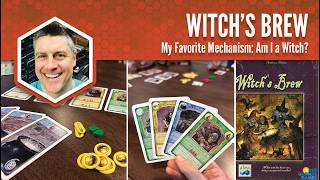
Witch's Brew, the 2008 card game published by Alea in its medium box series, receives a favorable but measured reception from the reviewers who have covered it. The common thread is that the game's quality shows up during play rather than on the box. Stonemaier Games is the most enthusiastic voice. Jamie Stonemaier calls the card mechanism a favorite and says the group kept finding new decisions the more they played.
The Board Game Garden approaches the title from a collector's perspective. Jenna included it in a list of games from roughly 2008 to 2013 they want to experience, drawn mostly by the theme of gathering ingredients and brewing potions. Jenna's interest rests on the setting more than on the competitive mechanics, and they are wary of the bluffing they expect from the design.
Board Gaming Ramblings played the game as part of its Keep or Color series and reached a positive verdict with reservations. The hosts describe it as a cozy, short game with a very solid design, though it felt light for their tastes. They also reported that less experienced players in their group enjoyed it more than the hosts did. Stonemaier Games returned to the title in a later Q&A recap of a game day, where Jamie Stonemaier had a surprising amount of fun with it and described it as a forgotten prequel to Broom Service.
Taken together, these perspectives present Witch's Brew as a game that rewards careful reading of the table. It is most often praised by players who enjoy tracking what others hold, and it is valued for a theme and length that make it easy to bring to a table.
Core Mechanics That Define Witch's Brew
Hand Management Through Role Card Selection and Sequencing
Each player begins with a hand of twelve role cards, and every player holds the same set of characters. Each round, players secretly and simultaneously choose five of their cards to play, then reveal them one at a time in sequence. Jamie Stonemaier identifies the choice of which card to lead with as one of the most interesting decisions in the game. A leading player must claim the role they reveal, so they may open with a card they care little about, accepting that other players holding the same role will likely claim it first. Saving the valuable roles for later in the round, when opponents have run out of cards, is a separate calculation. Players must weigh the value of each role against the cards still in their hand and the cards still in everyone else's hand.
The Role-Claiming and Role-Stealing System
The second core mechanic is the system for claiming roles. The first player to reveal a role announces that they are that character and takes the full action. A later player who holds the same card can instead say "so be it," which yields a lesser favor action. Alternatively, that player can declare that they are the character, hoping to take the full action from the earlier claimant. Jamie Stonemaier notes that a player who declares a role another player has also declared receives nothing from it, so every claim becomes a bet on what the rest of the table holds. Even the last player to act, who knows no one else will follow, can still say "so be it" for a benefit and avoid leading, which Jamie Stonemaier presents as a meaningful choice. Jamie also notes that a slightly different form of this system appears in Broom Service, the game Witch's Brew is generally regarded as a precursor to.
The Witch's Brew Experience
A Running Guessing Game Built on Reading the Table
Reviewers describe the central feel as a continuous guessing game. Players must ask whether they are the last holder of a role, whether another player still has it, and how many cards remain in each hand. Jamie Stonemaier describes how this uncertainty keeps players attentive to what others are doing throughout the round. Board Game Garden is drawn to the same idea, looking forward to a game where players try to outguess their opponents while collecting ingredients and making valuable potions. The result is a table where talk and timing matter as much as the cards themselves.
A Cozy Potion-Brewing Theme
The second experiential theme is the witchy, cozy setting. Board Gaming Ramblings describes the game as a simple, cozy experience in which players act as witches, gathering resources and cards and assembling the right combinations to bring potions to their clan. The Board Game Garden lists brewing potions and being a witch among the themes it wants to see in tabletop games, and it names Witch's Brew as a title that fits that interest. The modest length supports the mood. Jamie Stonemaier reports that the game played in about 45 minutes with five players, which was almost exactly the right length.
What Makes Witch's Brew Stand Out
Decisions That Deepen With Repeated Play
Jamie Stonemaier describes a game that kept adding layers the more the group played it. Choices such as whether to say "so be it" or declare a role, and whether to give up a lead, emerged only after the group had gained experience with the rules. Reviewers see this as the source of the game's lasting appeal. A short, simple structure gives the table room to discover new options, rather than simply running through a checklist of rules.
A Solid Design That Works Across Experience Levels
Board Gaming Ramblings concluded that Witch's Brew is a very solid game with a very good design, and that it proved more enjoyable for less experienced players than for the hosts themselves. That observation suggests the core rules are approachable even though the reading and bluffing involved can be subtle. The game's short playing time, which the box lists at 30 minutes, also makes it an easy title to suggest to a mixed group.
Potential Drawbacks
Bluffing May Not Suit Every Table
The Board Game Garden says that the bluffing element is the part of the game they do not particularly love, and they are unsure exactly which mechanic it refers to. Players who dislike bluffing or table deception will find the role-claiming system central to the experience rather than a side feature. This is a matter of taste rather than a flaw in the design, and players who enjoy reading opponents are likely to see the same system as a strength.
A Lighter Game With a Limited Player Range
Board Gaming Ramblings found the game somewhat light for its own preferences, even while praising the design. The Board Game Garden noted that the box lists three to five players, which is a less convenient range for couples who want a game they can play together. Stonemaier Games' account of five-player sessions shows that the game holds up at higher counts, but these reviewers did not offer a clear view of two-player play. Players seeking a heavier or two-player-focused experience may want to look elsewhere.
If You Enjoy Witch's Brew
Broom Service is the most natural next step. Jamie Stonemaier identifies it as the later game that developed the same basic role-claiming idea, so players who enjoy the mechanic can explore how the design evolved. For players who enjoy compact card games with a strong read-the-table element, the Board Game Garden points to Scout and Fujiflush as titles that have been enjoyed in its collection. The reviewer describes them as part of the same realm of great small card games, which makes them a sensible pairing for anyone who wants more of Witch's Brew's feel.
What Reviewers Are Saying
"It was one of those games where we were layering on these decisions, these choices the more we played. And the game also didn't outstay its welcome. It played, I think, in around 45 minutes for five players, and that was almost exactly the right length for this game."
— Stonemaier Games
"I just think I really want to try this one purely based off of the fact that it is literally collect ingredients and make valuable potions by outguessing your opponents."
— The Board Game Garden
"I think this is a very solid game, it's a very good design. I I liked playing it, and the people we played with who have played a little bit less games than us, they enjoyed it more than us as well."
— Board Gaming Ramblings