/pic8223783.png)
Last Move Wins!
Making the last move is how you win this game. Each player has six cubes that can slide, push and spin. Each cube starts out with the ability to move in three different directions; horizontally, vertically or diagonally. All 12 cubes will remain on the board throughout the game whether they are able to move or not. Cubes must always move in a straight line and cannot pass another cube diagonally if that cube’s side comes in contact. A cube may not jump over another cube, or land on top of another cube. A cube loses a direction of movement as indicated by colored triangle when a cube from the other player is pushed into it. It is possible to engage more than one cube at a time. Cubes without colored triangles are considered dead and are unable to move on their own, though it can be pushed by other cubes. Cubes can push other cubes, both their own or their opponent, but for this to happen there must be more triangles pointing in the direction of the push than there are triangles opposed to the push. If two cubes have opposing triangles that point into each other, they cancel each other out and there is no push either way. Cubes may not pull another cube. Cubes can only move forward in the direction of the 90 degree triangles. Triangles can turn a round when they reach the three gray squares at each end, and can move back and forth from those gray squares. When a player runs out of moves the game is over.

Wrestling Cubes
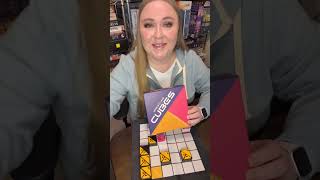
- Highly tactical two-player abstract strategy
- Compact design with neoprene mat that fits in the box
- Pieces stay on the board, leading to deep positional play
- Encourages creative piece interactions and combos
- Abstract nature may be hard to grasp for new players
- Lack of explicit theme may limit thematic appeal
- Abstract strategy
- Abstract, two-player arena with triangular pieces on a grid
- Mechanics-driven, no explicit theme
Mechanics (from transcript analysis)
- Collision and loss — When two pieces touch, the moving piece loses a triangle in the touched spot.
- Corner rotation — Reaching an opponent's corner rotates your piece 180 degrees to head the opposite direction.
- Goal condition — The last player who can make a legal move wins.
- movement rules — Pieces move along allowed directions (triangles point direction) and can move any number of spaces, but cannot move through or jump over other pieces.
- pushing — If opposing arrows align, a piece can push the other; pushes can open or close paths.
- Resource Management — Losing triangles reduces power; empty pieces stay on board and can be pushed.
Video topics + discussion points
Quotes (from this video)
- It's super fun.
- I really, really enjoy it.
- Excellent two-player game.
- I love that the pieces don't leave the board.