/pic5006914.jpg)
Game Info
Year
2020
Collection
Your Tier
Loading…
Mechanic profile
Not enough video data yet
Vibe profile
Not enough video data yet
Description
No description available.
Featured Videos

Rules Teach

How to Play Zen Monkeys
Ask a Rules Question
All mentions
Browse transcript mentions, sentiments, pros/cons, mechanics, topics, quotes, and references.
Total mentions: 4
This page: 4
Sentiment:
pos 2 ·
mix 1 ·
neu 1 ·
neg 0
Showing 1–4 of 4
Video MxOK0l_MdnE
Hungry Gamer Rules Teach at 0:09 sentiment: neutral
video_pk 82354 · mention_pk 206945
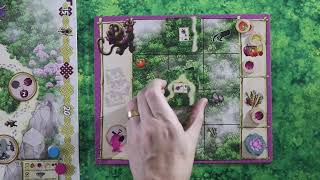
Click to watch at 0:09 · YouTube ↗
Overall sentiment (raw)
neutral
Pros
none
Cons
none
Thematic elements
- growth, exploration, resource management, and territory strategy
- Forest realm with monkey tribes and temple-building objective
- instructional/tutorial
Comparison games
none
Mechanics (from transcript analysis)
- endgame scoring and bonus cards — Multiple scoring tracks, bonus cards, and penalties for leftovers determine final scoring.
- Guardian phase with dice modifiers — Guardians move with a dice that can add or subtract distance, and guardians can chase away monkey disciples.
- Monkey deployment and resource allocation — Chosen actions determine how many monkeys go to the wilds board vs. remaining on the domain board, affecting placement and resource gain.
- Resource collection via domain and foraging actions — Collect various resources (fruit and other items) by selecting actions and placing on both domain and wilds boards.
- Resource Management — Collect various resources (fruit and other items) by selecting actions and placing on both domain and wilds boards.
- Simultaneous action card play — Each player selects one of three action cards, places it face down, then reveals and resolves actions simultaneously.
- Simultaneous Actions — Each player selects one of three action cards, places it face down, then reveals and resolves actions simultaneously.
- Temple-building track and cost scaling — Building temple pieces costs varying resources by level and yields points; progression advances a temple track.
- tile drafting and placement — Tiles are drawn from the top of stacks and placed to shape board bonuses and paths; players can rotate tiles when placing.
- Tile Placement — Tiles are drawn from the top of stacks and placed to shape board bonuses and paths; players can rotate tiles when placing.
- Track Advancement — Building temple pieces costs varying resources by level and yields points; progression advances a temple track.
Video topics + discussion points
No key topics recorded for this video.
Quotes (from this video)
- The completed temple is actually a total of 12 different pieces that will stack up into three levels.
- And every time you build a piece, you'll gain four points.
- Every time you come to this location, there is a chart that determines what it's going to cost to build a piece.
References (from this video)
No references stored for this video.
Video 4msqarlaTT8
Hungry Gamer Review at 0:09 sentiment: mixed
video_pk 82355 · mention_pk 206946
Click to watch at 0:09 · YouTube ↗
Overall sentiment (raw)
mixed
Pros
- Liking the decision space at the beginning of the round regarding sending monkeys and considering the danger of guardians.
- Appreciating the race element to accomplish goals and get to spots first.
- Liking the Monkey Teaching cards as goals that become worker placement spots and can be cleverly taken from others.
- Relatively quick game to play.
- Fairly easy to teach.
Cons
- The Monkey Guardians can be punishing, especially early in the game, leading to feeling like you can't do anything.
- There are a lot of things to track for a game described as simple.
- Being punished for having resources left over at the end of the game can be frustrating.
- Difficulty seeing the spaces on the prototype board's score tracker.
Thematic elements
- monkeys collecting things and building a temple
- forest
Comparison games
none
Mechanics (from transcript analysis)
- Area Control/Movement — Guardian monkeys move based on noise made, and can kick out player disciples if they land on the same space.
- Card Play — A single card is played each round to determine how many monkey disciples go out into the forest for worker placement or stay home to build.
- Objective Fulfillment — Players can claim 'teachings' which are goal cards that give points, and some are also worker placement spots.
- Set Collection — Collecting tiles, things to go on tiles, and fruits are mentioned as part of the game's resource gathering.
- tile laying — Players build up their section of the forest on their individual player boards by placing tiles.
- Worker Placement — Monkey disciples are sent out to worker placement spots on the board to collect things or stay home to help build.
Video topics + discussion points
No key topics recorded for this video.
Quotes (from this video)
- And I think it's a very tense decision space right there.
- And it's a race to put your workers on the spot that's going to give extra resources.
- Especially early in the game, you can just get smashed.
- And for a simple game, there's a lot of different things that you have to track.
- And that need to be perfect on your resources is something I have not seen in other games.
References (from this video)
No references stored for this video.
Video XW1_f5Cu2jI
Meeple University Preview at 0:26 sentiment: positive
video_pk 37525 · mention_pk 112757
Click to watch at 0:26 · YouTube ↗
Overall sentiment (raw)
positive
Pros
- Accessible and compact feel with light to medium complexity.
- Bright, vibrant table presence and monkey-themed artwork.
- Strong tension from guardian mechanism and risk/reward decisions.
- Clear path to scoring via landscape placement, tracks, and objectives.
- Nice balance of strategy and luck, making it friendly for new players while offering depth for veterans.
- Prototypes suggest upgrades (plastic minis) will improve table presence in the final production.
- Objectives create dynamic contest with opportunities to block opponents and steal points.
Cons
- Some luck is involved via guardian movement and die roll interaction.
- Prototype art and components mean visuals and balance may change in final production.
- Endgame optimization requires careful planning to avoid wastage, which can be nuanced for new players.
Thematic elements
- Monkey King mythos, temple/shrine building, nature and growth as a driver of progress.
- Mountainside kingdom of the Monkey King on the Mountain of Fruit and Flowers, inspired by mythic Monkey King legends.
- mythic legend-inspired with lighthearted, playful tone
Comparison games
none
Mechanics (from transcript analysis)
- Objective-based tension and theft — Teachings provide objectives that can initially be claimed by the first to meet them but can be stolen later by anyone who meets the objective better.
- Resource cards and bonuses — Random bonus cards provide additional short-term benefits that players can draw and use to accelerate progress.
- Resource Management — Harvesting fruit and spending resources to plant trees or construct buildings, generating income and contributing to scoring tracks.
- Resource management and income generation — Harvesting fruit and spending resources to plant trees or construct buildings, generating income and contributing to scoring tracks.
- Risk Management — Guardians introduce a probabilistic risk as their movement depends on card values plus a die roll, creating tension around action choice and blocking spaces for two rounds.
- Risk vs. reward and player interaction — Guardians introduce a probabilistic risk as their movement depends on card values plus a die roll, creating tension around action choice and blocking spaces for two rounds.
- Tile Placement — Players build up their personal domains by placing landscape tiles and features like fruit trees, koi, or other structures.
- Tile/landscape and feature placement — Players build up their personal domains by placing landscape tiles and features like fruit trees, koi, or other structures.
- Track Advancement — Advancement on various tracks (e.g., mountain/turn order, shrine progress) and six standard objectives plus Sun Wukong’s teachings; endgame scoring includes penalties for wasted spaces and unused tiles/resources.
- Track-based progression and scoring — Advancement on various tracks (e.g., mountain/turn order, shrine progress) and six standard objectives plus Sun Wukong’s teachings; endgame scoring includes penalties for wasted spaces and unused tiles/resources.
- Worker Placement — Each round, players simultaneously decide how many workers to send (1–3), then place them one at a time on open actions; guardians move and can block spaces.
Video topics + discussion points
No key topics recorded for this video.
Quotes (from this video)
- Zen Monkeys is a thoughtfully designed light to medium worker placement game.
- The core of Zen Monkeys tension and unpredictable fun, just like the early chicky sun Wukong fashion in the legend.
- You can't just take your favorite action. You need to weigh up the risk of taking an action and being bumped against the risk of not taking the action and having it blocked for a couple of rounds as well.
- Not only are these worth points to whoever holds them at the end of the game, but they also give a helpful personal worker placement space to whoever holds them at a given time, making them a hot commodity to fight over during the game.
- Zen Monkeys has a bright and vibrant table presence with its cute monkey art.
References (from this video)
No references stored for this video.
Video 08-kChrRvys
Our Family Plays Games Review at 1:09 sentiment: positive
video_pk 32141 · mention_pk 94861
Click to watch at 1:09 · YouTube ↗
Overall sentiment (raw)
positive
Pros
- Strong thematic integration; theme drives decisions and flavor is vibrant
- Colorful, engaging artwork and components that are visually appealing
- Interlocking mechanics (tile-laying, set collection, worker placement, pattern building) feel cohesive
- Endgame tension arises from shrine completion versus moon-track timing
- Guardians add meaningful strategic tension and interaction
- Accessible entry with room for strategic depth and misdirection
Cons
- Endgame can be punishing if you mismanage space and cannot fit required tiles
- Guardians can evict you from zones, potentially losing resources and momentum
- Complexity grows with multiple tracks and goals; could have a steeper learning curve for newcomers
- Card drafting and guardian outcomes introduce variance that can affect outcomes
- Prototype components may differ from final Kickstarter production
Thematic elements
- Zen principles guiding players as they build a flourishing domain to impress the Monkey King
- Mythical China-inspired kingdom-building setting centered on the Monkey King and his disciples
- Flavorful, whimsical but strategic; theme drives decisions and actions
Comparison games
none
Mechanics (from transcript analysis)
- Area Control — guardians influence zones; noise and guardian effects can remove or hinder followers
- card_selection_with_blind_reveal — select action cards each round without knowing opponents' choices, revealed simultaneously
- Movement Points — move 1–3 followers per turn to activate actions; trade-offs between building and moving
- movement_points — move 1–3 followers per turn to activate actions; trade-offs between building and moving
- Pattern Building — build patterns on the domain to maximize value and scoring opportunities
- pattern_building — build patterns on the domain to maximize value and scoring opportunities
- Resource Management — manage fruit, bamboo, clay, stone and other offerings to construct and score
- resource_management — manage fruit, bamboo, clay, stone and other offerings to construct and score
- Set Collection — collect tiles/resources that enable future builds and scoring
- set_collection — collect tiles/resources that enable future builds and scoring
- Simultaneous Reveal — select action cards each round without knowing opponents' choices, revealed simultaneously
- Tile Placement — place tiles to develop the domain and connect features
- tile_laying — place tiles to develop the domain and connect features
- Worker Placement — dispatch disciple workers to actions on the board
- worker_placement — dispatch disciple workers to actions on the board
- zone_control_and_guardians — guardians influence zones; noise and guardian effects can remove or hinder followers
Video topics + discussion points
No key topics recorded for this video.
Quotes (from this video)
- The artwork is so cute. You got the cute little monkeys and you got lots of different components.
- In Zen Monkeys, you'll use a variety of mechanics to achieve your goals.
- The Monkey King is saying, hey, let me have a good kingdom.
- The theme really comes out and they didn't skip on color.
- Guardians are not nice people.
References (from this video)
No references stored for this video.
Transcript Navigation
Showing 1–4 of 4