


















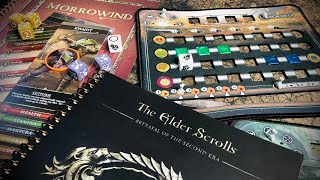
The Elder Scrolls: Betrayal of the Second Era box art

The Elder Scrolls: Betrayal of the Second Era

Game ID: GID0402245
Game Info
Year
2025
Players
1-4
Age
14+
Playtime
240 min
Collection
Ratings
Mechanic profile
Percentile rank vs. all games
Vibe profile
How this game feels to play
Description
No description available.
Ask a Rules Question
All mentions
Browse transcript mentions, sentiments, pros/cons, mechanics, topics, quotes, and references.
Total mentions: 103
This page: 50
Sentiment: pos 44 · mix 2 · neu 2 · neg 1
Mentions per page
Showing 51–100 of 103
Video NyJ0GfKrkU0 UndeadVikingVideos Discussion at 1:46:05 sentiment: neutral
video_pk 81172 · mention_pk 200305
UndeadVikingVideos - The Elder Scrolls: Betrayal of the Second Era video thumbnail
Click to watch at 1:46:05 · YouTube ↗
Overall sentiment (raw)
neutral
Pros
none
Cons
none
Thematic elements
Comparison games
none
Mechanics (from transcript analysis)
Mechanics unknown.
Video topics + discussion points
No key topics recorded for this video.
Quotes (from this video)
  • It's called Schllock. It's pretty good.
  • I love Habitats.
  • You're making a you have a movie theater and you're making like Bem movie posters to draw people into your theater and uh Yeah. It's pretty neat.
  • It's like a poker game where you're trying to predict who wins the wins the hand.
  • I had for our quiz today, I had I even showed the three frigin stripes. I'm like, that was way too easy.
  • The scammers have figured out a way around my anti-scammers work.
  • It's like an arms race.
  • It's like, you know, like you you know what you want. You have expressed it. But but when it was like the the fourth and fifth time that he brought it up in the thing trying to get people to to ban behind him that that was that was the you know I I I understood shooting his shot, you know, saying saying what he wanted out of his out of his board game so he could have a really awkward game night.
  • It's like, Oh, I want to play X. Well, I've got X. I can bring it. And so, it has matches.
  • The thing I couldn't figure out was I finally got it to figure out how to go to the geek and like if your game is like, 'What the hell is this game?' You can click on it, it'll go to the geek, it'll do a search for Ghost Tower.
References (from this video)
No references stored for this video.
Video wBrqZ_2cDkA Board Game Hangover Analysis at 26:41 sentiment: positive
video_pk 81120 · mention_pk 341030
Board Game Hangover - The Elder Scrolls: Betrayal of the Second Era video thumbnail
Click to watch at 26:41 · YouTube ↗
Overall sentiment (raw)
Positive
Pros
none
Cons
none
Thematic elements
none
Comparison games
none
Mechanics (from transcript analysis)
Mechanics unknown.
Video topics + discussion points
No key topics recorded for this video.
Quotes (from this video)
  • Magical Athlete
  • Star Wars Battle of Hoth. Oh, it doesn't fit there. But take time.
  • Hot Streak. HOT STREAK FROM PUBLISHER CM. SHOULD HAVE TRUSTED MY INSTINCTS AND VOTED IT.
  • It's uh fate. It's fate. It's fate.
  • The Lord of the Rings. The Fate of the Fellowship from publisher Zman Games.
  • It's a cooperative Lord Rings game based on the pandemic system, which is super popular where you cure diseases and is one of the first cooperative games. At least it's the one that blew everybody's minds when it came out because you can play ball games cooperatively. And if you know the Lord Ring story, you have to take the ring to the volcano and destroy it.
  • Elder Scrolls? Really?
  • It's the most thematic game.
  • Galactic Cruise from publisher Kinsson Key Games.
References (from this video)
No references stored for this video.
Video FYfEYve1UAM Board Games UnLocked Top List at 39:08 sentiment: positive
video_pk 81108 · mention_pk 199694
Board Games UnLocked - The Elder Scrolls: Betrayal of the Second Era video thumbnail
Click to watch at 39:08 · YouTube ↗
Overall sentiment (raw)
positive
Pros
  • Best fantasy game
  • Strong IP connection to Bethesda's Elder Scrolls
  • Encompasses various Elder Scrolls settings
  • High fantasy elements are prominent
  • Diverse character builds (classes, races, magic)
  • Guild system influences narrative
  • Location-specific rules add depth
Cons
  • May not appeal to those seeking dark fantasy
Thematic elements
  • High fantasy
  • High fantasy (based on The Elder Scrolls IP)
Comparison games
  • Aredia
  • Oathsworn
  • Gloomhaven
  • Divinity: Original Sin
  • Tainted Grail
  • Painted Grail
  • Kingdoms Forlorn
Mechanics (from transcript analysis)
  • Character building — Allows for diverse character builds with various classes and races.
  • Guild System — Players pick a guild that dictates their overall narrative experience.
  • Location-specific rules — Locations have unique rulesets that determine player choices.
  • Magic systems — Offers different types of magic for character development.
Video topics + discussion points
No key topics recorded for this video.
Quotes (from this video)
  • This is one of my favorite things about this game, is you actually get to have armor pieces that are on various sections of your body
  • I think Tainted Grail did the best campaign like board game writing first.
  • it's so descriptive and captivating that you actually feel like you are watching a show or reading a novel
  • It really got a good reaction out of me.
  • the reason why I think Roll Player Adventures is a the best beginning game is because it's not complicated at all.
  • You get a big sprawling world that is completely open world
  • I love this game.
  • So, that's why it's my favorite.
References (from this video)
No references stored for this video.
Video XvoDXAmneAQ One Stop Co-op Shop Discussion at 1:53 sentiment: positive
video_pk 80840 · mention_pk 337804
One Stop Co-op Shop - The Elder Scrolls: Betrayal of the Second Era video thumbnail
Click to watch at 1:53 · YouTube ↗
Overall sentiment (raw)
positive
Pros
  • Looks great
  • Tons of new skill lines
  • Tons of new things to liven things up
Cons
  • Only received skill lines, not quests or boss components in the preview
Thematic elements
  • Adventure
  • Tamriel
  • Quest-driven
Comparison games
none
Mechanics (from transcript analysis)
  • questing — The expansion includes new quests.
  • Skill lines — The expansion adds new skill lines to the game.
Video topics + discussion points
No key topics recorded for this video.
Quotes (from this video)
  • I'm kind of off of the Chronicles of Crime series in general.
  • I think it really uh brings Battlecrest to life.
  • I had a blast with this one, and I think it makes Uprising even easier to get to the table, which is a good thing cuz there's a great game design.
  • This is also the one of the last videos where I was like hand-holding things and showing them and giving people like vertigo as I moved.
  • The puzzly board movement of trying to get around and deal with all these threats is really exciting.
  • And as I mentioned in my review, the deck building is my favorite kind where you're upgrading your deck and you're getting rid of one card as you add another one in, so you just purely get cooler and cooler.
  • But this is one I called not for any good reason and actually Peter was asking me the other day if I still had it and he wanted to play it and I kind of regretted that I didn't have it.
  • This is probably the lowest of the four games I covered release games this month because it didn't feel like a racing game.
  • So yeah, this one just was pretty much a flop for me and all my groups that I tried it with.
  • And by all four I mean keeping none of them.
References (from this video)
No references stored for this video.
Video u658RZMz2QA The Dice Tower Top List at 9:32 sentiment: mixed
video_pk 80770 · mention_pk 197845
The Dice Tower - The Elder Scrolls: Betrayal of the Second Era video thumbnail
Click to watch at 9:32 · YouTube ↗
Overall sentiment (raw)
mixed
Pros
  • Huge game with over the top production.
  • Well done production.
  • Can keep characters between scenarios.
  • Impressive breadth of accomplishment.
  • Less over-wrought than other Chip Theory games.
  • Simpler than initially feared.
  • Impressive systems like leveling up, adding dice, and customization.
Cons
  • A bit extra for taste.
  • Some parts are a bit over-wrought.
  • Lots of keywords and calculations to remember.
  • Struggle getting it back to the table due to its size and complexity.
  • Know what you're getting into; not 100% accessible.
Thematic elements
  • Adventure in the Elder Scrolls universe
  • The Elder Scrolls universe
Comparison games
none
Mechanics (from transcript analysis)
  • Campaign play — Played through three scenarios in a soft campaign structure.
  • Character progression — Characters can be kept between game sessions.
  • dice customization — Adding dice and customization is a cool system.
  • Keyword Management — Requires remembering many keywords and calculations.
Video topics + discussion points
No key topics recorded for this video.
Quotes (from this video)
  • This marks 5 years since we started doing the rapid fire roundups here on the Dice Tower channel.
  • It's hot potato with a lot a lot a lot of special powers.
  • It feels like the first 70% of the game mostly doesn't matter and I don't love that part of it.
  • So quagmire a seven out of 10 for me.
  • This is a card dueling game that is just delightful.
  • I think this game does a lot of things absolutely right.
  • I love this head-to-head dueling game. It's one of my It's one of my favorites I've played in a while.
References (from this video)
No references stored for this video.
Video NNPCf_iv-7Q Shelfside Analysis at 13:10 sentiment: positive
video_pk 80206 · mention_pk 194806
Shelfside - The Elder Scrolls: Betrayal of the Second Era video thumbnail
Click to watch at 13:10 · YouTube ↗
Overall sentiment (raw)
positive
Pros
  • emphasize the story and world
  • nice little mechanical twist.
Cons
  • mini campaign adventure to be about 18 hours, so it's not short.
  • a lot of the time is reading from the story book to set up the stakes, flesh out the world
  • still a ton of components.
  • combat has to be simpler to keep the game time shorter.
  • might not be crunchy enough
Thematic elements
  • emphasis on the story and world by not only having more flavor text like dialogue, but also adding in an overland phase to give your party choices and shot potential between each fight across a map.
Comparison games
  • Lands of Evershade
Mechanics (from transcript analysis)
  • Dice Rolling — mostly dice to keep track of your character's fatigue and abilities.
  • overland phase — to give your party choices and shot potential between each fight across a map.
Video topics + discussion points
No key topics recorded for this video.
Quotes (from this video)
  • So, let's see if we can come up with the definition together. Then we'll walk back through all sorts of iterations of dungeon crawling to see how the heck we got here.
  • The genre is getting stretched in all these new creative ways to become more of a vibe.
  • And again, if you think it's really boiled down to something simple like kill monsters, grab the loot, and level up. Well, doesn't that also describe the backsabbing party game Munchkin?
  • And pretty much every single dungeon crawler we've played here is not actually a dungeon crawler by some sense of the definition.
  • Fly, you fools.
  • Rather, it's better to make combat mechanics around, say, constantly responding enemies that goofully stand around and exist to die for the adventurer's profit.
  • So actually the right terminology for a lot of dungeon crawling would be dungeon exterminating.
  • So, since we established that dungeon crawling is now dungeon exterminating with a level of vibes that you feel once your character is equipping items, fighting, and looting, let's go into some other examples of dungeon crawler feel that I felt over the years.
  • And finally, number four, dungeon crawler vibe check. There's actually now zero nada puzzle solving, at least from the strict sense of performing a dedicated puzzle within the dungeon.
  • cooperative board gaming just didn't really exist back then.
  • These are the moments that cause the high fives and make you remember game night.
  • But since it was made with a skirmish mode in mind, its turn order doesn't feel like a dungeon crawler at all.
  • This might be the most dungeon crawlery in the truest sense.
  • Wow, this is actually a pretty good comparison.
  • It's kind of like Munchkin and being dungeon crawler inspired, but now you have the threat of dying and with more mechanics.
  • We've always felt like Gloom Haven fit perfectly into what gamers wanted out of Dn D to just be a murder hobo and to kill everything in their path.
  • It wasn't so much about looting or exploration, even though it technically had those things. Rather, it was about being euro puzzly.
  • And ironically, none of them have that typical high fantasy swords and armor and elves and magic theme.
  • Yeah, I was actually chocked by this.
  • It really feels like we've gone from the video game inspiration to board game form which came with a lot of limitations as dungeon crawling in a board game is inherently timeconuming and also very component consuming.
  • For me, I started this video with the goal of, okay, we're going to nail exactly what a dungeon crawler is. But yeah, still it's just it's just like vibes, right?
  • My final thoughts. So, what do I think is going on with this genre? Well, I think it's been massively overtaken by video game influence onto your board game night.
  • And that makes my life as a reviewer more complicated, but also a lot more fun.
  • It actually sounds a lot like what Hero Quest scenarios are trying to do at the end.
  • So, what do I play now? Like what what?
  • And then I can participate in some sort of conflict like probably combat. And then I can move and interact with some sort of map thing like rooms. I don't care about the puzzle element, and it doesn't always have to be a campaign.
References (from this video)
No references stored for this video.
Video BQOrtL3KkrU Analysis at 174:00:00 sentiment: positive
video_pk 79927 · mention_pk 193567
The Elder Scrolls: Betrayal of the Second Era video thumbnail
Click to watch at 174:00:00 · YouTube ↗
Overall sentiment (raw)
positive
Pros
  • Captures the feeling of leveling up and character specialization
  • Offers deep character customization
  • Really captures the big open-world feel
  • Exploration of different areas and guilds
Cons
none
Thematic elements
  • Exploration and character development within The Elder Scrolls universe
  • The world of The Elder Scrolls
  • Campaign-based with branching story sections
Comparison games
  • Gloomhaven
  • Journeys in Middle Earth
  • Skyrim
Mechanics (from transcript analysis)
  • Campaign play — Played over multiple sessions with a progressing story.
  • character customization — Players can multiclass and develop skills.
  • dice-based actions — Dice are used to perform attacks and maneuvers.
  • exploration — Players explore different areas of the map and delve into locations like mines and caves.
  • Player board management — Limited space on the player board affects specialization.
Video topics + discussion points
No key topics recorded for this video.
Quotes (from this video)
No quotes stored for this video.
References (from this video)
No references stored for this video.
Video YPHlDT64kLQ Top List at 13:14 sentiment: positive
video_pk 79532 · mention_pk 193023
The Elder Scrolls: Betrayal of the Second Era video thumbnail
Click to watch at 13:14 · YouTube ↗
Overall sentiment (raw)
positive
Pros
  • Vast sandbox experience
  • Massive character customization options
  • Highly variable character builds (melee, magic, stealth, etc.)
  • Engaging campaign with multiple storylines
  • Unexpected encounters like dexterity challenges
Cons
none
Thematic elements
  • Character progression and adventure in a sandbox world
  • Tamriel (Elder Scrolls universe)
  • Campaign-based with multiple storylines
Comparison games
  • Too Many Bones
  • Skyrim
  • Oblivion
  • Morrowind
Mechanics (from transcript analysis)
  • Campaign play — Played through campaigns that are typically three sessions long.
  • Character leveling and skill customization — Players level up their characters and train them in various skills, leading to highly distinct playstyles.
  • Chip theory system — Works off the chip theory system where enemy chips have health and keywords that dictate their behavior.
  • Dexterity (in encounters) — Certain encounters can involve dexterity-based challenges.
  • Dice-based combat — Utilizes dice for combat and other actions.
Video topics + discussion points
No key topics recorded for this video.
Quotes (from this video)
  • I want everything. Put everything and the kitchen sink into the game.
  • It's like everything is in this one. It's got a little bit deck building. It's got a little bit of worker placement. It's got a little bit of this, a little bit of that.
  • All these things thrown into one, cuz sometimes you make that gumbo work really good.
  • It's a masterpiece for a reason.
  • There's just too much stuff in this game.
  • Those are 10 games that have everything and the kitchen sink in them, we think.
References (from this video)
No references stored for this video.
Video 7k94s7g0Slc Top List at 9:29 sentiment: positive
video_pk 77716 · mention_pk 187671
The Elder Scrolls: Betrayal of the Second Era video thumbnail
Click to watch at 9:29 · YouTube ↗
Overall sentiment (raw)
positive
Pros
  • Wonderful experience
  • Huge amount of content
  • Amazing production value and art
  • Clean and fun combat system
Cons
  • Heavy game
  • Long playtime
  • High commitment required
Thematic elements
  • Adventure / Combat / Exploration
  • The Elder Scrolls universe
Comparison games
none
Mechanics (from transcript analysis)
  • Character progression — You're leveling up your characters, you're getting new special abilities.
  • Cooperative combat — A cooperative game where you are fighting bad guys.
  • exploration — You're exploring.
Video topics + discussion points
No key topics recorded for this video.
Quotes (from this video)
  • Most of the time I want to play competitive, but it's really nice to have good games where you can work together and not work against each other.
  • Essentially turns the regular game of Santorini into a bit of a cooperative campaign puzzling game.
  • If you want an introduction to deduction games, I think a carnivore did it is really fun for that reason.
  • I like cooperative games that have real cooperation, that have real dialogue to them.
  • I had an epic day playing The Elder Scrolls where we were playing it for like 5 6 hours and it was awesome and it was so memorable and it is a great game.
  • This is essentially this game is taking the pandemic system and making a new game out of it.
  • You cannot communicate when you're placing cards down.
  • It is a cooperative polyomino tile laying game, and there aren't that many cooperative polyomino games.
  • It has gotten compared to The Crew, and I think the comparison is appropriate.
  • It is full of a bunch of dumb puns, which makes it silly and fun, too.
  • You know, it's one of those games where it's like you you're not guaranteed of a win in in Ham Hell Singh, which I like about cooperative games.
References (from this video)
No references stored for this video.
Video Q2EDI3EuNEw Playthrough at 6:00 sentiment: positive
video_pk 69610 · mention_pk 166223
The Elder Scrolls: Betrayal of the Second Era video thumbnail
Click to watch at 6:00 · YouTube ↗
Overall sentiment (raw)
Mixed to Positive, with enjoyment of theme and mechanics tempered by rule ambiguities.
Pros
  • Strong thematic connection to The Elder Scrolls.
  • Engaging campaign structure with varied encounters.
  • Interesting dice mechanics and resource management.
  • Satisfying progression through gaining XP and skills.
Cons
  • Ambiguous rule interpretations create uncertainty.
  • Complex setup and component management can be time-consuming.
  • Difficulty spikes require careful resource planning.
Thematic elements
  • Campaign-based adventure and exploration
  • The Elder Scrolls universe
  • Scenario-driven with choices impacting progression
Comparison games
  • Too Many Bones
  • Cloud Spire
  • TCGs
  • LCGs
  • CCGs
Mechanics (from transcript analysis)
  • Combat Skill Dice — Players utilize combat skill dice (white and black) for attacking and defending, with outcomes influenced by enemy defense stats and player abilities.
  • Delve Encounters — Special delve encounters involve exploring underground areas with unique mechanics like traps, frostbite chips, and enemy scaling based on collected shards.
  • Dice allocation — Players roll dice and place them in various slots (cooldown, active) to perform actions or gain benefits.
  • Encounter cards — The game progresses through various encounters, some peaceful and some combat-oriented, drawn from decks that include location-specific events and enemy deployments.
  • Fatigue Management — Players manage 'over fatigue' and 'light fatigue' on their cooldown track, which can be a cost for certain abilities or a trigger for negative effects.
  • Keyword Abilities — Enemies and adventurers have various keyword abilities that modify gameplay, such as 'Bane', 'Vine Snare', 'Detection', and 'Chillblain'.
Video topics + discussion points
No key topics recorded for this video.
Quotes (from this video)
  • Trying to figure out this rule book here, trying to figure out things from yesterday a little bit.
  • But again, throwing the word printed in there is kind of like that's not what the scenario says.
  • So it's like uh that being said, there was nothing explicitly in the rules talking about ignoring defense.
  • So it's like hard to say like how much do we value the word ignore in this game, you know?
  • And I play a lot of card games like like TCGs, LCGs, CCGs, all that stuff over the years. And they're very clear. They'll use the word printed.
  • But a lot of times we can't find the rule in the rule book. So that's the problem.
  • So, my brain goes, all right, I'm getting punished. How is it going to balance this out?
  • We are obviously shown you can interpret the rules in some of these games like that throw the difficulty off and who knows, right?
  • It's like hard to say like how much do we value the word ignore in this game, you know?
  • I play a lot of games where it's like a lot more clear, but I play a lot of games where it's like messy. Like the rules just get too big for their own their own their own good and they're just like not not rigidly tested enough uh before being printed and sent out kind of thing in my opinion.
  • So, it's like annoying that all those ones will probably have more health added up. But the cool part is those ones you can kind of ignore them once you get like you know one or two defense in your cooldown.
  • You know, and it's like hard to say like how much do we value the word ignore in this game, you know?
  • "So, it's like uh that being said, there was nothing explicitly in the rules talking about ignoring defense."
  • "When an adventurer deals damage to an enemy while rolling combat skill dice, if the enemy's defense stat is lower than the amount of over fatigue in your cooldown track, they may calculate the difference... and increase the amount of damage dealt by that amount."
  • "I play a lot of games where it's like a lot more clear, but I play a lot of games where it's like messy. Like the rules just get too big for their own their own their own good."
  • "It makes me feel nauseous. So, I don't hopefully that will go away, but I got it a couple times..."
  • "It comes down to like literally ignoring defense is like kind of busted."
  • "This is the final encounter for session two. So I I don't know. Is it supposed to be extra hard?"
  • "The cool part is those ones you can kind of ignore them once you get like you know one or two defense in your cool down."
References (from this video)
No references stored for this video.
Video eio5gIiDoqQ Rules Teach at 0:01 sentiment: positive
video_pk 69008 · mention_pk 165318
The Elder Scrolls: Betrayal of the Second Era video thumbnail
Click to watch at 0:01 · YouTube ↗
Overall sentiment (raw)
positive
Pros
  • Great big game of exploration
  • Loads and loads to it
  • Interesting combat mechanics with stances and dice
  • Rich world and lore
  • Engaging class and skill system
  • Variety of encounters and quests
  • Legendary items offer powerful effects
Cons
  • Can be overwhelming due to the amount of content
  • Risk of accumulating too much fatigue
  • Certain mechanics like draining dice can be punishing
Thematic elements
  • Exploration, battling, questing, leveling up, guild work, artifact hunting, escaping imprisonment
  • Tamriel, within the Elder Scrolls universe
  • Scenario-based with emergent storytelling through gameplay choices and encounters
Comparison games
none
Mechanics (from transcript analysis)
  • Character progression — Players gain classes, can upgrade them, spend experience points (XP) to improve attributes or gain skill dice, and acquire items.
  • Combat System — Involves moving, engaging, rolling combat dice, using different stances (heavy weapon, light weapon, magic, etc.), and managing stamina and fatigue.
  • Companion system — Players can summon and control companions that assist in combat and exploration.
  • Dice Rolling — Dice are central to actions, combat, skill checks (like lockpicking), and resolving abilities.
  • exploration — Players explore map tiles in delves, revealing new areas, enemies, and objectives.
  • Guild System — Players can join guilds (like the Undaunted) which offer unique actions, quests, and special effects.
  • questing — Players undertake quests, such as 'Curators of Chaos,' which involve traveling to locations, completing encounters, and finding artifacts.
  • Resource Management — Players manage stamina, magicka, health, fatigue, and dice in cooldown tracks.
  • scenario-based gameplay — The game is played through scenarios, starting with 'jailbreak' and then moving into a larger quest involving exploration and encounters.
  • Skill checks — Actions like lockpicking require rolling dice against a target number, with options to use fatigue to improve rolls.
  • Weather effects — Weather conditions (sunny, rainy) impact movement and gameplay mechanics.
Video topics + discussion points
No key topics recorded for this video.
Quotes (from this video)
  • This is a great big game of exploration, of battling, questing, leveling up in many realms of the Elder Scrolls universe.
  • So, we are starting in classic Elder Scrolls tradition with adventurers fighting to escape imprisonment.
  • There's loads and loads to it.
  • That was horrible.
References (from this video)
No references stored for this video.
Video hD4Hxf3N1cs Playthrough at 3:42 sentiment: positive
video_pk 68991 · mention_pk 165289
The Elder Scrolls: Betrayal of the Second Era video thumbnail
Click to watch at 3:42 · YouTube ↗
Overall sentiment (raw)
positive
Pros
  • The flexibility of playing campaign games at one's own pace and stopping/starting sessions without rigid structure.
  • The availability of community members to help clarify rules and strategies during the stream.
  • The satisfying feeling of successfully acquiring new items and upgrading character abilities.
  • The thematic integration of the Elder Scrolls world into the gameplay.
  • The host appreciates the community's input on game choices and rules clarifications.
Cons
  • The initial setup and cleanup process for campaign games can be time-consuming.
  • Some rules and keywords in the game can be obscure or require careful interpretation.
  • The host expresses frustration with not finding a specific two-handed weapon needed for his character build.
  • The game's complexity requires careful attention to rules and can lead to mistakes.
  • The potential for side quests to be disruptive or not align with the player's current needs.
Thematic elements
Comparison games
  • Too Many Bones
  • Frost Haven
  • Aridia
  • Fate Forge
  • Chronicles of Con
  • Arkham Horror: The Card Game
  • Gloom Haven
Mechanics (from transcript analysis)
  • Campaign play — The host discusses playing through a campaign, stopping and starting streams as needed, and how the game's design allows for flexible session lengths and saving at any time, which he prefers for managing his schedule and avoiding the setup/cleanup burden.
  • Character progression — The host mentions spending experience points (XP) to upgrade character abilities, specifically considering acquiring a new two-handed weapon die or improving stamina and health stats to enhance combat effectiveness.
  • Dice Rolling — The host frequently refers to rolling dice for various game actions, including combat, skill checks, and determining outcomes, highlighting the importance of specific dice results (e.g., tenacity, blanks).
  • Dungeon Delving (Uncover) — The host explores a delve, drawing tiles, collecting shards, and encountering enemies with specific keywords and abilities, noting the objective to collect shards and retreat successfully.
  • Encounter resolution — The core gameplay loop involves setting up and resolving various encounters with different enemy types, abilities, and objectives, which the host details throughout the playthrough.
  • item acquisition — The host talks about visiting towns to find and acquire new items, specifically looking for a two-handed weapon, and discusses the process of drawing items from decks and managing them, including the rules for discarding items from shops.
Video topics + discussion points
No key topics recorded for this video.
Quotes (from this video)
  • I'm trying to fix that for myself cuz they become um it's like a huge roadblock and and I sometimes resent wanting to play them if it involves all the setup, getting it out, relearning it, like like adding cards to decks, shuffling cards, decks, cleaning up after.
  • It's like we all can learn from that, which is nice. It's like no matter how confident you are with a game, somebody always knows some weird rule or interaction that you don't know.
  • This is like my own personal experiment for my own sanity.
  • When in doubt, it's your game, do what you want.
  • It is not explicit. I know it's not there and you guys know I'm one for that where I I get frustrated. It it I talk about this before. This is exactly a problem and playing games and reading rule books like this.
References (from this video)
No references stored for this video.
Video qTwTT7mBaxU Playthrough at 5:19 sentiment: positive
video_pk 68992 · mention_pk 165290
The Elder Scrolls: Betrayal of the Second Era video thumbnail
Click to watch at 5:19 · YouTube ↗
Overall sentiment (raw)
positive
Pros
  • True solo mode is appreciated.
  • Engaging for solo players.
  • Can be very rewarding with the right build.
  • Great components and table presence.
  • Deep mechanics offer strategic choices.
Cons
  • Rulebook is very dense and complex.
  • Requires extensive use of reference sheets.
  • Many keywords to memorize.
  • Can be overwhelming for new players.
  • Some loot acquired may not be useful.
Thematic elements
  • High Rock
Comparison games
  • Too Many Bones
  • Aridia
  • Gloomhaven
Mechanics (from transcript analysis)
  • Action Point Allowance — The host discusses managing actions for travel and town encounters.
  • Area Movement — The host moves their token across the map to different locations.
  • Character progression — The host discusses gaining XP and upgrading character abilities.
  • cooperative play — The host discusses playing with companions and how they function.
  • Deck Building — Mentioned in comparison to Too Many Bones, but not detailed for this game.
  • Dice Rolling — Every die in the game has keywords on each side that need to be understood and memorized.
  • Encounter cards — The host draws cards for events during overland travel.
  • Set Collection — The host discusses acquiring items and trainers for their character.
  • Variable player powers — The host discusses different character classes, races, and abilities.
  • Worker Placement — The host chooses to place their character token on certain locations for actions.
Video topics + discussion points
No key topics recorded for this video.
Quotes (from this video)
  • This game literally like it might give you paper cuts with how much you'll be flipping and flopping to different sections of the rule book trying to put together the flow of the game.
  • We're playing keyword simulator here, right? So, um it's a true test of your memory and your patience in this game.
  • I am offended when a game says one player on the side of the box, but you're forced to play with two characters. I feel like that's just like lazy uh on the development side of things.
  • It's like I feel like I'm playing the same game. And then I have something that happened with like Hopus and Cloudspire. like just some of the like the graphic design, the enemies, like the stats, like the keywords being named the same or similar. It's like, yeah, it's gets messy. Gets messy for sure.
  • I don't have faith in the in the my pulls on the in the loot in this game, especially playing true solo. So much of the loot is garbage.
  • You know, a lot of the games don't care about that. They only care about getting your money up front and getting the game in your house.
References (from this video)
No references stored for this video.
Video REmUk_p-0i0 Playthrough at 0:00 sentiment: positive
video_pk 68955 · mention_pk 165256
The Elder Scrolls: Betrayal of the Second Era video thumbnail
Click to watch at 0:00 · YouTube ↗
Overall sentiment (raw)
positive
Pros
  • The weather mechanic providing a boost (sunny allows more movement).
  • Acquiring powerful legendary items like Fracturing Poison.
  • Gaining a companion that grows stronger with defeated enemies (mud crab).
  • Successful skill checks for legendary items (lockpicking for potion of potential and potion of heroism).
  • The ability to gain XP and level up character stats like cooldown.
  • Successfully completing a delve with multiple enemies.
  • Acquiring a persistent effect to change weather from flooding to rainy.
  • The positive feeling of successfully navigating challenging encounters.
Cons
  • Some town locations and services being closed.
  • The 'blind' status effect on the mud crab making its targeting unpredictable.
  • Encountering difficult enemies in delves that require specific strategies.
  • The need to discard legendary items for town encounters.
  • Certain abilities or mechanics being complex to manage (e.g., companion effects, skill dice interactions).
  • Taking damage and fatigue from certain encounters or mechanics.
  • The mud crab's blind status causing it to target the strongest adjacent unit, even if it's an ally.
Thematic elements
  • Exploring ancient ruins, confronting dangers, and uncovering secrets
  • Black Marsh
Comparison games
none
Mechanics (from transcript analysis)
  • Combat — Encounters involve turn-based combat with enemies, where players use abilities and companions to defeat opponents.
  • Companion system — Players can acquire companions that assist in battles, like the mud crab or diving cliff racer.
  • Cooldown Tracks — Adventurers have cooldown tracks that can become 'terrifying' and need to be managed through resting.
  • Delves — Specific scenarios or dungeons that involve exploration and combat, often with objectives like collecting shards or defeating specific enemies.
  • Item Management — Players can acquire and use various items, including food, potions, armor, and glyphs, with some having unique effects.
  • Leveling up — Players gain XP, which can be used to increase stats or gain new abilities.
  • Movement — Players move across a map, with movement being affected by weather conditions like sunny (four hexes) or flooding (one hex).
  • questing — Players can pick up side quests at a quest board, such as the 'blood crabs' or 'another day, another dedra' quests.
  • Skill checks — Certain actions, like lockpicking, require skill checks against a target number.
  • Weather system — Weather conditions like sunny, rainy, or flooding affect movement and other game elements.
Video topics + discussion points
No key topics recorded for this video.
Quotes (from this video)
  • It's like a 100page rule book.
  • Our cooldown tracks are terrifying.
  • I'm going mud crabs. Definitely.
  • The Elder Scrolls: Betrayal of the Second Era is a game that demands careful management of resources and strategic decision-making, offering a complex and engaging experience for players willing to delve into its rules.
  • The sheer variety of encounters and mechanics ensures that each session presents new challenges and opportunities for players to explore and overcome.
  • The feeling of overcoming difficult delves and acquiring powerful loot provides a strong sense of accomplishment.
References (from this video)
No references stored for this video.
Video sx1VumPc1EM Playthrough at 6:02 sentiment: mixed
video_pk 68541 · mention_pk 164818
The Elder Scrolls: Betrayal of the Second Era video thumbnail
Click to watch at 6:02 · YouTube ↗
Overall sentiment (raw)
mixed
Pros
  • High variability and replayability due to different card draws, dice rolls, and combinations.
  • The game offers significant character build customization with classes, races, and skill lines.
  • The concept of flexible movement is appreciated.
  • The companion system with Chief Dushkull could offer interesting strategic choices.
  • The game's complexity provides depth for players who enjoy strategic decision-making.
  • The potential for gaining tenacity and managing cooldowns adds a layer of resource management.
Cons
  • The chosen one-handed and shield build has very low damage output, making it difficult in solo play against armored or stalwart enemies.
  • Reliance on tenacity makes the build vulnerable to mechanics that penalize its acquisition or use.
  • The game can be punishing with mechanics like fatigue rounds and forest blight cards.
  • The host struggles with remembering specific rules and abilities due to the game's complexity.
  • The current build is not well-suited for true solo play due to a lack of damage output and potential for getting overwhelmed.
  • The game's timer and round limit can be unforgiving if players cannot efficiently defeat enemies.
  • The effectiveness of certain abilities and dice is highly dependent on specific dice rolls.
  • Certain items obtained from loot are magic-based, which is not useful for a non-magic build.
Thematic elements
  • One-handed and shield build exploration
  • Valenwood
Comparison games
  • Too Many Bones
Mechanics (from transcript analysis)
  • Campaign progression — The game features a campaign with progression based on experience points (XP) and the potential for permanent changes or penalties, such as forest blight cards, which affect future turns.
  • Character Build Customization — The host discusses choosing a class (Acrobat), race (Wood Elf), skill lines (one-handed and shield), and how these choices influence gameplay and strategy.
  • Combat System — Combat involves rolling dice, engaging enemies, and managing resources like tenacity and cooldowns. The host notes the difficulty of low damage output with the current build against armored enemies.
  • Companion system — The host considers the possibility of gaining Chief Dushkull as a companion, who provides benefits like tenacity generation and assistance in combat, though this depends on a player choice.
  • dice manipulation — The host discusses abilities and items that allow for dice manipulation, such as rerolling, converting results, or preventing damage, highlighting the strategic importance of these mechanics.
  • Encounter System — The game uses a system of town encounters, peaceful encounters, and conflict encounters, with influence tracks that modify their effects and difficulty.
  • Guild System — The host explains the process of choosing a guild and discusses the unique town kiosk actions associated with each, such as gaining fear status dice or searching for items.
  • Movement — The host discusses the importance of movement flexibility, including options to move through enemies and chaining moves after defeating an opponent, linking it to stamina and action economy.
  • Overworld Map — The game features an overworld map with different regions and hexes, influencing encounters and requiring strategic movement to reach objectives within a certain number of days.
  • Rest Step — Players have a rest step where they can typically heal and recover dice, but certain choices or game effects can modify this step, such as skipping healing or gaining fatigue.
  • Retreat — The host discusses the ability to retreat from battles or encounters, which results in a failed encounter but allows the party to save resources and avoid defeat.
  • Skill checks — The host mentions the need to perform skill checks, such as lockpick checks, to gain rewards or overcome obstacles, with success often depending on dice rolls and specific abilities.
  • Status Dice — The game utilizes status dice like fear and stealth, which can be applied to enemies or allies to provide various effects.
  • Tenacity resource — The host repeatedly mentions the importance of tenacity, a resource that fuels certain abilities and actions, and the need to generate it effectively, particularly with the chosen build.
Video topics + discussion points
No key topics recorded for this video.
Quotes (from this video)
  • I like flexibility cuz flexibility leads to like a lot more choices when you're making decisions. Feels more rich, more rewarding, and more varied.
  • But the problem there is with these games that have timers of round counters that lead to fatigue rounds which ultimately will wreck you and then cause you not to gain XP and then snowball into you doing worse and worse as you move through the campaign. Um, not a fan of that kind of design, but we'll get we'll get through it.
  • This game is not a great true solo game. It's fine. It's fine. I mean, it's one of the better ones out there, I think. But still, you're kind of like, yeah, I I think you have to be really really experienced with the game or there's like you're limited on your classes and builds playing true solo, which is most games are that way, right?
  • I knew I would not like this, but I had to try it once. I had to try it once. Um I knew it would be a challenge, but uh yeah, definitely is rough.
  • The math doesn't make sense. That's why you need to use two-handed to that's why I was doing that last time to do like all the extra damage. I just wanted to see how this worked. I I didn't have any any hopes that it would be like amazing. I just I knew it would be a challenge, but uh yeah, definitely is rough.
References (from this video)
No references stored for this video.
Video 2wQFMXMnOCY Unboxing at 0:56 sentiment: positive
video_pk 67912 · mention_pk 164189
The Elder Scrolls: Betrayal of the Second Era video thumbnail
Click to watch at 0:56 · YouTube ↗
Overall sentiment (raw)
positive
Pros
  • Beautifully packed with organized trays
  • Convenient 'take out and play' components
  • Refreshing new solo game after playing another for a long time
  • High production quality, especially the PVC elements
Cons
  • Last chapter of Osworn was not satisfactory, leading to a break from it.
  • Rulebook is very thick (97 pages), potentially a lot of rules to cover.
Thematic elements
  • Exploring the Elder Scrolls universe in a solo campaign game
  • The Elder Scrolls universe
Comparison games
  • Osworn
  • Mythwind
  • Too Many Bones
Mechanics (from transcript analysis)
  • Campaign — The host is covering the game as part of a solo campaign, with a story to unveil and things to discover.
  • PVC components — The game features PVC cards and boards, which is noted as distinguishing for Chip Theory Games.
  • Take out and play components — Individual playable trays allow players to take components out of the box and start playing immediately.
Video topics + discussion points
No key topics recorded for this video.
Quotes (from this video)
  • So, I just put away Osworn, which means the next solo game I'm covering is The Elder Scrolls: Betrayal of the Second Era by Chip Theory Games.
  • My favorite part of the game so far are these individual playable. See this? I love love components like this because it's a take out and play type of thing.
  • Honestly, this is very distinguishing to chip theory and that is the PVC PVC cards and PVC boards.
  • Morowind. Western Skyrim. Oh my gosh, we love a beautifully packed game. Let me show youall what's in this box. This is so nicely done. Especially compared to Osworn. This is so beautiful.
  • This is the most I've ever seen in any rule book. Now, the good thing is since it's not a prototype anymore, I have dice. We also have official tutorials out and there's a lot of stuff out to help you dive into this game, which is very nice.
References (from this video)
No references stored for this video.
Video Xt0VJF9eZwg Analysis at 0:02 sentiment: positive
video_pk 67817 · mention_pk 164083
The Elder Scrolls: Betrayal of the Second Era video thumbnail
Click to watch at 0:02 · YouTube ↗
Overall sentiment (raw)
positive
Pros
  • New skills and classes add variety and replayability.
  • New classes are more beginner-friendly, easing the learning curve.
  • Werewolf and vampire abilities are interesting and powerful additions.
  • Werewolf abilities treat health as a resource, leading to interesting plays.
  • Soul magic and storm calling offer new offensive and defensive options.
  • The addition of special enemies that provide rewards upon defeat is engaging.
  • Expansions add significant content, especially new regions and skills.
Cons
  • The base game is complex and difficult to teach.
  • The rulebook is very long.
  • Werewolf form restricts the use of other skills.
  • Some new items can be situational.
  • The crowdfunding campaign has a lot of material, making it potentially overwhelming.
Thematic elements
  • Tamriel
Comparison games
none
Mechanics (from transcript analysis)
  • Aura Effects — Storm calling magic creates auras that can protect players. One such aura prevents critical hits.
  • Dice Rolling/Action Selection — Players roll dice to perform actions. Some abilities allow for extra dice rolls or rerolls.
  • Encounter Objectives — The demonstration involved defeating a monolith by the end of round five, otherwise losing the encounter.
  • Enemy Bag Building — Special enemy chips are put into a bag, and defeating them provides bonuses and removes them from the bag.
  • Itemization — Players can acquire items like the 'grim harlean jerken' and 'potion of heroism' which offer unique abilities.
  • Resource Management (Health) — The werewolf abilities are noted for using health as a resource, offering powerful effects at the cost of health.
  • Skill System — New skills and classes are introduced, including warrior, mage, thief, bounty hunter, werewolf, and vampire abilities. Some skills are noted as being more complex or having unique mechanics like requiring transformation or treating health as a resource.
  • Soul Trapping — Soul magic allows players to trap enemy souls in gems, which can then be used for additional damage later.
  • Werewolf Transformation — Players can become werewolves, gaining access to specific werewolf abilities but being restricted to only using werewolf and basic combat abilities while transformed.
Video topics + discussion points
No key topics recorded for this video.
Quotes (from this video)
  • But what I have seen I like.
  • This game is difficult to teach and yet little things like this I think are a nice touch.
  • I really really like both of them. I especially like the werewolf because the werewolf has a lot of abilities that hurt you but also do a lot of damage. I like it when games treat health as a resource.
  • If you already like the game, this is just going to add more to it.
  • This is still a complex game. The rulebook is still 100 pages long, but this makes it just a little bit easier to teach someone else.
References (from this video)
No references stored for this video.
Video lRvmFu4Nnnc Analysis at 0:13 sentiment: positive
video_pk 67741 · mention_pk 163963
The Elder Scrolls: Betrayal of the Second Era video thumbnail
Click to watch at 0:13 · YouTube ↗
Overall sentiment (raw)
positive
Pros
  • Adds a slew of new race cards with brand new art.
  • Allows for a full four-player party of Khajiits.
  • Introduces new classes like warrior and witch hunter.
  • New skills like dual wielding and storm calling allow for high damage.
  • Adds beloved vampire and werewolf curses.
  • Includes a new region with gazetteer quests, classes, skills, encounters, enemies, items, and a clash mat.
  • Adds the Khajiit homeland with political intrigue and dragons.
  • Brings the power of Daedric Princes with a new hedonism mechanic.
  • Provides a use for hedonism dice.
Cons
none
Thematic elements
  • Overseeing the administration of a thieves guild, howling at the moon, becoming transformed by curses like lycanthropy, political intrigue in a catty domain, dragons roaming skies, and the power of Daedric Princes.
Comparison games
none
Mechanics (from transcript analysis)
  • abilities — New once per battle abilities are added.
  • Clash Mat — The Summer Set expansion includes a clash mat.
  • classes — Includes additional classes like warrior and witch hunter.
  • Encounters — New encounters are added with the Fur and Fang expansion and the Summer Set region expansion.
  • Hedonism — Introduces a new hedonism mechanic where players may forfeit skills in the quest for Daedric power.
  • Lycanthropy — The Fur and Fang expansion adds vampire and werewolf curses and the possibility of becoming transformed by these afflictions.
  • Race Cards — Adds a slew of new race cards to the game, all featuring brand new art.
  • Regions — Adds a brand new region (Summer Set) and the Khajiit homeland (Elsewhere).
  • Skills — Mentions new skills like dual wielding and storm calling, and other skills acquired through hedonism.
Video topics + discussion points
No key topics recorded for this video.
Quotes (from this video)
  • I'm Bailey Myers. This is Good Time Society and you better join my vampire assassin club.
  • If you want in, just like this video, subscribe to the channel and come on back for more great games and good times.
References (from this video)
No references stored for this video.
Video 5s8K2e57gEs Top List at 3:27 sentiment: positive
video_pk 67563 · mention_pk 163694
The Elder Scrolls: Betrayal of the Second Era video thumbnail
Click to watch at 3:27 · YouTube ↗
Overall sentiment (raw)
positive
Pros
  • Leads to a truly modular experience.
  • Different region modules offer a ton of variety.
  • Many different elements are modular.
Cons
  • Sounds like a lot of setup to do.
Thematic elements
  • Tamriel (regions like Morrowind, Skyrim, Black Marsh)
Comparison games
none
Mechanics (from transcript analysis)
  • Modular Board — Different regions offer unique systems, conflict/peaceful encounter cards, and enemy tokens.
  • Modular Characters — Characters' skill lines and chosen guilds affect the core puzzle and overarching mission.
Video topics + discussion points
No key topics recorded for this video.
Quotes (from this video)
  • I'm referring to games where the core experience involves plugging in one or more modules that are part of the core game that have a significant impact on gameplay.
  • I'm not just talking about variable setups where maybe you have a few tokens or tiles that are slightly different than in a previous game.
  • I'm also not talking about player asymmetry where each player is a different character or different faction, things like that.
  • I'm also not including expansion modules.
  • I'm talking about the where the core game is designed around the idea where modules shape the core game experience.
  • This game is essentially infinitely modular.
  • this is perhaps the the best example that I'll have on this entire list of a truly modular game where the core experience of Shackleton base depends on you plugging in these three modules that have a significant impact on the game.
  • To say this is a large game is an understatement, but with these different region modules comes a ton of variety.
  • you are plugging in different elements to create a new unique experience rather than a scenario where it says like this is the scenario that you're playing.
  • all modular setup that all that all modular setup does take some work to put together and reset.
  • I think the takedown is almost worse because you're like, "Oh, we finished playing the game. Now we get and you have to sort out all of these different components."
  • I think that is a great space for modularity in a game like this.
  • You can really play the same temple track over and over again in Lost Arms Vernac and get plenty of replayability out of it.
  • I think Clank I think is my favorite modular game where just with the map modularity uh just flipping over which side of the board you're going to play on um can add can really make each game feel quite different every time you play.
  • We are talking about big modules that you are plugging into the game in from that are built into the core experience and they are making the game feel different or unique or harder or easier um or shorter or longer.
References (from this video)
No references stored for this video.
Video dvDsDfTbxy4 Unknown Channel Discussion at 2:37 sentiment: positive
video_pk 67144 · mention_pk 163123
Unknown Channel - The Elder Scrolls: Betrayal of the Second Era video thumbnail
Click to watch at 2:37 · YouTube ↗
Overall sentiment (raw)
positive
Pros
none
Cons
none
Thematic elements
  • open-world exploration, epic questing
  • Tamriel, a vast fantasy realm
  • single-player open-world RPG
Comparison games
none
Mechanics (from transcript analysis)
  • Character_progression — leveling and skill development
  • combat_system — real-time combat and magic
  • open_world_exploration — explore a large, interconnected world
  • quest_system — multi-branch quest lines with choices
  • Track Advancement — leveling and skill development
Video topics + discussion points
No key topics recorded for this video.
Quotes (from this video)
  • I have hit my official limit for creating videos on a daily basis.
  • I need a creative reset.
  • I'm actually traveling again tomorrow.
  • This is nowhere near goodbye.
  • I'll be back better than ever in a couple weeks after a little creative reset.
  • There is a Don't Starve preview that I filmed with Bonds that's coming out.
References (from this video)
No references stored for this video.
Video YIFybNbxbvM Review at 0:03 sentiment: positive
video_pk 66872 · mention_pk 162684
The Elder Scrolls: Betrayal of the Second Era video thumbnail
Click to watch at 0:03 · YouTube ↗
Overall sentiment (raw)
positive
Pros
  • Highly customizable characters
  • Deep and evolving character progression
  • Engaging gameplay outside of combat
  • Clean and improved dice cooldown system
  • Mechanically clever player board management
  • Vast amount of content in the core box
  • High production quality with deluxe components
  • Simple adjustment for player count
  • Mechanically enjoyable system
  • Exciting character creation and unique moments
  • Spectacular design
Cons
  • Generic fantasy theme due to lack of IP familiarity
  • Learning curve and high barrier to entry
  • Rulebook could be better
  • Symbol-heavy iconography requires learning
  • Long playtime per session
  • Requires significant player investment
  • Large table space requirement
  • Plain map artwork
  • Delves feel distracting and modular
Thematic elements
  • A betrayal plot
  • Tamriel's second era
Comparison games
  • Too Many Bones
Mechanics (from transcript analysis)
  • character customization — Players can customize their characters extensively by choosing race, abilities, and skills, with options that evolve throughout the game.
  • Dice Cooldown Management — Used dice go into a cooldown state, which players manage and can upgrade, offering a cleaner system than in previous Chip Theory Games titles.
  • exploration and encounters — Gameplay involves traversing maps, visiting towns, and engaging in various peaceful and non-peaceful encounters, not just combat.
  • scenario-based gameplay — The game is structured around playing through three-scenario mini-campaigns, providing a manageable scope for progression.
  • skill progression — Characters level up by gaining XP, allowing for the addition of new skills and balancing of stats, which can be done during gameplay.
  • Variable player powers — Each character's unique combination of race, skills, and abilities leads to asymmetric gameplay from the start.
Video topics + discussion points
No key topics recorded for this video.
Quotes (from this video)
  • I think that this is an improvement on that system. I think it is a new iteration and I'm I'm grateful to see those roots, but by no means does it feel like Too Many Bones 2.0. No. It does feel different enough that it is a unique product.
  • To me, that's really the shining hallmark of this game. Two Two things. One is that there's so much custom uh customability. No. There's so many ways. Yes. There's so many ways to customize your character, and it really um gets me as a gamer invested in the game because I really do feel like this character that I've created is unique to me.
  • And so it really grabs that RPG feel very very well and makes it personal.
  • The cool down system of the dice. I really really like that where as you use your skills and your dice they go into cool down.
  • Really clever um mechanically how that works and you can see it visually so you're not having to internalize it. It's right there in front of you. Very smart way of handling it.
  • And to me the other aspect of this that is a clear kind of evolution of this system is just how expansive it is. There is so much content in this game that while it can feel overwhelming, right?
  • This is a game that is not a quick grab off the shelf and play. Not you're not going to learn it in 15 minutes. You're not going to be playing within a half hour. It's just not the way it works.
  • For me this is probably more a solo game.
  • So that is going to lead into that high price point and that's not something we talk a lot about is the price point.
  • I do wish that the map itself didn't look so plain. I I think it it doesn't What sells the theme, what brings you into the world here is the character creation, are those little nuggets of story that you're getting along the way.
  • the hallmarks of it are the character customization, the breadth of the game. If you have an interest and a love of the IP and you like heavier games, to me this is a no-brainer.
  • I'm giving it an eight out of 10.
  • I love to me bones. It's in my top five games of all times and I think I can say mechanically I enjoy this system better.
  • The reason it's not a 10 for me is because same thing you said, just the theme itself. I I I still have that little bit of a it feels a little generic because I don't have that background. That's a me problem. That's not the game.
  • I also I don't love the I I believe they're called delves that you can go into. I find those are are distracting. They almost feel like this modular weird expansion, you know?
  • And it's one that I'm absolutely stoked to continue to explore. And it's one that I want to explore often enough that I don't forget how to play because it is such an undertaking to jump in. But yeah, but for me, I think it's an excellent game. It's going to be a nine.
References (from this video)
No references stored for this video.
Video kYV8ywi3bMY Playthrough at 0:06 sentiment: positive
video_pk 66680 · mention_pk 162470
The Elder Scrolls: Betrayal of the Second Era video thumbnail
Click to watch at 0:06 · YouTube ↗
Overall sentiment (raw)
positive
Pros
  • Host loves the game and is excited to play it.
  • Complex rule set is manageable with dedicated study.
  • Rich world-building and thematic elements.
  • Strategic gameplay with multiple character build options.
  • Satisfying combat encounters.
  • The community-created reference sheets are very helpful.
Cons
  • The game is long.
  • Potential for rule errors during play.
  • Some mechanics can be complex to grasp initially.
Thematic elements
  • Controlling characters in different provinces, dealing with influence tracks, and unique mechanics like 'resistance'.
  • Valenwood, a province with impenetrable forests, part of the Aldmeri Dominion, affected by the Three Banners War.
Comparison games
  • Too Many Bones
Mechanics (from transcript analysis)
  • Battle Forms (Defensive, Magic) — Characters can adopt different battle forms at the start of their turn, providing different benefits like healing or gaining tenacity.
  • Combat Dice — Dice with different symbols representing damage, tenacity, or other effects used in combat.
  • Companion system — The ability to gain companions that assist players in combat.
  • Delve Feature — A specific gameplay element that will be explained in more detail when encountered.
  • Enchantments — Items that can be applied to characters or tiles to provide ongoing benefits.
  • exploration — A core mechanic in delves where players reveal new tiles and encounter enemies or objectives.
  • Fatigue (Light, Over) — A negative status that players can gain, affecting their actions and potentially causing damage.
  • Guild Deck — A deck of cards representing different guilds that players can choose from to help complete quests.
  • Influence tracks — Three tracks measure a character's influence in a region and how it affects encounters, with effects triggering at different levels.
  • Keywords (Divert, Rally, Dodge, Retreat, Native, Ethereal, Decay, Rot, Stalwart, Shatter, Bladed, Vindictive, Iron Bark) — Various keywords are explained that modify enemy behavior, player actions, or damage/healing.
  • Keywords (Resistance) — A minor keyword that impacts end-game quests and can be gained multiple times, allowing players to reduce influence tracks.
  • Lockpicking — A mini-game involving rolling dice to acquire loot or items.
  • Native Skills (Iron Bark) — A skill associated with a region that increases defense when dealt damage by a non-adjacent unit.
  • Skill Lines (Two-Handed, Templar, Sorcerer, Destruction Staff, Light Armor, Speech) — Characters can specialize in different skill lines, which provide unique abilities and dice to use in combat.
  • tenacity — A resource used to trigger class abilities.
Video topics + discussion points
No key topics recorded for this video.
Quotes (from this video)
  • Oh boy, do I love it.
  • This is going to be a heck of a first encounter with four enemies.
  • I know nothing about Elder Scrolls. I know I'm terrible. So, if I botch names or whatnot, I apologize, but I love the game, so I'm really excited to show you the game.
  • This is going to be a lot of fun. Oh boy, I feel like these two are super super powerful.
References (from this video)
No references stored for this video.
Video v8qZkvN1JJw Top List at 51:40 sentiment: positive
video_pk 66676 · mention_pk 162459
The Elder Scrolls: Betrayal of the Second Era video thumbnail
Click to watch at 51:40 · YouTube ↗
Overall sentiment (raw)
positive
Pros
  • Uses mechanics loved from Too Many Bones but adds more layers.
  • Good setup for save systems in campaign play.
  • Opens up battle maps and player boards.
  • Cool skill ramp-up mechanic with a trade-off.
  • Neat cooldown track.
  • Many ways to build characters with different classes.
  • Exploration on maps.
  • High quality, waterproof components (Chip Theory quality).
  • Neat portfolio card holders.
Cons
  • Haven't played it a lot recently, so it would likely go down the list if re-ranked.
Thematic elements
  • campaign
  • Elder Scrolls universe
  • campaign
Comparison games
  • Too Many Bones
  • Mage Knight
Mechanics (from transcript analysis)
  • Campaign — A campaign game with a save system.
  • Cooldown Track — Utilizes a cooldown track for actions or abilities.
  • map exploration — Involves exploring maps to achieve objectives.
  • Modular Board — Player boards and battle maps open up more during play.
  • skill progression — Players can ramp up skills, with a trade-off for adjacent skills.
Video topics + discussion points
No key topics recorded for this video.
Quotes (from this video)
  • It turns into one big puzzle because there's just a line of enemies that you have to defeat.
  • So much stuff.
  • And Vantage is just a masterpiece. It's so [ __ ] cool.
  • Just the scenario ingenuity of these games is so cool because of different stuff just popping up and happening.
  • Um this one [clears throat] is a a super and and this is the reason this is the sole reason why this game beat out Elder Scrolls when we were doing that comparison.
  • It's just a masterful achievement.
References (from this video)
No references stored for this video.
Video 6h1a5wOvM1k The Hungry Gamer Top 10 List at 1:01:40 sentiment: positive
video_pk 66144 · mention_pk 160782
The Hungry Gamer - The Elder Scrolls: Betrayal of the Second Era video thumbnail
Click to watch at 1:01:40 · YouTube ↗
Overall sentiment (raw)
positive
Pros
  • Epic production value and cinematic storytelling
  • Deep character crafting and campaign depth
  • Excellent solo and two-player experiences
Cons
  • Heavy time commitment; long sessions
  • Complex rule set may be intimidating for new players
Thematic elements
  • Array
  • Fantasy / RPG
  • Cinematic, action-oriented storytelling with expansive character crafting
Comparison games
  • Too Many Bones
  • Seventh Citadel
  • Seventh Continent
Mechanics (from transcript analysis)
  • Campaign — Multiple campaigns with expanding adventures, long-term character development, and evolving goals.
  • Campaign-driven Campaign Framework — Multiple campaigns with expanding adventures, long-term character development, and evolving goals.
  • Card Crafting — Players craft and customize characters with skills and items across campaigns.
  • Character Crafting and Progression — Players craft and customize characters with skills and items across campaigns.
  • Combat: Dice — Combat involves dice that can dramatically swing outcomes, with large-scale battles.
  • Dice-based Combat with High Stakes — Combat involves dice that can dramatically swing outcomes, with large-scale battles.
Video topics + discussion points
No key topics recorded for this video.
Quotes (from this video)
  • this is the most scientific way of deciding the best game
  • the Fellowship of the Ring trick taking game from Office dog I believe
  • the app has amazing voice acting and storytelling
  • Elder Scrolls is now my favorite game of all time
  • Captain's Chair is based on the Imperium system I think this is better in every single way
  • Fate Forge is a campaign game you can play in a relatively short window, but it's still deeply narrative
References (from this video)
No references stored for this video.
Video k7OxloQB5ng Board Game Buzzz Playthrough at 0:30 sentiment: positive
video_pk 63080 · mention_pk 156372
Board Game Buzzz - The Elder Scrolls: Betrayal of the Second Era video thumbnail
Click to watch at 0:30 · YouTube ↗
Overall sentiment (raw)
positive
Pros
  • engaging dice mechanics
  • soul gems
  • absorbing souls
Cons
none
Thematic elements
Comparison games
none
Mechanics (from transcript analysis)
  • dice-based mechanics — the dice worked, rolling those soul gems, and absorbing souls
Video topics + discussion points
No key topics recorded for this video.
Quotes (from this video)
  • I fell in love with it. I love the mechanics, the way that the dice worked, and I was just rolling, casting those soul gems, and absorbing souls.
  • I actually had never played this game before, so I was so excited to have the opportunity to dive into this game.
References (from this video)
No references stored for this video.
Video mcIk3Fh7RCQ Neon Gorilla Review at 0:02 sentiment: positive
video_pk 59459 · mention_pk 152013
Neon Gorilla - The Elder Scrolls: Betrayal of the Second Era video thumbnail
Click to watch at 0:02 · YouTube ↗
Overall sentiment (raw)
positive
Pros
  • Deep build diversity through race, skills, class-like paths, and cooldown management
  • Clear evolution of the Too Many Bones design lineage with fresh systems
  • Companions and quest structure add meaningful strategic depth
  • High-quality components and substantial content value
Cons
  • High complexity may deter newcomers
  • Potentially AP-prone and time-intensive sessions
  • Item draws can feel unrelated to current build or strategy at times
  • Less emphasis on traditional narrative in favor of systems-driven gameplay
Thematic elements
  • adventure, exploration, character progression within a persistent campaign
  • Tamriel-based open-world campaign spanning multiple provinces, with dungeon delves and guild-driven quests
  • emergent, quest-driven experience framed by province/guild choices and side quests
Comparison games
  • Too Many Bones
Mechanics (from transcript analysis)
  • Adventurer customization (race, skills, battle forms) — Create a character from among races, then assign stats, skills, battle forms, and a cooldown-based progression system.
  • Companions and encounters — Companions join encounters, providing extra turns and power, balanced by time-limited use.
  • Cooldown/fatigue tracking — A cooldown track returns dice each turn; fatigue dice clog the track and XP powers upgrades.
  • Deck-based encounter resolution — Encounters are resolved by drawing and resolving cards with branching outcomes (peaceful, conflict, unstable).
  • Dungeon Crawl — Delves and dungeons expand endgame content with tile-by-tile exploration and dynamic enemy setups.
  • Dungeons and delves — Delves and dungeons expand endgame content with tile-by-tile exploration and dynamic enemy setups.
  • Items and loot system — Loot cards, town rewards, glyphs, potions, and other items that influence builds and tactics.
  • Open-world map with encounters — Navigate a large map with distinct province effects that alter town encounters and available actions.
  • Province and Guild selection — Choose a province for the campaign and one of nine guilds to dictate quest focus, town abilities, and flavor.
  • Quest and side-quest system — Draw and execute province/guild-specific quests, with flavor text and rewards including companions and loot.
Video topics + discussion points
No key topics recorded for this video.
Quotes (from this video)
  • this game is fun
  • build diversity is high
  • the cooldown system is such a wonderful little mini game
  • it's an evolution in most cases for the better
  • dungeons are the pinnacle activity and the best test of your Adventurer
  • if you like Too Many Bones you're probably going to like this game
References (from this video)
No references stored for this video.
Video x4HuZIS4czk The Dice Tower Top 10 List at 0:31 sentiment: positive
video_pk 39349 · mention_pk 191308
The Dice Tower - The Elder Scrolls: Betrayal of the Second Era video thumbnail
Click to watch at 0:31 · YouTube ↗
Overall sentiment (raw)
positive
Pros
  • Incredibly well designed and deeply thematic
  • Rewarding and cinematic for a heavy, map-spanning experience
Cons
  • Very heavy and long play sessions
  • Steep learning curve and potential fatigue after multiple heavy games in one night
Thematic elements
  • epic fantasy adventure with dice-driven resource management and exploration
  • Tamriel/Elder Scrolls universe; open-world dungeon-delving adventure with story-driven expeditions
  • campaign/story-driven, with modular adventures and narrative arcs
Comparison games
none
Mechanics (from transcript analysis)
  • adventure/story progression — Modular narrative encounters drive player choices and branching outcomes.
  • cooperative/semi-cooperative exploration — Players work together to explore, combat, and uncover story beats while pursuing personal and group goals.
  • Dice Rolling — Players roll and mitigate dice results to perform actions, manage resources, and progress on quests.
  • Dice-based resource management — Players roll and mitigate dice results to perform actions, manage resources, and progress on quests.
  • Narrative Choice — Modular narrative encounters drive player choices and branching outcomes.
Video topics + discussion points
No key topics recorded for this video.
Quotes (from this video)
  • The heaviest on this list physically just massive, huge, untenable how big and heavy it is, but it's such a cool adventure game as you're going through using your dice, a very interesting, clever mitigation and dice resource management systems in order to go out and adventure and fight and go through these stories.
  • I love a good track.
  • Galactic Cruise. This is such a phenomenal game. It is a Vital Lacerda-esque game, but it also smoothens so much of that onboarding and learning process, but also gives you so much crunch as you're trying to build up your cruise ships.
References (from this video)
No references stored for this video.
Video 3Sa3vs7jgoo The Brothers Murph Top List at 18:15 sentiment: positive
video_pk 38620 · mention_pk 116401
The Brothers Murph - The Elder Scrolls: Betrayal of the Second Era video thumbnail
Click to watch at 18:15 · YouTube ↗
Overall sentiment (raw)
positive
Pros
  • three-section journey provides focused, structured play
  • character progression feels satisfying and thematic
Cons
  • longer, heavier experience not ideal for casual players
  • complex rule set may require careful teaching
Thematic elements
  • journey-driven RPG-style progression
  • Tamriel-based journey with guild specializations
  • campaign with three major sections
Comparison games
  • The Elder Scrolls video game series
  • Black and Cruz (mentioned in context of discussion)
Mechanics (from transcript analysis)
  • campaign progression with three sections — players advance through a structured three-act journey
  • dice-based skill advancement — experience gained to upgrade skills across a three-section arc
  • tableau-like character development — you build and customize your character with skills and gear
Video topics + discussion points
No key topics recorded for this video.
Quotes (from this video)
  • We’re obsessed with board games.
  • I freaking love Unstoppable.
  • This game is great because there’s also it's a very open game where when a threat is out there, you can know what's on the other side of that.
  • You can see from the other side like what is on the other side.
  • Terra Mystica is getting a giant crazy big box version.
References (from this video)
No references stored for this video.
Video RPYNzVoAmv8 Going Analog Top 10 List at 59:10 sentiment: positive
video_pk 37313 · mention_pk 112063
Going Analog - The Elder Scrolls: Betrayal of the Second Era video thumbnail
Click to watch at 59:10 · YouTube ↗
Overall sentiment (raw)
positive
Pros
  • thematic and deeply engaged
  • replayable story arcs
Cons
  • heavy rule set, lengthy setup
  • availability and region release timing vary
Thematic elements
  • story-driven campaign with modular quests
  • Elder Scrolls universe, expansive roleplay and conflict
  • immersive, IP-driven
Comparison games
  • Pandemic Legacy
  • Descent: Journeys in the Dark
Mechanics (from transcript analysis)
  • card-driven campaign with variable quests — shuffle quests and drive story progression, with variable loss and gain.
Video topics + discussion points
No key topics recorded for this video.
Quotes (from this video)
  • it's like drunken mascots
  • it's a quick race, but the system is rewarding
  • the box sells itself
References (from this video)
No references stored for this video.
Video 8W3WVJeq6bE Board Gaming Ramblings Discussion at 1:05:15 sentiment: positive
video_pk 36905 · mention_pk 228135
Board Gaming Ramblings - The Elder Scrolls: Betrayal of the Second Era video thumbnail
Click to watch at 1:05:15 · YouTube ↗
Overall sentiment (raw)
positive
Pros
Cons
Thematic elements
Comparison games
none
Mechanics (from transcript analysis)
Mechanics unknown.
Video topics + discussion points
No key topics recorded for this video.
Quotes (from this video)
  • there's a 100 people watching us doing this right now
  • it's amazing that we are here
References (from this video)
No references stored for this video.
Video knW7X2KIGH4 Totally Tabled Top 10 List at 14:53 sentiment: positive
video_pk 36338 · mention_pk 230572
Totally Tabled - The Elder Scrolls: Betrayal of the Second Era video thumbnail
Click to watch at 14:53 · YouTube ↗
Overall sentiment (raw)
positive
Pros
  • IP familiarity increases engagement
  • Cooperative structure with modular campaign chunks
Cons
  • Brand/licensing could limit thematic flexibility
  • Some players may prefer stricter solo experiences rather than co-op
Thematic elements
  • adventure-campaign with a heavy-fantasy RPG vibe
  • Tamriel-inspired Elder Scrolls settings with a borrowed IP flavor
  • campaign-driven, dungeon-crawl with story integration
Comparison games
  • Too Many Bones
Mechanics (from transcript analysis)
  • Character_progression — Experience and level-up leading to stronger capabilities across adventures.
  • cooperative_pursuits — Players work together through a mini-campaign with sessions and campaigns.
  • Dungeon Crawl — Hex-map exploration with dungeon-style encounters.
  • dungeon_exploration — Hex-map exploration with dungeon-style encounters.
  • Track Advancement — Experience and level-up leading to stronger capabilities across adventures.
Video topics + discussion points
No key topics recorded for this video.
Quotes (from this video)
  • "2024 is shaping up to be an amazing year"
  • "Inventions Evolution of Ideas... the genuine thing"
  • "I tend to enjoy the games he works on"
References (from this video)
No references stored for this video.
Video w0jxzjRfag0 Board Game Hangover Top 10 List at 9:26 sentiment: positive
video_pk 36160 · mention_pk 210738
Board Game Hangover - The Elder Scrolls: Betrayal of the Second Era video thumbnail
Click to watch at 9:26 · YouTube ↗
Overall sentiment (raw)
positive
Pros
  • highly thematic
  • varied character options
  • distinct phases and equipment flow
Cons
  • complex binder and setup
  • lore-dense for new players
Thematic elements
  • cooperative, story-driven adventures with character customization
  • elder scrolls fantasy world with mythic quests
  • reading-paragraph quest structure with boss battles
Comparison games
none
Mechanics (from transcript analysis)
  • Boss Battler — progression through monster encounters with set phases
  • boss battler phases — progression through monster encounters with set phases
  • character customization — build and tailor characters to your playstyle
  • cooperative RPG-style progression — travelling, upgrading, and questing to finish a story
Video topics + discussion points
No key topics recorded for this video.
Quotes (from this video)
  • the story is amazing
  • it's the Dune universe, so obviously there will be intrigues, there will be deck building, there will be resource management and bunch of other things which culminate in a great board game.
  • Not to mention, all of these spirits work completely differently, and all of them feel like a puzzle.
  • I think it's one of the most unique experiences you can get in board game world, even though it's insane.
  • This board game encompasses everything you should learn in an economy class.
References (from this video)
No references stored for this video.
Video uGvub-Prf-A The Dice Tower Top 10 List at 4:46 sentiment: positive
video_pk 35811 · mention_pk 107101
The Dice Tower - The Elder Scrolls: Betrayal of the Second Era video thumbnail
Click to watch at 4:46 · YouTube ↗
Overall sentiment (raw)
positive
Pros
  • huge production quality
  • epic, rewarding gameplay
Cons
  • demanding in terms of time and space
  • steep learning curve for some players
Thematic elements
  • high fantasy adventure with quests and exploration
  • Tamriel-inspired epic RPG world
  • immersive, big-box euro-style epic
Comparison games
none
Mechanics (from transcript analysis)
  • character-driven progression — build and customize a character with various attributes
  • map-based exploration and combat — quests unfold across explored maps with combat encounters
Video topics + discussion points
No key topics recorded for this video.
Quotes (from this video)
  • It's a small game. I think it's one that unfortunately is going to fly under the radar, but for what it does, I really enjoyed it.
  • If you want that light combat game set in Star Wars, you can't go wrong with this one.
  • Production quality as you can expect from this company is through the roof.
  • It is big. It is epic.
  • This is a standalone core box that came out this year before all of the DC Superheroes United stuff hopefully shows up in 2026.
References (from this video)
No references stored for this video.
Video 8zi6AqYZU0M Stonemaier Games Discussion at 10:53 sentiment: positive
video_pk 35778 · mention_pk 107005
Stonemaier Games - The Elder Scrolls: Betrayal of the Second Era video thumbnail
Click to watch at 10:53 · YouTube ↗
Overall sentiment (raw)
positive
Pros
  • Beautiful components
  • custom dice
  • rich thematic setting
Cons
  • Very complex and potentially hard to teach
Thematic elements
  • fantasy/adventure with heavy components and dice
  • Elder Scrolls universe with complex, thematic adventures
  • complex, lore-rich, dice-centric experience
Comparison games
  • Chip Theory's other titles
  • Scythe Versus Expeditions
Mechanics (from transcript analysis)
  • complex rule set — Noted as a very complex title with layering and components.
  • dice-based components — Custom dice play a central role in actions and outcomes.
Video topics + discussion points
No key topics recorded for this video.
Quotes (from this video)
  • This one is a beauty.
  • two asymmetric factions.
  • Beautiful components.
  • Perhaps my pain medication has something to do with this one, considering that Alice in Wonderland already seems a bit out there.
  • Cooperative card-based fantasy adventure. Need I say more?
  • Still haven't played this.
  • Can't wait to see Chip Theory's take on the Elder Scrolls universe.
  • This is my favorite auction game.
References (from this video)
No references stored for this video.
Video ZxXxKPkBJeU BoardGameGeek Top List at 21:48 sentiment: positive
video_pk 35186 · mention_pk 105037
BoardGameGeek - The Elder Scrolls: Betrayal of the Second Era video thumbnail
Click to watch at 21:48 · YouTube ↗
Overall sentiment (raw)
positive
Pros
  • Strong thematic tie to Elder Scrolls IP without requiring video game play
  • Flexible, short campaign arcs that fit a weekend playthrough
  • Rich character development and dice-based progression
Cons
  • Requires commitment to campaign structure; can be heavy for casual sessions
  • Balance between IP fanservice and generic campaign mechanics
Thematic elements
  • character progression, questing, world-building
  • Elder Scrolls universe; campaign-driven adventures across different guilds
  • campaign-driven with a focus on building a character and pursuing quests
Comparison games
  • D&D-style campaigns
  • Other Chip Theory cooperative campaigns
Mechanics (from transcript analysis)
  • Campaign — three-session campaigns that can be reset and re-launched.
  • Dice-based progression — experience to unlock more dice and expand character capabilities via skill trees.
  • multi-session campaigns with focused arcs — three-session campaigns that can be reset and re-launched.
  • town trainers and itemization — locations allow training and acquisition of common/legendary items; progression paths a la RPGs.
Video topics + discussion points
No key topics recorded for this video.
Quotes (from this video)
  • This is a living website, which one we really like about it.
  • The list is a snapshot in time; it will morph over time as people rate more games.
  • BG is this living website; the community can contribute their own photos, their own feelings about a game.
References (from this video)
No references stored for this video.
Video ZLKw4N4GUx8 The Dice Tower Top 10 List at 5:04 sentiment: positive
video_pk 33238 · mention_pk 98681
The Dice Tower - The Elder Scrolls: Betrayal of the Second Era video thumbnail
Click to watch at 5:04 · YouTube ↗
Overall sentiment (raw)
positive
Pros
  • Grand production and expansive world feel
  • Focused campaign progression keeps balance while still offering depth
Cons
  • Only a surface exploration of a large box; content may be fan-service heavy
Thematic elements
Comparison games
none
Mechanics (from transcript analysis)
  • campaign progression / sandbox play — character creation, class selection, abilities and hero/enemy chips, with a three-act campaign progression.
Video topics + discussion points
No key topics recorded for this video.
Quotes (from this video)
  • Moon Colony Bloodbath isn't much to look at.
  • the production of Galactic Cruise is deliciously spot-on, even to the point of giving players not only a player aid card, but a player aid pamphlet styled as an employee orientation leaflet.
  • Zenith is my favorite of the year.
  • Zenith is a tug-of-war between two players.
  • I relish the thrill of finding something new.
  • There are a lot of moving parts, but sending that first rocket into space is satisfying indeed.
References (from this video)
No references stored for this video.
Video GlvHfGvq8bU BoardGameCo Top 5 List at 7:29 sentiment: positive
video_pk 32998 · mention_pk 97832
BoardGameCo - The Elder Scrolls: Betrayal of the Second Era video thumbnail
Click to watch at 7:29 · YouTube ↗
Overall sentiment (raw)
positive
Pros
  • Appeals to fans of The Elder Scrolls with an accessible entry point
  • Wide content and progression depth for experienced players
  • Opportunity to scale into the full big-box experience
Cons
  • Very high entry price for base and expansions
  • Requires a significant table footprint and commitment
Thematic elements
  • fantasy adventure and character development in a living world
  • Tamriel, taming the Second Era with open-world flavor
  • open-world progression with skill growth and multi-arc journeys
Comparison games
  • Too Many Bones
  • Too Many Bones Undertow
  • Too Many Bones Unbreakable
Mechanics (from transcript analysis)
  • Campaign arcs with quest book elements — A structured path through a large IP with modular quest content.
  • Chip-based resource management — Resources are tracked with chips to enable deep customization and strategy.
  • Open-world exploration and skill progression — Players grow characters through diverse skill lines and journeys.
Video topics + discussion points
No key topics recorded for this video.
Quotes (from this video)
  • The Elder Scrolls deserves a smaller box entry point
  • It's an accessible entry point to the world of Oswan with a guided experience
  • This is a great option to get into the system without having to go full bling
  • It's hands down my favorite boss battler
  • Ice Vanguard is a fantastic epic experience, but so big it needs a way to be approachable
References (from this video)
No references stored for this video.
Video vwNcT48viZI The Dice Tower Discussion at 5:35
video_pk 29912 · mention_pk 161414
The Dice Tower - The Elder Scrolls: Betrayal of the Second Era video thumbnail
Click to watch at 5:35 · YouTube ↗
Pros
none
Cons
none
Thematic elements
Comparison games
none
Mechanics (from transcript analysis)
Mechanics unknown.
Video topics + discussion points
No key topics recorded for this video.
Quotes (from this video)
  • We added them together. That was the incorrect usage there.
  • Blast some imps. Do it.
  • Tea fatigue is what I'm calling it.
  • We’re going to show you 200 through 101 and talk about them.
References (from this video)
No references stored for this video.
Video xzv32VVu8vM Neon Gorilla Discussion at 0:54 sentiment: neutral
video_pk 28179 · mention_pk 304002
Neon Gorilla - The Elder Scrolls: Betrayal of the Second Era video thumbnail
Click to watch at 0:54 · YouTube ↗
Overall sentiment (raw)
neutral
Pros
none
Cons
none
Thematic elements
  • unknown
  • unknown
  • unknown
Comparison games
none
Mechanics (from transcript analysis)
  • unknown — unknown
Video topics + discussion points
No key topics recorded for this video.
Quotes (from this video)
  • The inaugural cardboard punchy votes are open right this second.
  • This is your opportunity to be involved in the very first people's choice awards for this platform.
  • It's free. I'd love to have you over.
  • Go check out Cardboard. If you're not a member of Cardboard already, go check it out. It's free.
References (from this video)
No references stored for this video.
Video 3hpR7QOaG40 The Brothers Murph Top 10 List at 2:06 sentiment: positive
video_pk 28178 · mention_pk 207996
The Brothers Murph - The Elder Scrolls: Betrayal of the Second Era video thumbnail
Click to watch at 2:06 · YouTube ↗
Overall sentiment (raw)
positive
Pros
  • big production with IP appeal
  • immersive thematic feel
Cons
  • pricey
  • complex for casual players
Thematic elements
  • betrayal, alliances, epic fantasy
  • Tamriel / Elder Scrolls universe
  • campaign-driven, branching narrative
Comparison games
none
Mechanics (from transcript analysis)
  • Asymmetric play — different powers or roles per side
  • Asymmetric Player Powers — different powers or roles per side
  • Campaign progression — story-driven progression with branching outcomes
Video topics + discussion points
No key topics recorded for this video.
Quotes (from this video)
  • Way more than I was expecting to.
  • It was the NUMBER ONE RANKED NUMBER ONE.
  • Listen. Oh, mine's going to be hard to beat.
  • Recency bias is a hell of a drug.
  • I love Covenant.
  • Crafting the Cosmos being so low surprised me.
References (from this video)
No references stored for this video.
Video Py1AxtZoYOk Gaming Rules! Discussion at 1:00 sentiment: positive
video_pk 28060 · mention_pk 207085
Gaming Rules! - The Elder Scrolls: Betrayal of the Second Era video thumbnail
Click to watch at 1:00 · YouTube ↗
Overall sentiment (raw)
positive
Pros
  • epic campaign feel with deep tactical combat
  • high replayability from multiple regions and quests
  • narrative flavor enhances immersion without being mandatory
Cons
  • heavy rules and lengthy play sessions
  • quite complex for lighter-game players
Thematic elements
  • campaign-style, narrative-driven tactical combat
  • Tamriel, Elder Scrolls universe
  • Array
Comparison games
  • Recall
Mechanics (from transcript analysis)
Mechanics unknown.
Video topics + discussion points
No key topics recorded for this video.
Quotes (from this video)
  • This is one of my favorite games of all time. It's in my top five, definitely.
  • Recall is one of the better of the games that came out at Essen last year. I'm going to play it many more times because I really enjoy it.
  • It's not a big campaign that's going to take you months and months to play. And it's also whilst there is narrative included in the game, which is really nice.
  • The core gameplay of Elder Scrolls: Betrayal of the Second Era is in the individual battles, which is like a lot of games from Chip Theory Games, very tactical.
  • Goa is a great old-school euro game with a clean, focused design and a very accessible teach.
References (from this video)
No references stored for this video.
Video aat1QNgnZTE Good Time Society Playthrough at 0:00 sentiment: positive
video_pk 13115 · mention_pk 123158
Good Time Society - The Elder Scrolls: Betrayal of the Second Era video thumbnail
Click to watch at 0:00 · YouTube ↗
Overall sentiment (raw)
positive
Pros
  • Cooperative play that rewards teamwork and synergy across diverse character builds
  • Robust, modular character progression with cross-line wild skills creating emergent play
  • Vibrant production value and lively banter that enhances accessibility and fun
  • Meaningful consequences from choices (peaceful vs. conflict vs. unstable) that alter the campaign arc
  • Engaging combat system with varied enemy abilities and tactical depth
Cons
  • Complex rule set and a dense encounter log may present a steep learning curve for new players
  • Long play sessions can be demanding; the campaign pace fluctuates with multiple simultaneous systems
  • Some names and lore terms fluctuate in spelling across sessions, which may confuse new players
Thematic elements
  • team-based adventure in a political, magical, and perilous forested setting with exploration, pact-building, and artifact-hunting
  • Veilenwood in Tamriel, including Woodarth and four migratory tree cities; Felinesti/Fallonesti lore threads; a pocket-dimension arc tied to Artium
  • dialogue-driven, improvisational tabletop storytelling with modular character sheets, evolving alliances, and cascading encounters
Comparison games
  • The Elder Scrolls V: Skyrim
  • The Elder Scrolls IV: Oblivion
Mechanics (from transcript analysis)
  • combat map with specific unit abilities — Each enemy type (e.g., Thunderbug, Orc Bandit, Ogre) has unique abilities (shatter, maim, overtax) that require strategic targeting and timing.
  • cooperative dice pool and skill progression — Characters build a shared dice-driven system where basic stats advance alongside skill dice, with compulsory balancing across health, stamina, magic, and combat to avoid over-broad power.
  • encounter economy: peaceful, conflict, unstable — Encounters can be resolved as peaceful actions, conflicts with combat, or unstable outcomes that modify future encounters and increase risk.
  • equipment and wild skills — Items grant buffs or new capabilities; players can train or swap wild skills that can exceed trained limits but must align with other lines, enabling dynamic builds.
  • loot and cards in town markets — Town actions let players buy, discard, or swap items, altering current and future capabilities and potentially shifting fight readiness.
  • mastery and class-specific bonuses — Characters can master their class to gain new abilities; progression is contingent on XP spending and board placement.
  • movement fatigue and hex-based map — Each movement into a new hex costs fatigue proportional to how many items are ready, shaping pathing and risk-reward decision-making across day phases.
  • scamps as allies and threat — Companion-like scamps can join battles, offering aid, requiring management, or turning into threats if mismanaged, affecting rewards and ongoing effects.
  • tenacity, cooldowns, and fatigue tokens — A layered resource system where tenacity fuels powerful actions, cooldown tracks govern when skills can reuse, and fatigue represents ongoing exertion.
Video topics + discussion points
No key topics recorded for this video.
Quotes (from this video)
  • I love gleaning information.
  • Like, 'the appropriate business'—we're picking with the other one.
  • This is wild. It's Macaroni in the Elder Scrolls world.
References (from this video)
No references stored for this video.
Video i0yk64qPbhE Beyond Solitaire Analysis at 0:40 sentiment: positive
video_pk 11335 · mention_pk 33335
Beyond Solitaire - The Elder Scrolls: Betrayal of the Second Era video thumbnail
Click to watch at 0:40 · YouTube ↗
Overall sentiment (raw)
positive
Pros
  • High degree of character customization and player agency
  • Flexible skill lines, allowing personal playstyle and adaptation
  • Expanded battle formats and tactical depth beyond a single map
  • Strong thematic integration with Elder Scrolls lore and world-building
Cons
  • Large table footprint and component complexity
  • Steeper learning curve and heavier overall weight
Thematic elements
  • adventure-driven, lore-rich roleplaying within a strategy board game
  • Tamrielic setting spanning multiple provinces (e.g., High Rock, Morrowind, Black Marsh) with a campaign-driven quest arc
  • campaign-level storytelling with lore woven into quest progression
Comparison games
  • Too Many Bones
Mechanics (from transcript analysis)
  • character customization and class building — Players build their own Elder Scrolls character by selecting skills, starting stats, and battle stances, shaping a unique playstyle.
  • combat dice progression and dice upgrades — Dice upgrade paths and skill-line interactions drive deeper customization and progression.
  • Cooldown Track — Dice rotate through a cooldown row, influencing which dice return and what actions are available over time.
  • Fatigue Management — Fatigue dice in the cooldown row affect future turns and require strategic mitigation.
  • multiple battle types — Clash battles, delves, and dungeon-like encounters provide varied tactical challenges.
  • Once-Per-Game Abilities — Tenacity can be spent on special class abilities as dice results surface, adding strategic depth.
  • tenacity and class abilities — Tenacity can be spent on special class abilities as dice results surface, adding strategic depth.
Video topics + discussion points
No key topics recorded for this video.
Quotes (from this video)
  • I think Elder Scrolls might be the better game.
  • what makes Elder Scrolls really different uh is that everybody gets this same character Matt
  • There is an improvement from this game to this one specifically because these characters are more flexible.
  • What you're seeing is an evolution in design where this is really cool.
References (from this video)
No references stored for this video.
Video cl3a1WZvJtE Going Analog Top List at 24:32 sentiment: positive
video_pk 10917 · mention_pk 32150
Going Analog - The Elder Scrolls: Betrayal of the Second Era video thumbnail
Click to watch at 24:32 · YouTube ↗
Overall sentiment (raw)
positive
Pros
  • Faithful Elder Scrolls vibe with a smooth combat flow
  • High character variety and progression depth
  • Open-world feel in a cooperative board game format
Cons
  • Long play sessions; heavy and complex to teach
  • Still in development/shipping status at the time of review
Thematic elements
  • Cooperative RPG with open-world exploration and dungeon-crawling
  • Elder Scrolls universe; Skyrim-inspired fantasy RPG
  • Living-world RPG experience
Comparison games
  • Too Many Bones
  • Skyrim (video game)
Mechanics (from transcript analysis)
  • Character classes, races, and dice — Each player builds a character with unique class/race and dice that affect actions and cooldowns.
  • Character progression — XP unlocks more dice and new skills; builds feel like classic Elder Scrolls progression.
  • Cooperative campaign structure — Overworld choices lead to dungeon runs, side quests, and longer campaign arcs.
  • Dice-based skill checks and cooldowns — Dice faces determine actions; cooldowns limit actions between turns.
  • Open-world overworld and encounters — Cooperative exploration with an Overworld map and dungeon encounters.
  • Terrain and combat tokens — Poker-like chips for units, attacks, and defenses; streamlined combat.
Video topics + discussion points
No key topics recorded for this video.
Quotes (from this video)
  • it's not terribly complicated but you get that same feel as more complicated games it's just really elegantly designed
  • the stone thing is so cool it's so weird is because it looks like a limitation and it almost feels initially like oh they didn't really think this through but then totally thought yeah
  • I absolutely love this game but if I had to pick something negative to say I think I've already played it a bunch and I'm starting to be familiar with the deck
  • the 3x3 grid like that alone ... that's a really cool idea of like having to pick which row and which column to trigger
  • it's a contender for my early game of the year
References (from this video)
No references stored for this video.
Video CxcROrC8YDM Good Time Society Rules Teach at 0:00 sentiment: positive
video_pk 10311 · mention_pk 30424
Good Time Society - The Elder Scrolls: Betrayal of the Second Era video thumbnail
Click to watch at 0:00 · YouTube ↗
Overall sentiment (raw)
positive
Pros
  • Deep cooperative campaign with modular setup
  • Strong IP flavor and thematic ties to The Elder Scrolls universe
  • Rich physical components and organizer trays included
  • Guided setup with comprehensive rulebook and tutorial pathways
Cons
  • High complexity and lengthy setup may deter new players
  • Rulebook breadth can be intimidating to learn thoroughly
  • Numerous components require organization to avoid misplacement
Thematic elements
  • Cooperative fantasy adventure featuring exploration, quests, and faction-driven progression in a campaign.
  • Tamreel, a region inspired by The Elder Scrolls universe, explored through provinces and gazetteer-driven quests.
  • Campaign-centered storytelling with per-session day tracking, quest-based objectives, and delve/dungeon narrative arcs.
Comparison games
none
Mechanics (from transcript analysis)
  • Campaign journal and day tracking — XP and day dials track character progression and session pacing across days.
  • Combat with multiple battle modes — Battles occur as clashes, delves, and dungeons, each with distinct setup and enemy dynamics.
  • Delve tiles and sky shards — Delve mechanics add tiles and sky shards to pursue special objectives with delve cards.
  • Overland exploration — Players move on an overland map divided into hexes, triggering encounters and story events.
  • Quest and gazetteer-driven progression — Quests are selected from a guild deck, each with a starting location, objectives, and XP rewards.
  • Resource and cooldown management — Dice cooldown, fatigue, and tenacity costs regulate actions and combat stamina.
  • Resource Management — Dice cooldown, fatigue, and tenacity costs regulate actions and combat stamina.
  • Skill lines, tenacity and class systems — Characters build skill lines and can spend tenacity on class abilities, advancing in combat and skills.
Video topics + discussion points
No key topics recorded for this video.
Quotes (from this video)
  • There's a whole lot more in terms of skills, visiting towns, completing quests, both standard and side quests, companions, items, and so much more.
  • If you're interested in diving deep into Tamreel, it's for sale at your friendly local game store.
  • This is The Elder Scrolls: Betrayal of the Second Era. There's a whole lot more in terms of skills, visiting towns, completing quests, both standard and side quests, companions, items, and so much more.
References (from this video)
No references stored for this video.
Video jzSsS-TKwYs Tabletop Turtle Top List at 2:27 sentiment: positive
video_pk 9915 · mention_pk 29165
Tabletop Turtle - The Elder Scrolls: Betrayal of the Second Era video thumbnail
Click to watch at 2:27 · YouTube ↗
Overall sentiment (raw)
positive
Pros
  • vibrant world feel
  • deep tactical battles
Cons
  • solo play can be unwieldy
  • example items could be better balanced
Thematic elements
  • living world with evolving map and narrative
  • Tamriel
  • story-driven with world-events and random encounters
Comparison games
  • Too Many Bones
Mechanics (from transcript analysis)
  • skirmish campaign — tactical battles with class-based powers and route-planning
  • world map events — random encounters and evolving map influence the route
Video topics + discussion points
No key topics recorded for this video.
Quotes (from this video)
  • This is obviously an S tier game.
  • I'm combining a few Clank games here, but they're all A tier.
  • I hate Kingdom Death Monster. I hate it.
  • This is an easy A tier game.
  • This is an S tier game.
  • Don't yuck yums.
References (from this video)
No references stored for this video.
Video DjSi2y0VaVk Good Time Society Discussion at 2:27 sentiment: positive
video_pk 9709 · mention_pk 28677
Good Time Society - The Elder Scrolls: Betrayal of the Second Era video thumbnail
Click to watch at 2:27 · YouTube ↗
Overall sentiment (raw)
positive
Pros
  • Impressive scale and ambition
  • Becca provides approachable guidance for large, heavy games
Cons
  • Complex rules; steep learning curve for new players
Thematic elements
  • epic fantasy exploration with campaign-style play
  • The Elder Scrolls universe in a board game format
  • immersive storytelling with heavy lore
Comparison games
  • Skyrim (video game experience as fan context)
Mechanics (from transcript analysis)
  • campaign/education format — how-to-play and instructional approach to a large, complex game.
Video topics + discussion points
No key topics recorded for this video.
Quotes (from this video)
  • This game has been around since 1963.
  • This is Acquire. This game is fascinating.
  • The world series of board gaming is super competitive, but super friendly.
  • The art is beautiful; I wish I could punch in on it quick.
  • Becca did The Elder Scrolls how-to play. It hurts to bring it inside the house; literally, it was like rocks.
  • I love puzzle games; labberia looks wild.
  • Magical Athlete is back now in a new version implemented by Richard Garfield.
  • You just grab a tile, put it on. Nope, that's not it.
References (from this video)
No references stored for this video.
Video ovBi-cXr9Zg Tabletop Turtle Top List at 36:05 sentiment: positive
video_pk 8041 · mention_pk 23678
Tabletop Turtle - The Elder Scrolls: Betrayal of the Second Era video thumbnail
Click to watch at 36:05 · YouTube ↗
Overall sentiment (raw)
positive
Pros
  • highly thematic dungeon crawl with robust character options
  • strong tactical combat and campaign potential
Cons
  • solo play is strong; two-handed (two-hero) mode noted
Thematic elements
  • hero progression with tactical battles
  • Tamriel, dungeon-crawl exploration
  • campaign-like with modular experiences
Comparison games
  • Jaws of the Lion
  • Skyrim / Morowind campaigns
Mechanics (from transcript analysis)
  • Character building — distinct hero abilities with campaign-driven progression
  • cooperative dungeon crawl — group of heroes engaging in tactical battles
Video topics + discussion points
No key topics recorded for this video.
Quotes (from this video)
  • This is the kind of game you play when you want to feel smart.
  • Everything feels like a good decision.
  • The card play in this game is absolutely stellar.
  • A lot of little things come together to feel cohesive and satisfying.
  • You reap what you sew, you know, you need to be strategic and methodical about it.
References (from this video)
No references stored for this video.
Video gEl1z35HXhw The Broken Meeple Discussion at 40:54 sentiment: negative
video_pk 5320 · mention_pk 15829
The Broken Meeple - The Elder Scrolls: Betrayal of the Second Era video thumbnail
Click to watch at 40:54 · YouTube ↗
Overall sentiment (raw)
negative
Pros
  • visually appealing components
Cons
  • high price point
  • complex and cluttered rule set
  • maps and icons can slow play
Thematic elements
  • adventure in Tamriel with betrayal dynamics
  • Elder Scrolls universe
  • map-driven, chip-based components
Comparison games
  • Tainted Grail
  • Nemesis
Mechanics (from transcript analysis)
  • chip_and_map_overlay — chips overlay maps altering layout and effects
  • encounter_variability — varied boss and event encounters
Video topics + discussion points
No key topics recorded for this video.
Quotes (from this video)
  • it's only a game
  • it's not worth it to hype something that may never come out
  • remember, it's only again merry Christmas and have a happy new year
References (from this video)
No references stored for this video.
Video IsbMqrjqfl0 Box of Delights Rules Teach at 0:00 sentiment: positive
video_pk 3184 · mention_pk 9368
Box of Delights - The Elder Scrolls: Betrayal of the Second Era video thumbnail
Click to watch at 0:00 · YouTube ↗
Overall sentiment (raw)
positive
Pros
  • Strong thematic integration with the Elder Scrolls IP and campaign-style progression
  • Co-op capable with solid solo play options and multi-character depth
  • Content-rich production with varied regions and dynamic encounters
  • Deep character customization through skill lines and dice-based progression
  • Region-specific rules and quests offer replayability and scalability
Cons
  • High complexity and lengthy setup typical of Chip Theory Games
  • Steep learning curve and dense rulebook that may deter newcomers
  • Prototype/demo status may indicate final components or rules could shift in production
Thematic elements
  • adventure, exploration, artifact collection, guild-driven quests and assassination contracts
  • Tamriel universe with multi-region exploration (Morrowind, Skyrim, Black Marsh, High Rock, etc.)
  • campaign-driven, modular quest arcs with region-specific rules and evolving objectives
Comparison games
  • Too Many Bones
  • Marcus Victorum
Mechanics (from transcript analysis)
  • Artifacts and artifact tracking — An artifact track records artifact discoveries by a nemesis and scales progression/difficulty accordingly.
  • Campaign arc and day tracking — The scenario unfolds over a fixed number of days (up to 12); day progression and quest objectives shape pacing and reward scaling.
  • Combat dice and cooldown — Combat uses dice with different levels and a cooldown mechanic to manage action economy across encounters.
  • Enemy bags and region-specific foes — Enemies are drawn from bags; region codes restrict which foes may appear, creating region-specific variety.
  • Gazette region pages — Each map region has a dedicated page in the Gazette that reveals shops, guilds, and region-specific events when explored.
  • Guild-driven quest setup — Players select a guild to align with; a session snapshot details the main objective and narrative flavor for that guild.
  • Overland movement — Players use Overland tokens to move across a branching map; travel distance and encounter options vary by region.
  • Skill lines and tokens — Characters have up to eight skill slots represented by tokens; players allocate health, stamina, magicka, and other skills across lines, adjusting as the game progresses.
  • Town encounters and Overland deck — Town encounters can add items to the peaceful Overland deck; advancing encounters can increase the Moro Tong presence for quest tracking.
Video topics + discussion points
No key topics recorded for this video.
Quotes (from this video)
  • this is not a sponsored video I don't get paid to do any of my videos this is just purely me sharing the love of board gaming with you guys
  • this is a production sample that chip Theory games have sent me
  • I'm not going to be doing a full campaign scenario because just one game through of this is going to take about six hours
  • it's based on a popular video game franchise Elder Scrolls
  • I'm going to be playing solo but because it's a co-op game you can play multiple players solo if you want to
References (from this video)
No references stored for this video.
Transcript Navigation
Showing 51–100 of 103
Game Deep Dive