










Sand Art Deep Dive
What the Community Thinks About Sand Art
Sand Art inspires passionate reactions from reviewers. The consensus centers on the game's innovative hand-movement mechanic and beautiful theme, though opinions split sharply on whether the gameplay delivers on that promise. Reviewers consistently praise the aesthetic vision and creative design, yet several find execution stumbles over component quality and scoring clarity. The game remains a divisive entry in the roll-and-write space, admired by those who embrace its artistic nature but questioned by players seeking stronger mechanical depth.
Core Mechanics That Define Sand Art
Hand Management with Movement
Sand Art reimagines action selection through a tactile hand-token system. Players move a wooden hand marker across a row of workbench cards, always moving in the direction the thumb points. After each action, the hand flips to face the opposite direction, forcing players to plan multiple moves ahead. Reviewers consistently highlight this mechanism as the game's greatest strength. As one designer commentary noted, the hand going back and forth creates a puzzle where players must think about future positioning while selecting current actions. This creates the strategic tension that carries the game's mid-weight complexity.
Pattern Building Through Color Mixing
Players acquire sand in primary colors (red, yellow, blue) and mix them to create secondary colors (orange, purple, green). They then pour this colored sand into personal bottle sheets using colored pencils, following gravity-based rules where sand cannot float above empty spaces. The game presents multiple scoring pathways: completing layer cards that match specific color patterns on the bottle edges, forming abstract shapes on the board that yield bonuses, and collecting color majorities. This multi-avenue approach means no single strategy dominates, rewarding flexible planning.
The Sand Art Experience
Creative and Artistic Atmosphere
The defining experience of Sand Art is watching a unique visual creation emerge from pencil marks on paper. Reviewers repeatedly emphasize that filling the bottle sheet with intentional color patterns feels genuinely creative. Players see their decisions reflected in an increasingly colorful design that resembles actual sand-art bottles. This thematic integration separates Sand Art from typical abstract puzzle games, grounding strategies in a recognizable craft experience. One reviewer called the game "very artsy," noting that planning the design itself becomes as important as the scoring mechanics.
Intellectual Puzzle with Fiddly Execution
Sand Art layers puzzle-solving complexity onto the satisfying core mechanic. Players must manage limited resources (sand in each color), navigate gravity constraints, and plan sequences several turns in advance to unlock bonus abilities. However, reviewers note that the fiddliness of sand management (even when using pencils instead of actual sand) can interrupt flow. The need to carefully shade sections without mistakes, combined with pencil quality issues, occasionally frustrates players who want smoother execution of their plans.
What Makes Sand Art Stand Out
The Innovative Hand-Token Mechanic
The thumb-direction hand-placement system is genuinely novel for board games. Players cannot shuffle their action choices freely; they're locked into moving left or right based on which way the hand points, creating a rhythm and spatial puzzle that no other game quite replicates. This mechanic forces meaningful decisions about whether to take a suboptimal action now or commit to a specific series of future moves, embedding long-term planning into a lightweight action-selection framework.
Beautiful Theme Integration Without Abstract Disconnect
Many games present elaborate themes that have little connection to their mechanical realities. Sand Art avoids this trap by making the theme integral to the strategy. Players genuinely engage with the idea of mixing sand, respecting physics, and designing a beautiful bottle. The colored pencils and visual progression make each game feel like a personal artistic achievement rather than a mechanical exercise. Reviewers consistently describe being drawn in by the visual appeal and theme, even when they question other aspects of the design.
Potential Drawbacks
Pencil Quality and Component Frustrations
Multiple reviewers flag the included pencils as a significant weakness. Pencils arrive with dulled or broken tips and prove brittle during play, breaking mid-game with frustration-inducing ease. While the rule book mentions these are provided with a sharpener and substitutes are acceptable, the fact that a core game component requires immediate replacement before enjoyable play speaks to production quality concerns. One reviewer called them "some of the worst pencils I've ever used in a game," indicating this is not a minor inconvenience but a real barrier to enjoying the experience.
Scoring Clarity and Rule Complexity
The game's multiple scoring tracks and conditional scoring create opportunities for confusion. Reviewers note that keeping track of layer-card patterns, objective cards, bonus abilities, and color majorities requires constant reference to the rules, particularly around how patterns must remain isolated (certain colors cannot touch from unrelated patterns). One reviewer found that despite the game's light-to-medium weight positioning, players must stay focused on precise pattern requirements throughout play. The shaking rule also drew criticism as unclear and potentially unnecessary to the core experience, adding complexity without proportional strategic depth.
If You Enjoy Sand Art
Players who love Sand Art's hand-movement mechanic and artistic theme will find similar satisfaction in other games that emphasize placement decisions and visual progression. Grand Central Skyport offers comparable puzzly tableau-building where players rearrange cards for scoring combos, though without the theme. King Domino delivers the spatial puzzle and satisfying visual result, featuring grid-building with simpler rules and clearer scoring paths. For those drawn specifically to the cooperative, relaxing creative experience, Calico shares the satisfaction of building a visual pattern over time with fewer fiddly components, though it lacks Sand Art's hand-token innovation.
What Reviewers Are Saying
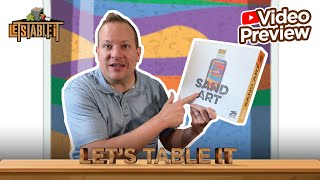
"It's a very artsy game planning out your design and then when and how to take actions will be you know the biggest focus of the game besides that it's your own little creation with your different colors and you actually are coloring in you know different shapes to form your own masterpiece."
— Let's Table It
"I love the concept in the middle, the thumb with the hand going back and forth. That's a really clever mechanism. It does get muddied as you get more special abilities."
— The Dice Tower
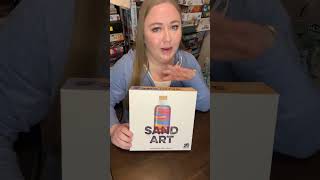
"Well, I thought the theme was really cool actually in this game because you're making sands in different colors and putting it into your bottle and you're trying to go for different shapes to score more points. But basically, it is an action selection game where you're moving your action markers back and forth and you're trying to fill it up as efficient as possible."
— Board Gaming Ramblings