



Canvas Critters Deep Dive
What the Community Thinks About Canvas Critters
Reviewers mostly treat Canvas Critters as a silly party game, and the fullest coverage comes from a complete playthrough on the Foster the Meeple channel. The group there spends most of the session naming their artwork, joking about a giraffe with fins for feet, and handing out ribbons with plenty of bickering. The fun is obvious even when the table is struggling with the rules.
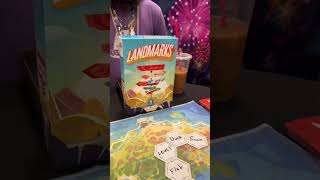
The Where There's a Wilz, There's a Play channel covers the game as part of a letter-by-letter review of its collection, and its verdict is more measured. The hosts call it silly and a natural pick for New Year's Eve, but they felt the two-player version fell short and wanted to try it with more people before settling on a rating. Grant Lyon, in a roundup of games they saw at Origins Game Fair, was simply excited to play it more and kept their take to the basics.
Core Mechanics That Define Canvas Critters
Timed, one-at-a-time token drafting
The heart of the game is a race to build. The first player flips a theme card and picks the subject, such as ghost, clown, or jungle, and everyone then takes critter tokens from a shared pool and arranges them on their own canvas. The rules are strict about how it is done: tokens come off the pool one at a time, a canvas needs a minimum of seven pieces, double stacking is allowed, and the art has to stay inside the border. When the first finisher flips the timer, everyone else gets that same amount of time to finish, which turns a quiet arranging step into a scramble. Players on the playthrough admitted to grabbing more than one token at once and worried aloud that the timer would run out before their picture came together.
Ribbon voting and the golden ribbon
Scoring happens after the art is named. Each artist presents a title, and then the others hand out first and second place ribbons, worth three and two points, to the pieces they like best, with no voting for yourself allowed. Every player also holds a single golden ribbon that can be given out once during the game. The Foster the Meeple table pointed out the stakes of holding onto it: if you do not give it out by the end of the game, you lose five points. The reveal turns into a running argument over who got shorted, and whoever has the most points at the end takes the win.
The Canvas Critters Experience
Goofy table talk and absurd titles
Much of the appeal comes from the chatter around the table. Players give their pieces names that are often funnier than the art itself, and the group reacts to every reveal. One piece is titled "Ghosts That Went Too Fast," another is a Ronald McDonald piece with a burger bun falling off, and one round dissolves into a debate about whether giraffes live in the jungle. The Foster the Meeple group treats the disputes as part of the fun rather than a reason to stop.
Creative pressure under the clock
The timer gives the game its tension. Players describe getting stressed, rushing to place a last piece, and struggling to see the overall picture before time runs out. One player admits that they "just can't see the vision," and the table tends to answer these moments with laughter rather than sympathy. The rush and the teasing arrive together, which is much of the game's character.
What Makes Canvas Critters Stand Out
Titles that turn artwork into comedy
The naming step is the game's most quotable feature. Players stop to praise a good title, such as an elephant taking a bath below the stars with a creepy rhinoceros watching, and they can tell when a name is clever rather than merely literal. Because the group judges the title as well as the picture, a piece can win laughs before it wins any ribbons.
A small, easy table game
The Where There's a Wilz, There's a Play hosts point out that the game is not a big box and does not take up much space, which makes it easy to pull out when a group wants something silly. The components are simple critter tokens and personal canvases. One host can see it becoming a New Year's Eve game for their group, which sums up the kind of easygoing social experience the game offers.
Potential Drawbacks
Rule questions during play
The playthrough shows how quickly rules questions pile up. Players argued about whether a title could literally describe the art, whether you could vote for yourself, and whether tokens had to be taken one at a time, and at one point the table asked for the rulebook. The hosts also noted that the copy being played was a prototype, with a cat token standing in as first player marker because the Bianca Blanco card was missing, and that anything could still change. Groups who want a smooth night should settle the rules before the timer starts.
Two players is a tougher fit
The Where There's a Wilz, There's a Play hosts were lukewarm on the two-player variant, where players build a picture from a shared pool and the other player has to work out what it is and which card it matches. The mode did not win them over, and one host said the game would likely be better with more people at the table. Players who enjoy the judging and the ribbon reveal should expect the game to shine most when there are enough artists to make the votes feel contested.
If You Enjoy Canvas Critters
None of the three sources names a comparison game, so there is no specific recommendation to make from these videos. The reviewers' descriptions point toward a particular kind of group: people who like loud, silly party games, enjoy good-natured arguing over art, and are happy to laugh at their own clumsy pictures. If your table enjoys quick creative challenges with a timer and a funny reveal, Canvas Critters fits that appetite. Groups who prefer quiet, strategic play, or who mainly want a two-player experience, may find it less satisfying.
What Reviewers Are Saying
"If you don't give it out by the end of the game, you lose five points. For being stingy. And whoever has the most points at the end of the game wins."
— Foster the Meeple
"This is one that I do feel would be better at a higher player count. You have to be fast because everybody's drawing their pieces from the same pool."
— Where There's a Wilz, There's a Play
"I'm excited to play more in Canvas Critters. You draft little animal meeples and use them to create mosaics based on a theme."
— Grant Lyon