










LLAMA Deep Dive
What the Community Thinks About LLAMA
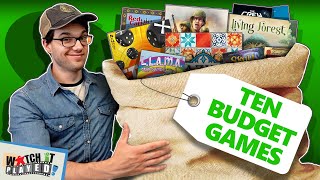
LLAMA has earned recognition as one of the most approachable and engaging lightweight card games in the hobby, frequently positioned as a superior alternative to Uno. Community reception splits distinctly between casual and hardcore gaming audiences: enthusiasts in mainstream circles celebrate it as the gold standard for family gaming, while some experienced players find its decision space too limited for sustained engagement. The consensus points to LLAMA's remarkable ability to bridge generations and skill levels, making it a game that genuinely works with everyone from young children to non-gamers who might otherwise dismiss board games entirely.
Core Mechanics That Define LLAMA
Betting and Bluffing Through Push-Your-Luck
LLAMA centers on a deceptively simple core decision: when you can no longer play a higher card onto the discard pile, do you pass out of the round and lock in your losses, or do you draw another card and risk compounding your penalties? This single decision axis defines the entire strategic experience. Players play cards in ascending numerical order, starting from ones and progressing upward, or use special llama cards to reset the pile back to the beginning. When a player cannot or chooses not to continue, they take on points equal to the value of every card remaining in their hand, a mechanic that shifts the game from pure luck into moments of genuine tension as players calculate risk versus reward.
The push-your-luck element transforms what could have been a routine card-shedding experience into something with teeth. Reviewers consistently highlight this decision point as the game's true brilliance. The choice to fold versus continue creates psychological engagement that encourages table talk and creates memorable moments, even when the eventual outcome hinges partly on fortune.
Score Redemption Mechanic
LLAMA includes a subtle but elegant catch-up mechanism through its unique scoring token system. Score tokens come in denominations of one point and ten points. When a player completely empties their hand before anyone else, they can return one score token to the supply. This means a successful round can eliminate an entire 10-point penalty rather than just reducing it by one. This mechanic rewards players who time their boldness correctly and provides meaningful opportunities to recover from a bad round, preventing any single player from running away with the game through early fortune.
The LLAMA Experience
Approachable Simplicity That Belies Surprising Depth
LLAMA teaches in minutes and plays in roughly 10-15 minutes, yet reviewers note it captures something magical about why people love Uno while actually providing more interesting decisions. The rules are transparent and the card play is intuitive even for young children and casual players. This accessibility works as LLAMA's greatest strength: it reaches people who might never touch a real board game, yet gives them an experience that feels clever rather than trivial. One reviewer described it as a Uno that is better, capturing how it delivers the same social energy but with superior game design.
Quick Rounds Enable Natural Re-engagement
Because LLAMA plays so briskly, players immediately want another round. The game's momentum keeps tables energized without demanding lengthy attention spans. Reviewers report playing LLAMA repeatedly in single sessions, which speaks to its addictive quality. The speed also means that even a single bad round doesn't create frustration since the next round begins quickly enough that luck feels less decisive. This plays directly into LLAMA's family appeal: everyone stays invested because no one sits idle and every round feels like a fresh start.
What Makes LLAMA Stand Out
It Succeeds Where Uno Falls Short
Multiple reviewers explicitly compare LLAMA to Uno, and the comparison consistently favors LLAMA. Where Uno devolves into pure chance with minimal meaningful decisions, LLAMA introduces the push-your-luck fork that transforms passive card play into active thinking. One reviewer, noting they played Uno extensively as a child, stated they would have strongly preferred LLAMA had it existed then. The game respects player agency without sacrificing mass appeal. Even casual gamers sense this difference immediately; it feels like a real game rather than an arbitrary luck generator.
Genuine Mass-Market Crossover Appeal
LLAMA performs a rare feat: it works brilliantly with non-gamers while remaining satisfying enough that dedicated board gamers will include it in their collections as a reliable filler or family tool. One reviewer's experience exemplifies this: their local gaming group found LLAMA unimpressive, but family members enjoyed it so thoroughly that they requested their own copy. The game doesn't need hardcore gamers' validation to succeed; it thrives in the spaces where most games cannot go. This flexibility makes it one of the few true crossover hits in modern design, genuinely useful whether introducing board games to new audiences or adding a crowd-pleaser to an experienced group's shelf.
Potential Drawbacks
Limited Decision Space for Experienced Gamers
Reviewers who approach LLAMA from a rules-complexity perspective find the decision tree thin. With essentially one meaningful choice per turn, push or fold, and outcomes heavily dependent on card draw, players seeking strategic depth may find LLAMA exhausted after a few rounds. One experienced reviewer rated it low, acknowledging it pretty much just plays itself and describing it as way too thin in terms of its decision space. For players accustomed to games with multiple strategic paths to victory or complex hand management, LLAMA feels simplistic by design. That design is intentional and appropriate for its audience, but it does mean hardcore hobbyists may view it as a novelty rather than a regular rotation game.
Significant Luck Element Can Overshadow Skill
Despite the push-your-luck decision point, LLAMA ultimately hinges heavily on which cards appear and when. A player can make perfect risk assessments but still lose decisively if the card distribution works against them. This randomness is precisely what makes the game appealing to casual players, but for those seeking games where skill meaningfully separates winners from losers, LLAMA's reliance on fortune may frustrate. The turn-your-brain-off quality that makes LLAMA perfect for family gatherings is the same quality that prevents it from becoming a game that rewards mastery or strategic study.
If You Enjoy LLAMA
For those drawn to LLAMA's quick rhythm and push-your-luck tension, Caesar offers a similarly brisk head-to-head dynamic in a package still playable in a single sitting but with a bit more strategic texture. Uno remains the obvious comparison point, though reviewers overwhelmingly suggest LLAMA is the superior choice between the two, trading pure luck for a game that respects player decision-making while keeping the same family-friendly energy.
What Reviewers Are Saying
"It does feel like a uno that is better. I played a lot of uno when I was a kid and I suspect if llama existed when I was a kid i would have much preferred llama."
— Getting Games
"I played this one with my local gaming group and it did not go over well. Very lukewarm tepid response. Then I played it with some family who are not like deep down the pit board gamers and they loved it. We played this one over and over and over again."
— Getting Games
"If your family liked uno and you want something that i think is even way better than uno, you know llama should be the game that is in everybody's houses rather than uno. It's just so much fun."
— Watch It Played