
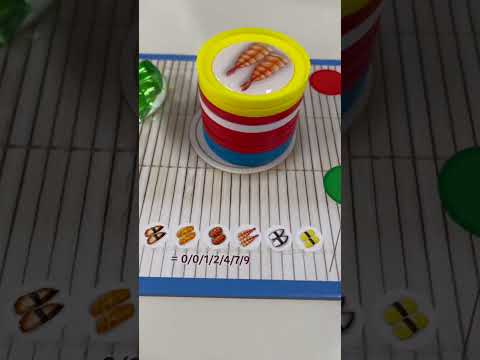





Sushi Boat Deep Dive
What the Community Thinks About Sushi Boat
Sushi Boat has captured reviewers' attention as a rare board game where thematic design meets mechanical elegance. Board game reviewers consistently celebrate how the game's core mechanic of set collection aligns perfectly with the real-world experience of ordering sushi at a conveyor belt restaurant. The game creates an accessible entry point for casual players while maintaining enough depth to engage experienced gamers. What stands out most in community discussion is how Sushi Boat respects both its theme and its players, avoiding unnecessary complexity while delivering a satisfying play experience.
Core Mechanics That Define Sushi Boat
Set Collection
At its heart, Sushi Boat revolves around collecting and matching colored plates of sushi. Players gather plates throughout the game and score points in two ways: by assembling consecutive sets of plates in the same color, and by building collections of different sushi types. What makes this mechanic special is its thematic authenticity. As one reviewer noted after experiencing sushi culture firsthand in Japan, "This is the first game where set collection actually makes thematic sense." In a real conveyor belt sushi restaurant, diners stack their plates by color at the end of their meal, and the bill is tallied by counting the colored stacks. Sushi Boat translates this authentic experience directly into scoring, making the mechanical action feel natural rather than arbitrary.
Memory
Sushi Boat incorporates memory as a secondary but meaningful mechanic. Players must recall which plates they have already eaten in order to make strategic decisions about which new plates to take. The game features a Wasabi Challenge element that specifically rewards players who can remember which plates were hidden from view earlier in the game. This adds a light but genuine puzzle layer to what might otherwise be a purely spatial strategy game. The memory element is forgiving enough for casual groups but present enough to create moments of genuine recall satisfaction.
The Sushi Boat Experience
Casual Social Atmosphere
Reviewers consistently describe Sushi Boat as a game designed for friendly, relaxed gatherings rather than competitive slugfests. The turn structure is simple enough that players can engage in conversation between turns without slowing the game down. The game accommodates two to five players, making it flexible for different group sizes. One reviewer emphasized that Sushi Boat excels at "sharing a taste of Japanese culture with a casual group of players," suggesting the game's appeal lies partly in its low-barrier entry point and social compatibility. The straightforward rules mean teaching takes minutes, leaving more time for actual play and interaction.
Immersion in Japanese Restaurant Culture
The game's thematic setting creates a distinct atmosphere that pulls players into the world of a busy Japanese sushi restaurant. Every component reinforces this immersion: the conveyor belt mechanism that physically slides plates toward and away from players, the detailed sushi pieces representing different nigiri and rolls, the porcelain wasabi dish, the colorful plates. These elements aren't mere decoration; they're integral to how the game communicates its theme. Reviewers who have experienced actual conveyor belt sushi dining noted that playing Sushi Boat replicates the familiar rhythm and decision-making of the real experience. Players face a continuous stream of choices as the conveyor moves, creating authentic tension between "What do I want?" and "Should I wait for something better?"
What Makes Sushi Boat Stand Out
Thematic Artistry and Component Quality
From the moment the box opens, Sushi Boat announces itself as a game where art direction and physical design matter. The handcrafted quality of the sushi meeples, the authentic look of the serving plates, the detailed illustrations on the side dish cards: no element feels like an afterthought. Reviewers consistently noted that "no effort was spared in the components." This level of care extends the play experience beyond the mechanics themselves. A beautiful game invites more table time and more casual play, which aligns perfectly with Sushi Boat's design intent. The visual appeal also serves the theme; seeing your personal collection of colorful plates grow reinforces the restaurant-setting narrative.
Simplicity Without Sacrifice
Sushi Boat proves that accessible games need not be shallow. The ruleset is intentionally minimal, yet the decisions players face remain meaningful. On each turn, a player draws a card showing how far to push the conveyor belt, then chooses whether to take a plate, buy a side dish, or make a request to the staff. This simple loop generates consistent engagement without overwhelming new players. The game's relative simplicity is one of its greatest strengths; it enables a wider audience to enjoy a game with genuine strategic options and thematic depth. Reviewers highlighted this balance as key to Sushi Boat's appeal, noting it works equally well as a family introduction to modern board gaming and as a casual game night staple for experienced players seeking something light but satisfying.
Potential Drawbacks
Memory Challenges for New Players
While the memory element adds charm, it can create friction for players unfamiliar with the game or those with memory-focused play anxiety. The Wasabi Challenge specifically requires recall of hidden information, which some players might find frustrating rather than engaging. In mixed-experience groups, this mechanic can inadvertently advantage experienced players over newcomers. The game does provide tools to make this manageable, but reviewers suggested that groups should be aware this element exists and might want to discuss house rules if memory challenges feel punitive rather than fun.
Name Confusion With Other Sushi Titles
Sushi Boat enters a crowded marketplace of sushi-themed games. Most notably, Sushi Go Around occupies a similar thematic space. While Sushi Boat distinguishes itself through its physical conveyor belt mechanism and more robust set collection system, the title similarity and shared theme could cause confusion among casual buyers or players unfamiliar with the distinction. Reviewers did not express this as a major gameplay issue but noted it as a practical consideration in a market where sushi-themed games are not uncommon. Game stores and online retailers might benefit from clear differentiation, as the games serve different audiences despite surface-level similarities.
If You Enjoy Sushi Boat
Players drawn to Sushi Boat likely value games where theme and mechanics align naturally. If you appreciate set collection games that feel purposeful rather than abstract, Sushi Boat delivers that experience. You'll enjoy games that reward memory without punishing it, and you'll appreciate design where component quality enhances rather than distracts from gameplay. Sushi Boat succeeds because it understands its own identity: a gateway game for casual groups that doesn't talk down to experienced players. Look for other games that share this philosophy of accessible depth. The game also appeals to players who seek cultural immersion through board gaming; if experiencing different cultures and settings is part of your gaming enjoyment, Sushi Boat delivers an authentic sushi-restaurant experience compressed into seventy-five minutes.
What Reviewers Are Saying
"This is the first game where set collection actually makes thematic sense and it's gorgeous."
— Board Game Dad
"What makes this game Stand Out is its thematic Artistry and relative Simplicity making it a great game for sharing a taste of Japanese culture with a casual group of players."
— Board Game Dad
"No effort was spared in the components from the plates of ngiri to the porcelain Wasabi dish."
— Board Game Dad