
/pic4037705.jpg)
There’s something hiding among us: an elusive cryptid is prowling our city streets. The evidence is clear but, without definitive proof, the scientific community will never believe you. There’s nothing else to be done – you must track down this cryptid yourself!
Play as a determined Scientist manipulating heat, movement, and sonic sensors to scan the city, identify your quarry's true location, and capture them. Or take the role of a Cryptid, snaking your way through the shadows and back alleys of the metropolis that surrounds you, eliminating all evidence of your existence as you go, desperately avoiding capture. Emerging victorious in this high stakes cat-and-mouse chase, played out across a sprawling urban landscape, will require all your ingenuity and foresight.
Cryptid: Urban Legends is a tense asymmetric game of competitive deductive reasoning for two players from the creators of Cryptid.
Part of the Cryptid family — see Cryptid for the combined view.



- finding cryptic
- city
Mechanics (from transcript analysis)
- Heat Sensor — Players use a heat sensor to go through the city to find cryptic elements.
Video topics + discussion points
Quotes (from this video)
- but number 86 is Love Letter
- I thought it would be top 20
- I think love letter is BR brilliant in its Simplicity
- so colorful so colorful
- it's exactly what a party game should be
- Unique I've never actually seen a mechanic quite like broom service
- beautiful beautiful beautiful
- it is not as easy as they look
- it's about Jack the Ripper basically and it's one versus all
- you just feel like you're being chased the entire time
- player interaction is really good
- it's fun super fun
- lots of cars beautiful cars beautiful artwork
- it's very Point sality very Point sality very kind of puzzly little bit of spatial awareness beautiful art it's great
- The Wolf theme isn't just abstracted on or painted on
- the art is great
- I'm really afraid I don't want to keep playing because I don't do those types of of of trading card games or living trading card game
- Darth Vader just killed Princess Leia
- I think it's perfect spot there and I hope it stays there
References (from this video)
- tight two-player deduction; strong box art
- images not shown in BGg at time of discussion
- two-player asymmetric deduction; cat and mouse
- Mr. Jack
- Mr. Jack Pocket
Mechanics (from transcript analysis)
- asymmetric deduction — one player operates as a cryptid; the other as a detective, with hidden locations and clues
- competitive deduction — players deduce true locations of the query through reasoning and sensor/measurement mechanics
Video topics + discussion points
Quotes (from this video)
- i'll be discussing 32 games that i have learned about over the last eight weeks
- gen con is happening
- arc nova it says you design a modern zoo and you run a successful park and you support conservation projects
References (from this video)

Mechanics (from transcript analysis)
Video topics + discussion points
Quotes (from this video)
- I think I might be kind of done with it
- the best solution for us right now is my iphone
- we filmed two more playthroughs and those realistically should be the first ones that go public
- I really can't wait to hear what people think
- we're hoping to put out the gallerist later this month
References (from this video)

- Borderline broken
- Mechanical and dry
- Not fun
- Cryptids and urban legends
- Cryptid
Mechanics (from transcript analysis)
- Area Control — Discs representing the cryptid expand based on certain configurations and proximity to other discs.
- Card game — Players have small decks of cards to manipulate cubes on a shared board.
- Set Collection — Victory point tokens are collected, which can determine the winner if other conditions aren't met.
Video topics + discussion points
Quotes (from this video)
- this is going to be pretty brief
- mostly positive i think
- i think i still want to do that
- it's been out several years but let's just say you get new types of workers there's new types of resources and there's new types of things so it just kind of grows in complexity again and i think it's a really good game actually but it was just like not satisfying enough
- so that's carnegie so this one i definitely recommend if you like euro games
- i really cannot recommend this one enough
- this is one i was like man every time i i played it twice now like i said and whenever i've left that left his house there i've been like i want to take this with me
References (from this video)
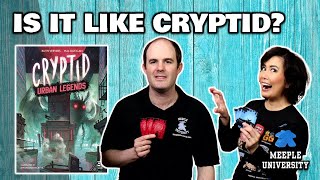
- a clean, well-thought-out design
- strong two-player gameplay with accessible rules
- great portability and compact size
- interesting balance and tension between the scientist and cryptid roles
- engaging enough to want to replay
- early game can feel abstract and not immediately intuitive
- requires visualization and explanation early on
- design hinges on managing a limited deck with only a few card types
- cryptid pursuit and deduction
- urban legends / cryptid theme
- two-player deduction with hidden information and public actions
- Cryptid
Mechanics (from transcript analysis)
- End Game Bonuses — At the end of a round, outer spaces reset and are replaced with new cards; game ends via a 'best of five' or auto-win conditions.
- Evidence counters / presents — The cryptid uses 'presents' tokens to claim spaces; scientists collect tokens by sweeping counters off the board.
- Focus cubes / colors — Cubes representing sensor focus (white/black/pink) drive the core deduction and scoring.
- Line action — Line: pick a color of sensor and move all sensors of that color to the opposite side (left or right).
- movement cards — On your turn you can pick up two movement cards from your deck; there are three movement types and a wild card.
- Round end / outer spaces — At the end of a round, outer spaces reset and are replaced with new cards; game ends via a 'best of five' or auto-win conditions.
- Shuffle action — Shuffle: move a cube (and related placements) with diagonal components to create new arrangements.
- Split action — Split: split the cubes in a chosen area into two directions, making sure at least one cube goes to both directions.
- wild card — Wild card acts as a balancing mechanism within the actions deck.
Video topics + discussion points
Quotes (from this video)
- it's a really neatly designed game
- one of the recommendations from us to try and play cryptid urban legends
- it's actually a different game it doesn't resemble the original cryptid at all
- the artwork also done by Quan Chi Moria
- this is a good compact travel game as well
- I reckon this is more fun than the original cryptid
References (from this video)
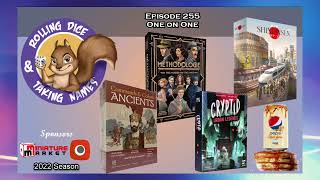
- Accessible entry for two players
- High production quality and clear components
- Solid depth after learning rules
- Rules can be initially confusing; mastering colors/numbers is nontrivial
- Mystery, investigation, cryptid lore
- Urban city landscape; two players take roles as cryptid vs. scientist within the cryptid universe
- Asymmetric, competitive deduction with a loose narrative tie-in to Cryptid universe
- Cryptid (original)
- Memoir '44
- Command & Colors: Ancients
Mechanics (from transcript analysis)
- area/sequence scoring — Scoring depends on card reveals and board positions to form winning configurations
- asymmetric roles — Cryptid vs. scientist with different win conditions
- Card-driven movement — Use action cards to move blocks/cubes on a city grid and reveal new possibilities
Video topics + discussion points
Quotes (from this video)
- not a deduction game like the original cryptid is this is something totally different
- if you like deduction games you might want to give this a shot
- this is a deduction game ... the complexity can be high but it's rewarding
References (from this video)

Mechanics (from transcript analysis)
Video topics + discussion points
Quotes (from this video)
- this is a two-player standalone game where players play as asymmetric people
- the cryptid is trying to escape the city by means of careful deduction
- we're going to start with the teach of the game and then go into our full two player playthrough
- the scientists are trying to capture the cryptid by means of careful deduction
- presence counters on the ends
- the deck is upside down