
Game Info
Year
2022
Collection
Your Tier
Loading…
Mechanic profile
Not enough video data yet
Vibe profile
Not enough video data yet
Description
Each round in Glyphics, the active player chooses a word or phrase from a card, then uses any or all of the forty plastic components to create an image or act out a scene so that another player can guess what you're trying to convey.
Featured Videos
Rules Teach

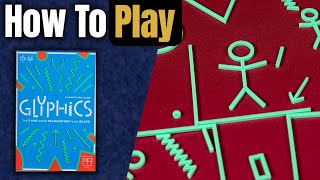
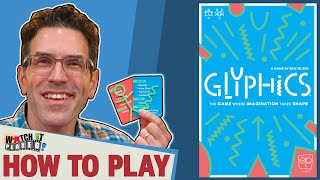
Glyphics - How To Play
Ask a Rules Question
All mentions
Browse transcript mentions, sentiments, pros/cons, mechanics, topics, quotes, and references.
Total mentions: 3
This page: 3
Sentiment:
pos 1 ·
mix 0 ·
neu 1 ·
neg 0
Showing 1–3 of 3
Video NOseO7lklNk
kovray Rules Teach at 0:00
video_pk 68214 · mention_pk 164572
Click to watch at 0:00 · YouTube ↗
Pros
none
Cons
none
Thematic elements
none
Comparison games
none
Mechanics (from transcript analysis)
Mechanics unknown.
Video topics + discussion points
No key topics recorded for this video.
Quotes (from this video)
- Glyphics, a game where imagination takes shape.
- This is not charades.
- Dive into glyphics.
- What are you waiting for?
References (from this video)
No references stored for this video.
Video NOseO7lklNk
kovray Rules Teach at 0:06 sentiment: positive
video_pk 68214 · mention_pk 219283
Click to watch at 0:06 · YouTube ↗
Overall sentiment (raw)
positive
Pros
- Encourages imagination and visual thinking
- Multiple play modes add variety and replayability
- 3D glyph construction is visually engaging
- Clear timer and round structure supports fast-paced play
- Roles and prompts create dynamic interaction between players
- Feedback mechanisms (nods/points) keep guessers engaged
Cons
- Relies heavily on visual interpretation, which may be challenging for some players
- No verbal communication can limit expressive possibilities for some groups
- Setup and learning curve may be slower for new players unfamiliar with glyph-based clues
Thematic elements
- Imagination and visual clue construction; nonverbal communication as the core mechanic.
- A tabletop setting where players sit around a table and collaboratively create visual glyphs to represent prompts.
- Abstract, clue-based party game with visual construction and deduction.
Comparison games
none
Mechanics (from transcript analysis)
- Alternative play modes — Multiple modes exist to vary play style, including mystery, timeless, slow motion, six for six, and team-up modes.
- Builder and guesser roles — On each turn, one player is the builder while the others are guessers; roles rotate each round.
- Compound Scoring — A correct guess for a noun or verb scores one point for both builder and guesser; a correct phrase scores two points for both.
- Dynamic prompt control — Builders may change the prompt mid-turn and indicate the change by clarifying whether the new prompt is a noun, verb, or phrase.
- End of round and game structure — Five rounds per game with one prompt skipped per round; total points determine the winner; tie-breakers are resolved by overtime rules.
- Glyph manipulation and 3D possibility — Pieces can be moved and arranged to create three-dimensional glyphs and illustrate actions.
- Hint indicators — Nodding or pointing is allowed to indicate if guessers are on the right track.
- Nonverbal clueing — Builders use glyph pieces to convey the prompt without talking, sounds, or spelling the word.
- Prompt reuse — If players are stuck, the builder can reuse the same prompt in a future turn.
- Prompt selection and classification — Builders choose one of six prompts and declare if it is a noun, verb, or phrase.
- scoring rules — A correct guess for a noun or verb scores one point for both builder and guesser; a correct phrase scores two points for both.
- timed rounds — Each builder turn is accompanied by a 60-second timer to shape a glyph that conveys the prompt.
Video topics + discussion points
No key topics recorded for this video.
Quotes (from this video)
- Glyphics, a game where imagination takes shape.
- This is not charades.
- Dive into glyphics.
- What are you waiting for?
References (from this video)
No references stored for this video.
Video AdW1sPmKmXc
Watch It Played Rules Teach at 0:13 sentiment: neutral
video_pk 64123 · mention_pk 157607
Click to watch at 0:13 · YouTube ↗
Overall sentiment (raw)
neutral
Pros
- Doesn't require drawing or acting skills; accessible to players who may not be able to draw or act.
- Encourages imagination and creative depiction.
- The timer adds pace and energy to rounds.
- Clear scoring and multiple ways to play (variants).
Cons
none
Thematic elements
- depicting nouns, verbs, or phrases using pieces to convey a prompt
- tabletop at the center of the table with players using pieces to depict prompts
- silent depiction using physical pieces without talking
Comparison games
none
Mechanics (from transcript analysis)
- guessing — Other players call out guesses to identify the secret prompt; unlimited guesses allowed.
- Return of pieces — After each turn, used pieces are returned to the center; next player starts.
- scoring — Builder and guesser earn points based on whether the prompt was a noun/verb (1 point) or a phrase (2 points).
- Tie-breaker — Sudden death turn with no time limit to break ties.
- Timed depiction — The builder uses pieces to depict a secret prompt within a 60-second turn.
- Turn order and rounds — Turns proceed clockwise with five rounds; each player gets five turns as builder.
- Variants — The rule book includes alternative modes like not revealing prompt types or removing the timer.
Video topics + discussion points
No key topics recorded for this video.
Quotes (from this video)
- In glyphics, players will take turns being the builder using the plastic pieces to create scenes representing one of the words or phrases on their card while the other players attempt to correctly guess it.
- Correct guesses earn the guesser and builder points, and the person with the most points at the end of the game wins.
- If more than one person calls out the correct answer at the same time, the group must determine who they believe said it first.
- So dreaming would have been fine, too.
- If the word was dolphin, then dolphins would also count as a correct guess.
- There is no time limit and the first player to guess correctly breaks the tie and wins.
- The game also comes with other ways to play, which you'll find on this page of the rule book.
- The first player to discover a new hieroglyphic wins.
- I don't make up the rules. I just explain them.
References (from this video)
No references stored for this video.
Transcript Navigation
Showing 1–3 of 3