





Fishing Lessons Deep Dive
What the Community Thinks About Fishing Lessons
Fishing Lessons has sparked enthusiasm across the solo gaming community for reasons that go beyond its compact format. Reviewers consistently praise it as a thoughtfully designed experience that subverts expectations: the game delivers emotional weight alongside clever puzzle mechanics in just 12 minutes of play. While the theme immediately draws some players, others start skeptical about fishing as a subject but find themselves won over by the depth and meaning embedded in the mechanics. The consensus suggests Fishing Lessons succeeds because it integrates its theme seamlessly into how the game actually plays, making the mechanical choices feel authentic to the experience of honoring a family legacy rather than simply fishing for sport.
Core Mechanics That Define Fishing Lessons
Programming
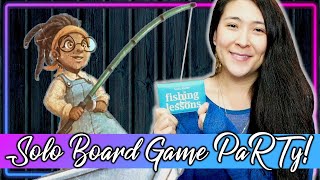
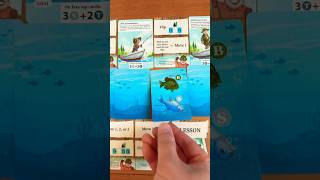
Fishing Lessons uses a programming system at its heart: you place lesson cards in a row, then execute them in order to move your boat and flip cards in a lake. This mechanic creates the tension that makes the game work. You must think ahead about how each lesson will cascade into the next, considering which fish cards you want visible and where your boat will end up. The brilliance lies in the flexibility of the approach. You can place lessons anywhere in your sequence, replace existing lessons, or show restraint by discarding cards entirely. Designer Scott Elms crafted this system so that the act of planning your actions mirrors the real-world discipline fishing requires: sometimes the strongest move is doing nothing. The programming system ensures every decision carries weight, and no turn feels like busywork.
Set Collection
Your ultimate goal in Fishing Lessons is collecting the right combination of fish. Each character has a unique target: three tilapia and two catfish, or perhaps three sturgeon and two trout. You flip cards by executing your lessons, revealing fish underneath, and you must ensure the correct cards remain face-up when you reach your win condition. This set collection goal transforms the game from a simple sequence puzzle into a planning challenge where you must trace multiple moves ahead. The fish cards themselves carry Button Shy Games' signature charm: beautiful artwork and diverse character designs make each family member's fishing dream feel personal and meaningful. The constraint of matching a specific set under pressure creates satisfying moments of victory and genuine tension when you realize you've made an error with only lessons left to play.
The Fishing Lessons Experience
Satisfying Puzzle Tension
Reviewers describe an intense mental challenge that doesn't outstay its welcome. Players report that the game regularly breaks their brain in the best way: the complexity of tracking which cards move where, which fish remain flipped, and how your sequence of actions chains together demands focus and planning. Yet this challenge fits neatly into a quick solo session. The difficulty scales gracefully through three modes: checking your goal after each lesson card, after each full turn, or only at the end of the game. This structure means players can gradually climb the difficulty ladder rather than being locked into one challenge level. The payoff is genuine: reaching your goal feels earned because you've threaded a mental needle, not simply gotten lucky with card draws.
Nostalgic Emotional Resonance
The theme creates an unexpected emotional layer. You play as one of Leland's family members carrying out the fishing trips he taught them, completing the lessons he left behind. This framing transforms a puzzle game into a meditation on family, legacy, and how people are remembered. The lesson cards carry quotes from Leland, and as you play through different characters, you piece together a portrait of who he was and what mattered to him. Reviewers note this theme caught them off guard, turning what seemed like a straightforward puzzle into something more contemplative. The game feels small in scope and playtime, yet large in its emotional impact. It's a reminder that board games can teach players something about themselves and their relationships, not just challenge their logic.
What Makes Fishing Lessons Stand Out
Theme Married to Mechanics
Button Shy Games succeeded in making the mechanical choices feel authentic to the fishing theme. The necessity of planning ahead, showing restraint, and thinking about movement patterns aligns naturally with how real fishing works. You're not going through motions where the theme feels tacked on; instead, the programming system, the boat movement, the flipping mechanic, and the specific fish you need all reinforce the experience of a contemplative fishing trip. This unity of theme and mechanics is why the game resonates beyond the solo gaming enthusiast crowd. Even players initially skeptical about fishing as a subject find themselves drawn in by how elegantly the rules reflect the theme.
Expandability Without Bloat
The game ships lean at 18 cards, but expansions enhance it meaningfully. The Family Friends expansion adds more characters and lesson cards, increasing replayability. The Fabled Fish expansion introduces special cards that trigger unexpected effects when revealed, adding surprise and adaptability. Reviewers praise how these expansions add variety without complicating the core experience. There's a specific note about the Fabled Fish expansion: an early print run had an incorrect ability on one card, but replacements are available, and players report this is a minor issue easily addressed. The expansion strategy respects the game's elegance while offering players who want more puzzle variety a clear upgrade path.
Potential Drawbacks
Luck and Card Draw Variance
How your lake cards are initially shuffled into the row matters significantly. Some players report winning on their second game quickly, then winning the next several times on easy difficulty, which felt less satisfying than the genuine struggle of their early plays. The luck of card placement at the start can create mismatches between your preparation and the actual puzzle you face. Reviewers note that the hard mode mitigates this by requiring you to plan everything perfectly regardless of initial layout, but for players preferring a more consistent level of challenge, the luck element can undercut replay satisfaction. This suggests the game shines most when you're willing to climb the difficulty ladder as you master it.
Memory Element and Limited Visibility
The mechanics require you to flip cards face-down and face-up as you execute lessons. Some players struggle with the memory component: remembering which fish hide under which cards matters strategically, and if you're not naturally gifted at memory games, this can feel frustrating. A few reviewers note they use house rules to mitigate this, keeping a separate offset row so they can track revealed cards without remembering them mentally. Others adapted by playing the easy mode, which reduces the memory burden. The 18-card constraint means the visual information density is high, and the small card size can make tracking details difficult during play. Players who dislike memory elements should be aware this is a real component, though the community has identified viable workarounds.
If You Enjoy Fishing Lessons
Players who love Fishing Lessons often gravitate toward other Button Shy Games titles. The design sensibility across the publisher's catalog is consistent: elegant mechanics, beautiful art, and respectful complexity in a wallet-sized format. If you enjoy the programming puzzle, Rove offers a similar satisfaction of planning movements and positioning modules on a map. If the emotional theme resonated with you, Unsurmountable similarly uses its climbing-a-mountain theme to create introspection while solving spatial puzzles. For those who want more character-driven storytelling with solo depth, other wallet games from Button Shy provide similar craftsmanship. The broader recommendation is to explore designers who treat solo gameplay as a storytelling medium, not just a puzzle format: designers like Scott Elms and others in the Button Shy catalog consistently deliver games where the theme and mechanics work in concert rather than contradiction.
What Reviewers Are Saying
"I think the mechanics do a great job of emulating that. You can put out a sequence of lessons that you have to really think ahead about how that's going to impact your presence in the water and the idea that you can replace certain lessons and show restraint and not doing too many moves sometimes less is more and that goes pretty well with the theme."
— Tabletop Tokki
"This is not just about fishing picking up some fish it is kind of looking at and it sort of looks at that idea of the lessons we pass down to those around us and family members and friends and how they remember us."
— Jessica
"It is a very simple little puzzly card game, but for some reason I just could not figure out how to win this game and it broke me. A lot of to have to figure out in my brain."
— The Board Game Garden