




Tug of Roar Deep Dive
What the Community Thinks About Tug of Roar
Tug of Roar occupies a curious space in the board game landscape. Reviewers universally recognize it as a competitive two-player game with area control elements, but they're unanimous in reframing it as something deeper than a traditional battle game. The consensus across independent reviewers and the publisher is striking: this is, above all else, a puzzle game. Reviewers who might typically avoid military or combat-themed games find themselves drawn to Tug of Roar precisely because the "battle" metaphor masks what is really a game about sequencing, card combination, and resource management. There's no criticism or controversy in the available discussions, only enthusiasm tempered by recognition that the game demands careful thought from both players. The design by Filippo Landini and publication by Inside Up Games have produced something that plays much faster than its strategic depth would suggest.
Core Mechanics That Define Tug of Roar
Captain Bidding Auction
Tug of Roar's enlist phase opens with a bidding system that immediately signals the game's real identity as a puzzle. Players each start with 10 captains ranked from 0 to 10, representing their clan's military leadership. Each round, two sets of recruits appear, and players simultaneously bid one captain against each other to claim their preferred set. Whoever plays the higher-ranked captain gets to choose, while the other player takes the remaining set. After bidding, that captain is permanently retired from the game, never to be used again. This creates immediate tension around a core decision: should you spend your strongest captains now to secure the best recruits, or conserve them for the skirmish phase when they determine the final battles? The bidding mechanism is economical and elegant, forcing players to balance short-term advantage against long-term leverage. Reviewers compared this decision-making to games like El Grande, noting that spending your highest-value cards early is a trap, but timing them too late is equally costly.
Area Control Across Contested Regions
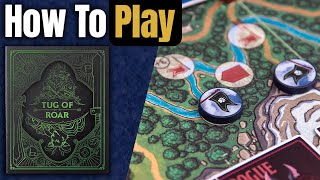
The deploy and skirmish phases transform the game into a spatial puzzle across five contested regions on a shared map. In the deploy phase, players alternate placing their recruited units face up or face down into these regions, with each region holding exactly two cards per side. Placing the first two cards in a region grants an enlist bonus that provides immediate card draw advantage. The real complexity emerges from the roar mechanic: cards played face up can generate roar values that move a central roar marker along a fear track. When the marker reaches the opponent's side far enough, that opponent receives fear tokens, which function as point penalties applied to specific regions during final scoring. Face-down cards hide your intentions but give up the ability to generate roar and activate class-specific powers. When all placements are complete, the skirmish phase begins: players add their remaining captains to each region, compare total combat strength (including fear penalties and class bonuses from paired units), and claim flags based on margins of victory. This multi-layered area control system rewards planning across three distinct phases, creating a puzzle that unfolds gradually rather than resolving in a single decisive moment.
The Tug of Roar Experience
Puzzle-Like Strategic Depth
The most striking quality of Tug of Roar, according to reviewers, is how it disguises itself. From a distance, it looks like a dueling wargame with fantasy armies and contested regions. In reality, players are solving an intricate optimization puzzle. Reviewers emphasize that the real task is drafting the right cards that combine with each other to produce the best outcome, not winning individual battles. Class abilities activate only when paired cards of the same type occupy the same region, rewarding foresight about which recruits you draft and where you deploy them. The puzzle compounds because you only ever see three of your twelve recruits at a time, forcing decisions under incomplete information. This transforms the game into a jigsaw where you're fitting pieces you don't fully understand into spaces you can't fully see. A reviewer from Allies or Enemies noted that when drafting, "you want to draft cards that have a high battle value but you also want to think about what power they may have and most of the powers only activate if you're playing two in a battlefield."
Tension of Limited Resources and Timing
Tension permeates every decision in Tug of Roar because nothing respawns. Your captains, spent in bidding, are gone. Your recruits, placed on the board, cannot move. Your remaining captains, held for skirmish, must be chosen for five regions but you only have six left. This constraint creates a specific flavor of tension: the game constantly forces you to choose between revealing strong cards early (showing your opponent your strategy while gaining immediate advantage) or hiding them (keeping them secret but forfeiting present opportunity). Reviewers describe this as "mind games," noting that much of the gameplay consists of reading your opponent's moves and deciding whether to commit resources to a region or save them for uncertain future threats. The face-down card option heightens this: three of your ten recruits can be hidden, and the decision of which three and where they go becomes a critical bluff. One reviewer noted, "There's a lot in this game that's about timing of when am I going to show my really good cards what am I going to try and keep secret you know there's some mind games going on and it's really fun."
What Makes Tug of Roar Stand Out
A Three-Phase Structure That Unfolds Gradually
Unlike simpler area control games that resolve on a single round of allocation, Tug of Roar spreads its decision-making across three distinct phases: enlist, deploy, and skirmish. This structure forces players to think forward while adapting to present information. The enlist phase (four rounds of bidding) forces long-term commitment; you're selecting recruits based on abilities and values you hope will combine well, without seeing the full army you'll field. The deploy phase breaks this abstract selection into concrete positioning, where you see your opponent's strategy forming and must react accordingly. The skirmish phase, finally, tests whether your planning survived contact with your opponent. Reviewers found this progression elegant because it prevents any single decision from being dominant, creating a game where no two plays unfold identically. The captain tiebreaker rule, where unclaimed regions are decided by remaining captains, adds a fourth layer of decision-making: should you burn a strong captain on a region you're already winning to avoid a tied outcome, or trust that your final captain will prevail?
Class Bonuses That Reward Pairing and Foresight
The game includes six classes of recruits (Barbarians, Druids, Bards, Clerics, Warlocks, Rogues), each with special abilities that trigger only when two of the same class occupy the same region during skirmish. Barbarians have no special ability but higher base values. Druids can move or replace cards during deployment. Bards add to captain ranks. Clerics allow a third recruit. Warlocks force one-on-one duels. Rogues add random ambush tokens. These abilities are modest individually but create genuine moments of satisfaction when they come online. The constraint that you must draft both cards of a class pair during enlist, then successfully deploy both to the same region, creates a two-phase puzzle: you're both selecting compatible cards and anticipating how you'll use them later. Reviewers appreciate this because it layers another dimension of planning onto an already rich game. A reviewer from Allies or Enemies noted the asymmetry between the Elk and Lyran clans (who win tiebreakers at different phases), adding just enough personality without breaking game balance.
Potential Drawbacks
First Impressions May Mislead
The game's presentation as a fantasy battle game may deter players who have explicitly rejected wargames, area control games, or military themes. Reviewers address this head-on by reframing the game as a puzzle, but this means a prospective player reading rules or seeing the map and miniatures must overcome an initial misconception. The game does not reward aggression or grand strategy in the traditional sense; it rewards ruthless optimization and tight play. For players seeking a theme that immerses them in fantasy conflict, Tug of Roar's mechanical focus may feel cold or overly abstract. The strength of the game is strategic, not narrative.
Complexity Emerges in Layers
While reviewers note the game plays in 30 minutes, that speed applies only after both players understand the cascading interactions between bidding, deployment, fear mechanics, class bonuses, and tiebreaker resolution. The rules are not difficult, but the decision space is large. A first-time player bidding captains without understanding how roar mechanics or class abilities will matter later will spend their strong captains without optimal return. Similarly, the face-down card option adds bluffing depth that requires confidence and familiarity; new players often avoid the strategic advantage of hiding cards out of uncertainty. The game doesn't have a learning curve so much as a learning cliff: it's playable and fair immediately, but expertise comes from dozens of plays. Reviewers who have played multiple games express genuine excitement, but the path from first play to competence requires patience.
If You Enjoy Tug of Roar
Players drawn to Tug of Roar's blend of bidding and area control will find similar satisfaction in related titles. Almighty shares the two-player head-to-head intensity and area majority mechanic, though with different auction systems and theme. AirLand and Sea similarly divides the board into contested theaters and forces players to manage a limited hand across multiple simultaneous conflicts, creating that same juggling of resources and priorities. Shot and Totton offers area control with a bidding layer, appealing to players who love the captain-auction feel. El Grande, while more complex and with more players, pioneered the spending-your-best-cards-early tension that Landini channels into Tug of Roar's streamlined frame.
What Reviewers Are Saying
"You want to draft cards that have a high battle value but you also want to think about what power they may have and most of the powers only activate if you're playing two in a battlefield."
— Allies or Enemies
"Really this is a puzzle game, this is a game about drafting the right cards that are going to combine the best to give you the best outcome."
— Inside Up Games
"There's a lot in this game that's about timing of when am I going to show my really good cards."
— Inside Up Games