







Repent! Ye Foolish Gods Deep Dive
What the Community Thinks About Repent! Ye Foolish Gods
Reviewers embrace Repent! Ye Foolish Gods as a fresh take on the solo and cooperative wargaming space, celebrating its narrative-driven campaign system and accessibility for players new to miniatures gaming. The consensus is decidedly positive: this is a game that delivers meaningful gameplay in a compact footprint, supported by an aesthetic vision that sets it apart. Tabletop Minions content creators consistently highlight the game's dark fantasy appeal and its straightforward approach to what could otherwise be intimidating mechanics.
Core Mechanics That Define Repent! Ye Foolish Gods
Campaign-Driven Progression
The heart of Repent! Ye Foolish Gods is its campaign system. Players progress through linked scenarios where outcomes carry forward between sessions. Warriors in your Sept gain new abilities, better weapons, and magical items as they prove themselves in battle. This progression creates stakes: your characters become invested entities with personal development arcs rather than interchangeable tokens. The campaign structure is designed for play across weeks or months, rewarding players who commit to seeing a narrative through from start to finish, culminating in a confrontation with the dark god that plagued your warriors.
September Selection and Character Customization
At the core of gameplay is your Sept, a band of four warriors chosen from six character types: the Bastard, the Cursed, the Fallen, the Forsaken, the Soldier, and the Wronged. Each type breaks down into two variants, giving players meaningful choices in how they build their force. Designers Adam Loper and Vincent Venturella structured the game to work with miniatures agnostic principles, meaning players source their own models. Combined with the ability to choose from eight different dark gods, each granting unique powers to enemy forces, the system offers genuine variety without demanding purchase of official miniatures.
The Repent! Ye Foolish Gods Experience
Narrative Tension and Personal Investment
Reviewers consistently describe the experience as deeply personal. Individual warriors become characters with names and stories rather than faceless game pieces. Damage is permanent, and warriors can fall in battle, forcing players to recruit replacements and grapple with loss. This creates emotional weight: every decision matters because your warriors might not survive to the next scenario. The narrative framing, where you play as forsaken followers of a dying god seeking vengeance, reinforces this sense of consequence and meaningful struggle.
Dark Atmosphere and Old School Fantasy
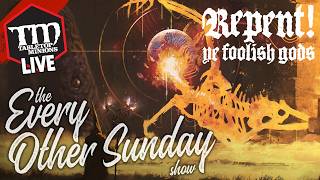
The aesthetic pulls heavily from classic dark fantasy and dungeon-delving traditions. The artwork by Polish artist Darius Kieliszek sets the tone through moody, powerful imagery that fits the world perfectly. Reviewers note an old-school Dungeons and Dragons sensibility with magic systems that feel weighty and dangerous. The game celebrates darkness not as grimdark nihilism but as a setting where your choices and actions matter against overwhelming evil. This tonal consistency runs through every aspect of the game design.
What Makes Repent! Ye Foolish Gods Stand Out
Miniatures Agnostic Accessibility
Unlike Games Workshop titles that lock players into official models, Repent! Ye Foolish Gods encourages sourcing miniatures from any manufacturer. This is a feature, not a limitation. Players can use models from their existing collections, hunt for Frostgrave cultists from North Star Military Figures, or proxy entirely different lines. The game requires cultist models as enemies and a handful of player character miniatures, but reviewers praise how easily these exist across the miniatures ecosystem. This approach lowers the barrier to entry significantly: players can start playing with models they already own.
Compact Footprint and Accessibility for New Wargamers
The game plays on a 22 by 30 inch area, the same footprint as Kill Team. This means no sprawling battlefields, no need for massive tables. Small play areas and quick game resolution make Repent! accessible to adult gamers juggling time constraints. Reviewers with limited hobby space specifically call out how the compact design solves real-world problems. New wargamers find entry easier here than with army-scale games: instead of building and painting dozens of models, players field four to eight miniatures and focus on narrative and tactics rather than vast model counts.
Potential Drawbacks
Game Density and Learning Curve
The 132-page rulebook is comprehensive, and reviewers note that the game's density may require effort to learn. For players seeking ultra-streamlined mechanics, the rules depth might feel overwhelming on a first read. The wealth of warrior types, god options, and modular terrain systems creates complexity that demands engagement. This is not a filler game or a quick-play experience; it is a system with meaningful systems to master. Players who prefer lighter designs may find themselves on the outside looking in.
Warrior Attrition and Permanence
Warriors can die and need replacement. Damage can affect warriors permanently, reducing their effectiveness for future scenarios. For players who form attachments to specific miniatures, losing a favored warrior stings. This is by design, creating genuine stakes. However, for players who dislike character loss mechanics, this permanence may feel punishing rather than narratively resonant. The campaign structure means these losses accumulate and compound, reshaping your force across months of play.
If You Enjoy Repent! Ye Foolish Gods
Reviewers who love this game gravitate toward similar titles built on narrative foundations. Kill Team shares the compact skirmish approach and individual character focus, though it lacks Repent's campaign backbone. Space Station Zero from Snarling Badger Studios delivers comparable miniatures-agnostic design with a sci-fi twist. Death Wizards and Rain in Hell, earlier titles from the same designers, establish the lineage of games that prioritize campaign play and solo accessibility. Players drawn to old-school dungeon-crawling vibes may find appeal in games that blend wargaming with RPG sensibilities, games where character progression and narrative weight drive the experience as much as combat mechanics.
What Reviewers Are Saying
"The artwork in the book is darkly beautiful and all done by artist Darius Kilisk, which I I think I'm probably mispronouncing a little bit and I apologize. You can find his amazing work on Instagram, again, link down below, and you'll see exactly what we saw in his work, like, you know, moody powerful images that fit into the world of Repent Ye Foolish Gods perfectly."
— Snarling Badger Studios
"We will see the launch of Repent Ye Foolish Gods, a dark fantasy game that we have been working on over this last year with amazing artwork and uh, a lot of like campaign play. And you can play it solo and co-op or versus all that kind of stuff. And it's really cool."
— Tabletop Minions
"Skirmish games are generally easier to create. Vince Venturella and I have been making miniature games since 2021 with our company Snarling Badger Studios, and they've all been skirmish-sized war games. But only needing usually fewer than 10 or at the most even 20 models helps our games sell."
— Tabletop Minions