



Small-Time Heroes: Base Box Deep Dive
What the Community Thinks About Small-Time Heroes: Base Box
Small-Time Heroes has emerged as one of the standout solo and cooperative games in recent memory, earning consistent praise from multiple major review channels. Reviewers describe it as a fresh take on the deck-building roguelike formula, with several noting a preference for it over similar titles in the genre. The game resonates particularly well with players who appreciate both campaign structure and the replayability of roguelikes. One reviewer placed it among their top 10 games of last year, while the game appeared on numerous "best of" lists. The enthusiasm extends beyond casual appreciation, with hosts citing it as a personal favorite and recommending it to players specifically interested in solo experiences.
Core Mechanics That Define Small-Time Heroes: Base Box
Deck Building and Card Choice
At the heart of Small-Time Heroes lies a robust deck-building system where players acquire upgrade cards after each battle to strengthen their hero. What stands out is the sheer breadth of available upgrades. With such a large pool to draw from, no two playthroughs feel identical. Players report that they consistently select completely different cards from run to run, discovering new synergies and strategies each time they return to the game. This mechanical depth ensures that even experienced players find fresh tactical puzzles in subsequent plays.
Boss-Driven Enemy Design
The game's boss system introduces a layer of strategy that extends beyond the final encounter. Rather than serving as a sudden climax, bosses actively shape the minion waves that precede them. Their mechanics and powers influence how enemy encounters unfold, forcing players to adapt their deck composition and tactical choices in anticipation of future boss fights. This forward-looking design creates a unique tension where players must balance immediate survival against preparing for the inevitable confrontation.
The Small-Time Heroes: Base Box Experience
Compact and Accessible Gameplay
Despite its strategic depth, Small-Time Heroes excels in presentation and pacing. Setup and teardown take literally less than five minutes, making it one of the quickest games to deploy and put away. The rounds of play are straightforward and intuitive, avoiding excessive downtime between decisions. This accessibility combined with meaningful choices makes the game welcoming to new players while remaining engaging for veterans.
Roguelike Progression and Replayability
The game follows the roguelike formula: players control a hero tasked with defending against successive waves of monsters. After each wave, players gain the opportunity to upgrade their hero by selecting new cards. Should they survive the minion encounters, they face a boss. Victory requires both tactical skill and smart deck construction. This loop is immediately satisfying, and the variability in card choices ensures each run feels meaningfully different from the last.
What Makes Small-Time Heroes: Base Box Stand Out
Campaign Mode Excellence
Reviewers consistently highlight the campaign mode as a standout feature. Unlike many solo games that excel at one-off plays, Small-Time Heroes structures its campaign to feel purposeful and cohesive. The multi-game campaign creates an arc that rewards investment across multiple playthroughs, appealing to players who value narrative progression and long-term engagement beyond a single session.
Diverse Heroes and Mechanics
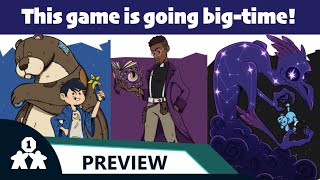
The base game includes multiple playable heroes, each with distinct abilities and playstyles. The announced expansion introduces new heroes, including a summoning-focused character whose mechanics allow players to field allied units that attack automatically each turn. These summoning mechanics introduce tactical layers absent from other characters, opening up entirely new strategic approaches and encouraging repeated plays to master different archetypes.
Potential Drawbacks
Familiarity in Genre Conventions
Small-Time Heroes draws heavy inspiration from Slay the Spire, making the core gameplay loop recognizable to anyone versed in roguelikes and deck builders. While the implementation differs and many prefer this game's execution, some players may perceive it as iteration rather than innovation. The comparison arises naturally and frequently in reviews, which can either draw fans of the genre or attract those seeking more radical departures from established roguelike structure.
Challenge and Luck Dependency
The game can be unforgiving. Reviewers note that card draws and enemy spawns can heavily influence outcomes, and players in an unlucky streak may find themselves unable to recover. Some players mention the difficulty requires accepting losses as part of the experience rather than pursuing continuous victory. Those seeking guaranteed or easily achievable success, or players who prefer more forgiving mechanics, may find the inherent randomness frustrating.
If You Enjoy Small-Time Heroes: Base Box
Players who love Small-Time Heroes should explore Slay the Spire in both its digital and board game forms, though reviewers note a preference for the Small-Time Heroes experience. Other rogue-lite games that emphasize deck building and progressive power growth, as well as games featuring summoning mechanics or dynamic boss encounters, will likely resonate with fans. The game's campaign structure also appeals to those drawn to cooperative experiences with single-character focus, and its quick playtime makes it ideal for players seeking meaningful solo gameplay that fits into shorter windows.
What Reviewers Are Saying
"it was one of my top 10 games of last year. And if you listen to the podcast, it was Peter's number one game of last year, spoilers. So, we just love it."
— One Stop Co-op Shop
"this is basically Slay the Spire, but with different characters, some different mechanics, and I actually prefer this one to Slay the Spire, both the video game and the board game adaptation. I love the campaign mode. I love the way the bosses work and how they impact the enemy fights even before they come out."
— One Stop Co-op Shop
"there are so many upgrade cards no two plays of this game feel the same. I find it fascinating whenever I pull this one off my shelf and how each play I end up picking completely different upgrade cards and it provides such a unique experience."
— Meet Me At The Table