



Dungeons of Doria Deep Dive
What the Community Thinks About Dungeons of Doria
Dungeons of Doria has quietly built a passionate following among board game reviewers who recognize it as something special. Reviewers consistently place it in their top tier of dungeon crawlers, praising its fresh take on a well-worn formula. The game strikes a balance between accessibility for newcomers and strategic depth for veterans, making it a standout choice for cooperative dungeon-delving experiences. What emerges across multiple reviews is a game that feels both classic and innovative, combining familiar roguelike mechanics with clever systems that keep each playthrough feeling distinct.
Core Mechanics That Define Dungeons of Doria
Modular Board and Randomized Exploration
Each scenario begins with a predetermined dungeon layout that gets revealed tile by tile as players explore. The genius of this system is how it creates genuine uncertainty and tension, even on replays of the same scenario. With multiple tile options shuffled into the deck before setup, players never quite know what's lurking behind the next door. This modularity extends to large rooms that force players to draw multiple connected tiles, creating sprawling areas filled with treasure and danger. The unpredictability drives strategic decision-making: do you rush forward to complete objectives quickly, or carefully explore to maximize loot and leveling opportunities?
Combat: Damage Based with Initiative Puzzle
Combat revolves around tracking hit points through an elegant initiative system where every action costs initiative points. Players roll dice, add modifiers, and spend initiative to attack, move, or use abilities, all while managing when enemies activate based on their position on the initiative track. Weapons have varying initiative costs, forcing choices between powerful moves that burn your remaining actions and efficient strikes that keep you active longer. Armor doesn't regenerate but breaks after blocking damage once, creating a resource-management layer around defense. This system rewards tactical thinking and positioning rather than relying solely on dice luck.
The Dungeons of Doria Experience
Building Power Through Loot and Leveling
The game's most satisfying element is the gradual empowerment of your character. Each defeated enemy yields experience points that convert into stat improvements, and every exploration rewards loot cards representing equipment, spells, and consumables. Unlike many dungeon crawlers where gear feels generic, Dungeons of Doria's loot cards are diverse enough that characters develop unique identities through their equipment choices. Stat requirements on gear create meaningful progression as players decide which attributes to boost first, unlocking access to more powerful items. Scenarios are carefully balanced so that even starting characters feel capable, yet growing stronger provides tangible benefits that persist within a campaign's story.
Scenario-Driven Adventures with Campaign Support
Whether playing standalone scenarios or following a multi-scenario campaign, Dungeons of Doria structures its narrative around clear objectives and escalating challenges. A scenario might ask heroes to rescue a prisoner, investigate an alchemist's lair, or survive environmental hazards. The game includes both fast-playing one-shot adventures and longer campaign arcs with character progression that carries between missions. Reviewers note that the scenario design feels genuinely varied, each with unique rules and victory conditions that prevent the experience from becoming repetitive. The flexibility to mix and match playstyles makes the game accessible to solo players, duos, and full groups.
What Makes Dungeons of Doria Stand Out
The Loot System as World-Building
Few dungeon crawlers make looting as engaging as Dungeons of Doria. The game features massive card pools representing mundane gear, magical artifacts, spells, and consumables. The purchasing mechanism is elegantly simple: loot and equipment cards have coin values printed on them, and players trade cards as currency when buying from the shop that appears each turn. There are no abstract money tokens or accounting headaches; the loot itself becomes the medium of exchange. This creates a satisfying feedback loop where early finds directly enable access to more powerful gear later. Reviewers highlight the staggering variety of cards available, noting that even across multiple campaigns, new combinations emerge that feel fresh and worth exploring.
The Initiative System as Puzzle and Theater
The initiative track functions as both a mechanical puzzle and a moment-to-moment storyteller. Players place tokens on a numbered track, and the order of activation determines turn sequence. Since enemies always move then attack using all their initiative points, players can often predict what will happen and plan around it. The system creates engaging decisions: spending lots of initiative on a powerful attack might leave you vulnerable, but waiting too long for enemies to activate could leave allies in danger. Different weapons have different initiative costs, meaning character builds can emphasize fast, weak attacks or slow, devastating ones. Reviewers consistently cite this system as the heart of the game's appeal, calling it fresh and clever compared to traditional turn-based structures.
Potential Drawbacks
Swingy Dice Rolls and High Variance
Dungeons of Doria uses d10 dice with exploding rolls, meaning dice can cascade into very high values. Combined with the initiative cost system, this creates moments where dice determine success or failure dramatically. A player might roll perfectly for several consecutive attacks or face a stretch of poor rolls that leaves them struggling to damage enemies. This swinginess is especially pronounced against heavily armored foes where minimum damage thresholds can make success feel impossible in early game. For players who prefer tight statistical guarantees, the high variance can feel frustrating. However, reviewers note that the progression system and loot variety usually provide compensating advantages eventually, even after bad luck streaks.
Learning Curve and Character Differentiation
The rulebook is comprehensive, and while individual rules are logical, the sheer number of systems requires solid first-playthrough explanation. New players often find setup and early turns slow as people consult rules for edge cases. Additionally, while eight character classes exist with different starting equipment and stats, each character's unique identity emerges primarily through loot choices rather than asymmetrical abilities or powers. This means two warriors outfitted differently might play more similarly than desired. Reviewers acknowledge this limitation, noting that the character system is flexible and buildable but lacks the distinct feel-good factor of games with more divergent class mechanics. Experienced players rarely find this a problem, but it may disappoint those seeking class-based specialization.
If You Enjoy Dungeons of Doria
If Dungeons of Doria resonates with you, several other games share its DNA. Keep the Heroes Out offers a similar roguelike feel with cooperative tower defense mechanics and a different approach to combat and resource management. Tales of the Red Dragon brings comparable modular dungeon-building to a lighter experience focused on story beats and narrative progression. Cthulhu: Death May Die matches the cooperative horror-dungeon-crawling vibe with asymmetrical power progression and cinematic encounter design. All three share Dungeons of Doria's commitment to replayability through modular boards and varied scenarios, though each brings its own flavor to how characters grow and how dungeons challenge them.
What Reviewers Are Saying
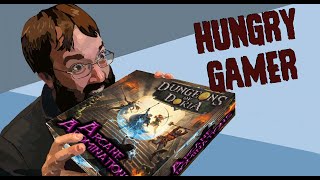
"I really like this initiative system I find it very very fresh I find it very very interesting when it comes to kind of the puzzle and it just it's just fun it is just fun the way that board works and the way your initiative works it's very very clever and it works really really well."
— Hungry Gamer
"This game is a standalone game, or it can be played in a modular format. It does come with a single scenario book that has tons of different scenarios that you can do as one shots. On top of that, it comes with four different modules that we could choose to play through. Each one of these is about eight missions long, which is a lot of content inside this game. What you're looking at right now is a loot based dungeon crawler with statistics and the ability to power up your guys through experience points as they go through the dungeon."
— Meet Me At The Table
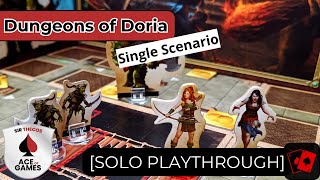
"This is an amazing dungeon crawler. It's great. It really like blends like old-school dungeon crawling that everybody knows with like quite a few interesting new mechanisms."
— Sir Thecos