








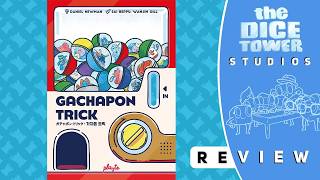

Gachapon Trick Deep Dive
What the Community Thinks About Gachapon Trick
Gachapon Trick has struck a chord with trick-taking enthusiasts and casual players alike. Reviewers consistently praise its elegant fusion of familiar mechanisms with a charming theme that feels genuine, not tacked-on. The game succeeds because it respects its players: the rules are approachable, the strategic depth is real, and the experience is genuinely fun. One reviewer called it simply "outstanding," while others highlight how the game's economic tension and interactive play create memorable moments around the table. For a 30-minute game in a small box, Gachapon Trick delivers substance that punches well above its weight.
Core Mechanics That Define Gachapon Trick
Trick-Taking With a Twist
At its heart, Gachapon Trick is a trick-taking game, but with a deliberate departure from traditional rules. Instead of following suit strictly, players face a more dynamic choice: follow the lead suit if you can, but if you cannot, you may play any other suit. Once multiple suits are in play, subsequent players can follow any suit already present. The highest card of the most-played suit wins the trick. This small twist opens up interesting tactical moments, especially for the last player in a trick, who might choose whether to lean into the dominant suit or try to create a tie. Reviewers noted this implementation feels intentional and well-balanced, avoiding the trap of complicating trick-taking without reason.
Set Collection and the Gacha Economy
The twist comes after the trick resolves: the winner must purchase at least one of the cards played. Each card represents a toy from a gachapon machine, and winning the trick gives you the privilege (and obligation) to spend your limited yen on those toys. You can buy just the cheapest card, or splurge on all of them if your budget allows. The goal is to collect matching toys across different suits, as scoring is squared, meaning three of one toy is worth nine points, while one singleton is worth one. What makes this layer compelling is the interactivity: losers of tricks know they can play high-value cards as bait, hoping to drain the winner's wallet and force them into difficult decisions about which toys to pursue. This turns trick-taking from a pure card-play puzzle into a resource-management mind game. Reviewers highlighted this as genuinely unique, noting that most trick-taking games don't create this kind of blocking and counter-play at the purchasing stage.
The Gachapon Trick Experience
Theme and Production
The gachapon machine theme (those Japanese capsule toy dispensers) is not window dressing. It shapes how players think about the game: you are dipping into a machine for random toys, you have limited yen to spend, and you either get lucky or you don't. The artwork by Saipu is widely praised as adorable and charming, with bright colors and delightful toy designs that make collecting feel rewarding. Some editions include a physical coin slot in the box, a thoughtful nod to the theme that reviewers found delightful, even if it serves no mechanical purpose. One reviewer noted being "very very happy that they kept Saipu and their fantastic art on these games," describing it as "very very charming." The production does not overwhelm the gameplay, but it absolutely enhances it. The small box means you can take this game anywhere, a quality that appeals to players looking for high-value portability.
Accessibility and Play Feel
Gachapon Trick manages something difficult: it feels light but plays with substance. Trick-taking games have a reputation for being niche, but reviewers agreed this is an exception. A player new to the genre can grasp the rules in a teach or two, and the theme provides intuitive hooks (you buy toys; you want matching sets). The 30-minute playtime keeps sessions snappy, and the push-your-luck element with the lucky dip creates genuine moments of tension. After winning a trick and buying your cards, you have the option, once per trick, to spend 500 yen for a face-down dip into the machine. You might grab your perfect toy, or you might get something worthless. This simple choice recurs every round and gives the game its emotional rhythm. The experience feels fresh across plays because the luck of the dip means no two games unfold identically.
What Makes Gachapon Trick Stand Out
Elegant Mechanical Cohesion
Gachapon Trick works because every mechanism serves the theme and vice versa. The trick-taking is not separate from the set collection; the cards you play in tricks are the toys you might buy. The economy is not abstract; it reflects the real constraint of a limited allowance at a toy machine. The push-your-luck lucky dip is not a tacked-on subsystem; it is the emotional core of collection-building. One reviewer praised the game as "pure and clean," and another noted that while other trick-taking games have dabbled in set collection, "this one is so pure and so clean, and it's such a satisfying feeling game." This cohesion is rare. Many designs try to mash two systems together and create friction; Gachapon Trick creates flow.
Interactive and Blocking-Rich Play
Trick-taking games are often mechanical puzzles played in parallel. Gachapon Trick changes this by making what you lose matter as much as what you win. When you cannot win a trick, you face real choices about which toy cards to throw away. Throw a high-value toy that your opponent is collecting, and you might damage their strategy. Reviewers noted that this creates a "kind of interactive play in a different way than many trick taking games because you have to try to like block people more from winning specific cards and winning specific tricks." This blocking layer transforms trick-taking from a game about card dominance into a game about reading your opponents' collections and denying them what they want. It opens the table to meaningful conversation and strategic planning.
Potential Drawbacks
Small Components and Fiddly Setup
The 30-minute playtime comes partly from the game's compact scope, which means small cards and small coins. Reviewers with accessibility concerns noted that the small tokens and toy cards can be fiddly, especially if you are managing a tableau of collected toys. The box is designed for portability, which means it is genuinely small. Some players love this; others find the cramped components a drawback. One reviewer mentioned that while the small size is a feature for portability, they would have preferred a larger box for ease of play.
Run-Away Leader Problem and Early Disadvantage
Gachapon Trick has a potential structural weakness: if one player builds up a strong collection early, it can be difficult for opponents to catch up. The squared scoring means early leads compound. A player who wins several tricks in a row and collects three of the same toy quickly builds an insurmountable lead. Additionally, if a player struggles to win tricks early and accumulates low-value cards or unmatched singles, they may find it hard to break into the game mechanically. One reviewer noted this: if you start weak and only have low-value cards, "it's really really hard to win anything and do anything at all. So it sometimes a little hard to break that cycle that the people who has already a lot gets a lot more." This is mitigated by the luck-based nature of the dip and the unpredictability of what cards appear in tricks, but it remains a potential concern for players seeking balanced games with guaranteed catchup mechanics.
If You Enjoy Gachapon Trick
If Gachapon Trick resonates with you, explore The Enemy, a trick-taking game also by designer Daniel Newman that plays with the must-not-follow mechanic and builds cards that permanently shift future card values. It shares Gachapon Trick's clever mechanical hooks and the same spirit of taking a familiar form and introducing subtle twists that open up new strategic space. The Enemy is denser in theme absence (it openly tells you there is not much theme) but sharper in mechanical tension.
Dino Tricks Tarot Adventures is another worthwhile pairing. It offers three distinct games on a single Tarot-sized deck, each a twist on the same core card play, with special abilities that create dynamic scoring and card value shifts. Like Gachapon Trick, it pairs trick-taking with a collection impulse and rewards players who adapt to changing card values. The production and artwork by Saipu (who also illustrated Gachapon Trick) carries that same adorable charm that makes the game a joy to look at during play.
What Reviewers Are Saying
"It's a trick-taking game with set collection and push your luck, which are all things that I think have some pretty wide appeal. Of those three mechanisms, trick-taking is the most perhaps niche. But if you are not someone that's played a lot of trick-taking games, this is not so far off of kind of established rules of trick taking that your mind's going to be lost."
— The Dice Tower
"This was very unique. I haven't seen it done in this way before. And when you play it the first time just like what what is happening now? It's a game. It's kind of interactive in a different way than many trick taking games because you have to try to like block people more from winning specific cards and winning specific tricks."
— Board Gaming Ramblings
"It just leads to this really fun experience where everybody is kind of looking at what other people are trying to collect, trying to get their own uh collections to be the best. Taking some push your luck in there, too."
— The Dice Tower Week in Review