




Twisty Tracks Deep Dive
What the Community Thinks About Twisty Tracks
Twisty Tracks lands in a sweet spot that appeals to both casual players and hobby gamers looking for something genuinely fun without complexity. The game strikes a balance between simplicity and just enough tension to keep the table engaged. Reviewers emphasize its accessibility, praise its breezy pace, and highlight how well it works for introducing people to modern board games. The core appeal lies in its elegant design and the clever way it puts two competing strategies at odds with each other, creating interesting decisions without overwhelming players with rules.
Core Mechanics That Define Twisty Tracks
Tile Placement
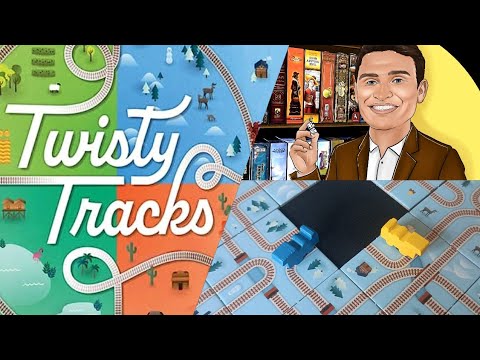
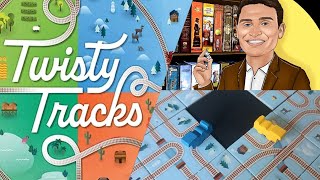
Twisty Tracks centers on a straightforward tile placement system where each player has their own frame and draws tiles from a shuffled stack. On each turn, a player flips the next available tile and places it somewhere within their frame, moving at least one of their trains along the resulting track extension. The beauty of the mechanic is that players act simultaneously, which keeps the game moving quickly and maintains constant engagement. Each tile placement is tactile and satisfying, yet the randomness of draws means every game unfolds differently. The constraint of fitting tiles within a frame adds a spatial puzzle element without requiring complex puzzle-solving, making it accessible to newer players while still offering meaningful choices about placement.
Simultaneous Actions
By having all players draw and place tiles at the same time, Twisty Tracks eliminates the downtime that kills so many heavier games. Everyone participates simultaneously, which creates a noisy, concurrent tabletop where the group's rhythm is set by whoever finishes placing their tile first. This mechanic works particularly well at scaling across different player counts. The shared pace keeps energy up and prevents any single player from dragging out turns. Players remain mentally engaged even when it is not their turn, watching where others are sending their trains and adjusting their own strategies.
The Twisty Tracks Experience
Breezy, Joyful Simplicity
Reviewers emphasize that Twisty Tracks has a toy-like charm that puts a smile on your face. The game is silly and fun, with an almost throwback feel to old-school tabletop pleasures. There is something deeply satisfying about watching your trains loop across your personal map, especially when a single tile placement sends a train on an unexpectedly long journey. The game rarely outstays its welcome at 20 to 30 minutes on average, which means the fun never gets exhausted. It works equally well with board game enthusiasts looking for a lighter palate cleanser and with families discovering games for the first time.
The Journey Rewarded
A key part of the Twisty Tracks experience is the dual satisfaction of long journeys and arrival at stations. The game asks an elegant question: try to keep trains moving to generate more border-crossing points, or get them to their destinations to lock in the station bonuses? Reviewers note there is real tension in this decision space. When a train successfully sets off on a wild, looping path across the frame, racking up 10 or 12 points from border crossings alone, the payoff feels genuinely rewarding. Yet there is always a nagging pull to secure those station points before someone else claims them, creating a satisfying push and pull between two competing satisfactions.
What Makes Twisty Tracks Stand Out
Elegant Accessibility
Twisty Tracks stands out for how easy it is to teach and how impossible it is not to have fun playing it. Reviewers consistently highlight that the game requires next to no rules explanation, making it perfect for introducing people to modern games. There is no complex scoring phase, no hidden information, no player elimination, and no downtime spiral. The rules are so simple that anyone can immediately grasp what is happening, yet the game is not trivial. That combination of immediate accessibility with genuine decision-making is rare and valuable. Reviewers note it works equally well whether playing with children, non-gamers, or a group of experienced hobby players.
Scaling Across Player Counts
The game scales remarkably well from two to four players because the station bonuses adjust based on player count. Fewer station bonus spots exist relative to the number of players, creating appropriate urgency at every player count. The simultaneous play mechanic means that most of the game runs in parallel regardless of how many people are at the table. This keeps total play time consistent and ensures that nobody feels like they are waiting around. Whether playing with a partner or with a full table, the pacing and experience remain tight and engaging.
Potential Drawbacks
Lighter Than Some Expect
For players deeply invested in pipe-building puzzles or who enjoy more complex spatial optimization, Twisty Tracks can feel too light. Reviewers who love games where players construct increasingly elaborate systems report that the random draw of tiles and the simplicity of placement mean players are mostly reacting tactically rather than executing a long-term strategy. Some players expected more crunch and found themselves placing tiles without much deliberation. Players looking for deep spatial puzzles may find the experience passes too quickly and without enough friction to satisfy that particular itch.
Components Feel Economical
The production is more than adequate, and reviewers appreciate that the modular frame design allows for a smaller box. However, the scoring tokens feel somewhat cheap and do not sit well on the scoreboard, which is functional but fairly basic in design. The wooden trains look appealing, and the tile size is practical, but the overall production is utilitarian rather than luxurious. Players who particularly value high-quality components and beautiful production will find Twisty Tracks delivers a solid but not spectacular experience in that department.
If You Enjoy Twisty Tracks
Twisty Tracks shares DNA with other elegant, spatial puzzle games. If Twisty Tracks clicked for you, consider exploring Indigo, which also creates satisfying path-building through tile placement and simultaneous play. Suro is another excellent stepping stone in the same family, offering similar simultaneous action and tile-placement elegance with its own unique spin on creating paths and managing movement. Both games share Twisty Tracks' philosophy of keeping rules minimal while maintaining genuine decision-making. The community around these games values accessibility, good scaling, and that toy-like satisfaction of building something physical on the table.
What Reviewers Are Saying
"Needless to say, this is very simple, silly fun. It's very chaotic in nature and reactionary. You know, you always kind of just tactically reacting to the next tile that you're drawing, but I do like that conflicting mechanism of the way you score points."
— Chairman of the Board
"The heart of this game is making the best decision with the tiles that you draw as everyone has their own playing area where on a turn each player draws a tile then places it somewhere in their frame so they can advance at least one of their trains."
— Millennials of Mystery
"It's one of those games that puts a smile on your face. It's so breezy and simple, and when you do pull off these big moves and rack up loads of points and send them on wild journeys, it's just fun."
— Chairman of the Board