






The Lord of the Rings: The Two Towers – Trick-Taking Game Deep Dive
What the Community Thinks About The Lord of the Rings: The Two Towers – Trick-Taking Game
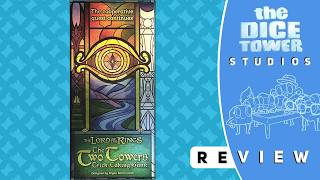
Reviewers greet The Two Towers as a confident sequel to The Fellowship of the Ring Trick-Taking Game, and the verdicts are warm across the board. The Dice Tower's two hosts score it an 8.5 and a 9, with one saying there is nothing in this box that is worse than the first box. Board Gaming Ramblings calls it a great evolution of the first game, more of the same in a very positive way, and has placed it in their monthly top three more than once while playing through it with a regular group of four. Rolling Dice & Taking Names, three games in, feels the new mechanics have elevated it beyond the opening of the first game, and Nick of The Brothers Murph, in a BoardGameGeek news show, found it just as fun, just as weird and just as cool as Fellowship. Ilia and Tyler, whose play-through was sponsored by publisher Office Dog, call the story and new mechanics hidden in the box quite a joy. The main reservation is familiar: long chapters that are painful to lose, and a formula that will not convert anyone who disliked the first box.
Core Mechanics That Define The Lord of the Rings: The Two Towers – Trick-Taking Game
Cooperative Trick-Taking With Character Goals
Designed by Bryan Bornmueller and published by Office Dog, the game keeps the cooperative trick-taking heart that several reviewers compare to The Crew. The deck has four suits numbered one to eight, and players must follow the led suit if they can; the highest card of that suit takes the trick. What changes the puzzle is the characters. At the start of each chapter players draft characters, each with a goal the whole table must see met. As The Dice Tower explains, Gimli must win a set number of mountain cards, Legolas wants forest cards, Aragorn and whoever holds the black tower must win a majority of tricks together, and Boromir must win two or more tricks before the black tower appears and none after. Setup actions let characters exchange cards, and later chapters add twists such as tucking a card under a character, which Ilia and Tyler meet in chapter 20. If every goal is met, the group moves to the next chapter.
The Two Towers and the Orcs
The Dice Tower notes that the two tower cards replace the ring suit from the first game. The white tower and the black tower are ultimate trumps that can only be played off suit, and each automatically wins the trick, unless both land in the same trick, in which case they cancel each other out. Ilia and Tyler show what that means at the table: with the towers cancelled, the led suit decides the trick. The Dice Tower calls this cancellation an escape valve for a player who cannot afford to win another trick. Rolling Dice & Taking Names adds that character goals are tied to who wins or plays those cards, which cleverly uses two simple cards. The other new addition is three orc cards, which cannot be led; they can only be discarded when a player cannot follow suit, and a player forced to lead one loses the chapter. The Dice Tower finds the orcs a constant worry and a really unique mechanism.
The The Lord of the Rings: The Two Towers – Trick-Taking Game Experience
A Story That Follows the Book
The campaign picks up at chapter 19, where Fellowship ended, and The Dice Tower stresses that it follows the structure of the book rather than the films. The first half of The Two Towers differs from the second, the point of view shifts as the Fellowship splits, and players meet characters who never appear in the movies. That shift means one chapter can feel very different from the next. Nick of The Brothers Murph enjoys discovering how each part of the book translates into a trick-taking gimmick, and notes that only the characters present in a scene are available, so the opening chapter around Boromir's death offers Boromir, Legolas, Gimli and Aragorn but no hobbits. Ilia and Tyler read the book's passages aloud before each chapter and describe a box full of flaps and surprises still to open.
Tense, Collaborative Problem Solving
Play is a shared puzzle under limited communication. Ilia and Tyler lose chapter 19 on their first try and chapter 20 once as well before succeeding, second-guessing plays and teasing each other about keeping to the communication rules. Rolling Dice & Taking Names imagines the moment someone is dealt all three orcs and the table has to think hard about how to get rid of them. Board Gaming Ramblings, who are not usually big on co-op games, count it among their favorite cooperative games, and point out that anyone who has played a few trick-taking games will find it very easy to get into.
What Makes The Lord of the Rings: The Two Towers – Trick-Taking Game Stand Out
Theme at the Core
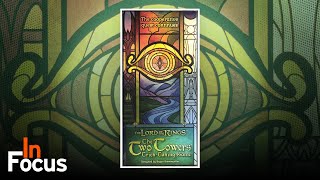
The Dice Tower's highest praise is for how deeply theme is woven in. One host feels the art is a scooch better than the first box, and mentions that their daughter noticed Merry and Pippin appear in the background of each other's character cards. The little details, in their words, keep giving you that Lord of the Rings story experience; the cards themselves are just numbers in suits, but everything around them makes it a thematic experience. Rolling Dice & Taking Names likes that the group is not always playing the fellowship together, and credits the game with bringing more story into a familiar mechanic.
A Sequel That Refines Rather Than Repeats
Reviewers agree the changes are welcome without being disruptive. Board Gaming Ramblings describes it as not trying to reinvent the wheel but making the wheel a little bit rounder. The Dice Tower praises the towers for doing something clever and different, so the game does not just feel like more of the same while still being more of the same. Rolling Dice & Taking Names says the new cards and goals really change how it plays compared with the opening of the first box. The game also works without its predecessor: The Dice Tower confirms that players can start here without having played Fellowship, and a box that can be put away in order makes it easy to play just the next chapter before game night.
Potential Drawbacks
Long Chapters
The one thing The Dice Tower does not love is the long chapters. One host compares them to a long time between save points in a video game: do well in the first half, falter in the second, and the whole chapter has to be replayed. The other host suspects there may be fewer of these chapters in this box and that their placement makes sense, but groups who dislike replaying a failed stretch should expect some frustration.
Familiar If You Have Played Fellowship
The refinements are also a limitation. The Dice Tower is blunt: anyone who did not like the first game is not going to like this one, and it is unlikely to change a mind. Rolling Dice & Taking Names, despite its enthusiasm, admits that beyond the new wrinkles it is pretty much what fans of Fellowship or The Crew are used to. Players hoping for a new direction for the series will find a polished continuation instead.
If You Enjoy The Lord of the Rings: The Two Towers – Trick-Taking Game
Every reviewer frames this as the sequel to The Lord of the Rings: The Fellowship of the Ring Trick-Taking Game, which covers the first 18 chapters of the story, as Ilia and Tyler recall. The Dice Tower says that if you liked the first one you are going to like this one, so players who start here will find the same satisfaction in going back to the beginning.
The Dice Tower, Rolling Dice & Taking Names, Nick of The Brothers Murph and Board Gaming Ramblings all compare its cooperative trick-taking to The Crew. Players who enjoy working together to meet goals through tricks here will find the same core in The Crew, without the Lord of the Rings story around it.
What Reviewers Are Saying
"There's nothing in this box that is worse than the first box. And I think that there's even some things that might be better or at least to taste, right?"
— The Dice Tower
"There's a lot of chapters in this game and a lot of story to uncover, a lot of new mechanics to see. And that's kind of the joy of this game, too, is you have these little flaps, you open the boxes, you continue through all of it, and it's quite a joy."
— Ilia and Tyler
"It's number two because it's great. We have enjoyed our plays of this so much so far. We're playing with this the same group of four people and it is a great evolution of the first game."
— Board Gaming Ramblings