





Thrones of Valeria Deep Dive
What the Community Thinks About Thrones of Valeria
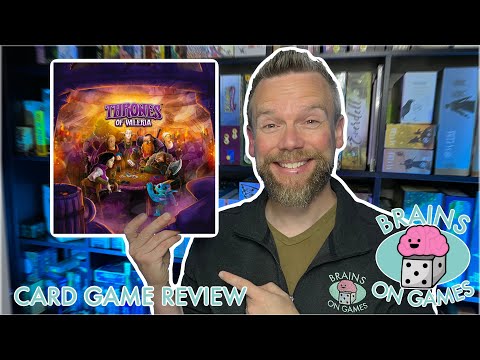
Among board game reviewers, Thrones of Valeria stands out as an instant hit, a trick-taking game that breathes fresh life into a centuries-old card tradition. What makes it remarkable is that it succeeds in pulling in casual card players and seasoned strategists alike. Reviewers consistently praise it as a surprising triumph, noting that the game pulls in non-gamers who would otherwise never touch modern board games. The core appeal is simple: it respects players' time and intelligence, delivers meaningful decisions every single turn, and creates a chaotic but engaging experience where no two games feel quite the same.
Core Mechanics That Define Thrones of Valeria
Money Over Tricks: Reframing Trick-Taking Success
At its heart, Thrones of Valeria inverts the traditional trick-taking formula. Rather than racing to win the most tricks, success depends on accumulating the most silver coins. This fundamental shift matters far more than it might initially seem. You can dominate the trick count and still walk away empty-handed if you have not managed your money wisely. Conversely, losing tricks deliberately can actually be profitable, because certain suits pay out while others levy penalties. The elegance lies in how the money system creates a secondary puzzle underneath the traditional trick-taking framework, rewarding those who can see when losing is actually winning.
Dynamic House Rankings: Shifting Power Every Card
The second pillar that elevates Thrones of Valeria is the standing board, five noble houses whose rank changes with almost every card played. Each suit begins a round with its own position in a hierarchy that determines which suit beats which. But the moment a card ability triggers, and nearly all do, that hierarchy shifts. An assassin might drop the top house to the bottom. A rogue swaps two adjacent houses. A matriarch moves one house up by two spaces while others shift down. This constant flux means a suit that looks dominant at the start of a trick can be worthless by the time the trick is resolved. The result is a game where players cannot rely on the same strategy from one hand to the next, demanding flexibility and real-time adjustment.
The Thrones of Valeria Experience
Constant Momentum and Meaningful Card Play
What unites almost every review is a sense of constant engagement. Because every single card grants a special ability or triggers an effect, there is no such thing as a wasted turn. Players are never simply playing a card and passing to the next player; instead, each card advances the game state, shifts the board state, or puts silver into someone's pocket. This relentless action density means downtime is minimal and the game maintains energy even across multiple rounds.
Chaotic Beauty and the Unpredictability Trade-off
Reviewers recognize that Thrones of Valeria trades pure strategic depth for dynamic unpredictability. The constantly shifting ranks mean players cannot plan three turns ahead with confidence. Even the highest-ranked card in a suit offers no guarantee of winning a trick if the house order flips before a player's turn resolves. This openness delights some players and unnerves others. For players accustomed to Hearts or Cribbage, where card memory and long-term planning dominate, Thrones of Valeria demands a different mental posture: read the board state right now, react to what others are doing, and adapt on the fly.
What Makes Thrones of Valeria Stand Out
Elegant Integration of Theme and Mechanic
The Valeria universe, a shared setting across Daily Magic Games' portfolio, gives Thrones a rich narrative backdrop. Players are not simply playing cards; they are manipulating noble houses vying for power, deploying assassins and rogues, and bribing mercenaries. The mechanic of moving house ranks on a board makes the theme tangible: the political machinations play out card by card. This thematic coherence separates Thrones from generic trick-takers and creates a sense that the rule system serves a story, rather than the story serving abstract mechanics.
Accessibility for Casual Players Without Sacrifice
A striking virtue is Thrones of Valeria's appeal across skill levels. The rules are learnable in a single teach, yet the decision space remains rich enough to reward skillful play. The game excels at pulling in players who love Hearts or Cribbage, traditional card games that feel familiar, while introducing them to modern board gaming concepts like hand management, area control through the house ranks, and engine building through cumulative silver rewards. The fact that reviewers report playing the game over 100 times speaks to its repeatability and broad appeal.
Potential Drawbacks
Symbology Learning Curve and Best Player Counts
The card icons representing special abilities are not immediately intuitive. Each numbered rank has a distinct power, and there are five houses, so the symbol density is real; players will need the provided cheat sheets for the first few hands. Additionally, reviewers noted that the game plays best at even player counts, particularly with a team variant for four or six players. With odd player counts or solo play, the dynamic ranking mechanic can feel less strategic and more driven by luck, since there are fewer opportunities to anticipate and react to opponents' rank-shifting moves.
Chaos Over Determinism
For players who thrive on control and long-term planning, Thrones of Valeria can feel chaotic. The constant rank shifts mean surprises are baked in. A player holding what looks like a guaranteed winning card can still lose the trick if opponents simply play a different, more valuable color instead. It is a game that rewards tactical flexibility more than strategic planning, and one reviewer noted it became a little too open in the possibilities available at the table.
If You Enjoy Thrones of Valeria
Players drawn to Thrones of Valeria should seek out Hearts, the timeless trick-taking classic that shares its blend of hand management and rank-shifting drama. Those who love the team mechanic should explore Cribbage, particularly the four-player partnership variant, which offers a similar collaborative-competitive dynamic with historical depth. For a taste of the Valeria universe beyond trick-taking, the base Valeria: Card Kingdoms provides a lighter, engine-building experience in the same thematic setting.
What Reviewers Are Saying
"This is probably my favorite trick taking game just because of the way the card plays allow you to do something every single turn that you play, one something interesting is happening, and maybe you're just shooting the other players in the foot, maybe you're stealing some silver for yourself, but it always keeps you interested and engaged in a game that's very quick."
— Brains On Games
"The money aspect of the game is a neat way to be able to lose tricks, but still stick in the game. You know, the game isn't just the player who wins the majority of tricks wins, but it becomes a player who plays their cards more strategically, who still gains money when losing, but then knows how to use their cards in the way so that when they win, they win big."
— Meeple Mountain
"I swear I've played this game over 100 times now because I have lots of friends who are really non-gamers who don't play these complicated modern strategy games but they play card games like hearts and so a trick taker is something that that everybody gets."
— Brains On Games