




Baghdad: The City of Peace Deep Dive
What the Community Thinks About Baghdad: The City of Peace
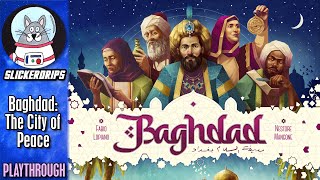
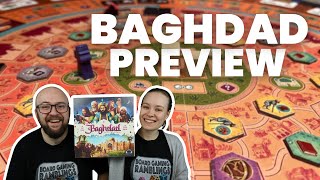
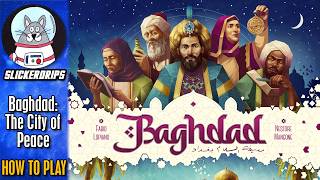
Reviewers describe Baghdad: The City of Peace, published by Alley Cat Games and designed by Fabio Lanfiano, as a medium-weight game that rewards planning more than it punishes mistakes. The shared view is that the rules are approachable while the decisions stay demanding. Johannes, Board Gaming Ramblings calls it one of the lighter Lanfiano designs, lighter than Shlon Base and Sanor, yet still full of "crunchy" choices. Tom, slickerdrips presents a complete teaching playthrough and spends most of its time on how the character cards and end-game scoring fit together.
The reviewers agree on the core loop but differ on luck. Johannes is relaxed about the randomness of tile draws, since the city tiles come in sets and the order is unknown, but finds it more irritating when a card reappears right after it was taken. Both channels suggest the game is hard to fully grasp on a first play, and that players should expect to learn it over several sessions before the strategies become clear.
Core Mechanics That Define Baghdad: The City of Peace
Resource Management
The economy is the engine of the game. Coins are scarce, and nearly every action has a cost attached. Moving a vizier next to a student forces a coin payment for tuition, and a patient next to the path costs favor, the track that doubles as a currency. Tom explains that favor can be converted into a coin, into any good, or into a wild token, which makes the favor track a flexible reserve as well as a score. Goods are gathered by moving boats along the river, and they can be sold at ports for coins or traded for other goods. Johannes highlights the consequence: "This game has a pretty tight economy, and we like games with tight economy. You never have enough of the things you need." Reviewers describe the result as a constant trade-off, where a strong move often means skipping another action that would have been just as useful.
Tile Placement
City tiles, library books, and building pieces all go onto the player board, and each one requires the right skill icons from the character cards you have played. Students need abacus icons, patients need medical icons, artifacts need anvils, and books need quills. Placing a tile above and below a matching reward triggers that bonus, and when two effects fire from one placement, the player chooses the order. Writing books unlocks permanent extra symbols, which makes later actions easier. Tom notes that the scoring also depends on the placement, since the palace pieces and buildings you add later can score heavily at the end of the game. Johannes describes the tiles as a planning puzzle, where the real question is whether a given space is worth the price to occupy.
The Baghdad: The City of Peace Experience
A Tight Clock Built Into the Cards
Character cards slide one space along your board every turn, and the card that slides off the end resolves its requirement. Reviewers say this creates a constant sense of urgency. Johannes likes the timer that comes from it, which gives "this small burst of 'oh, I have to get this thing now before this goes out.'" Because you hold three cards in hand, you always have some choice about the order you play them, and the decision of whether to chase an immediate tile or follow the long-term plan comes up on almost every turn.
Satisfying Puzzle Assembly
The feeling of the game is closer to a logic puzzle than a race. Players spend much of the session working out which symbols they have, which symbols they will need, and where they can position their vizier to access them. Tom describes the moment a card slides off with its requirement met as a clear payoff for careful sequencing. The tiles and reward links on the player board give the same satisfaction, because each completed pattern visibly reflects several turns of planning.
What Makes Baghdad: The City of Peace Stand Out
Straightforward Rules With Crunchy Decisions
Reviewers consistently point out that the rulebook sounds intimidating but the game teaches itself. Johannes says the symbols "make a lot of sense" and that most of the abilities are self-explanatory, even when playing from a draft rulebook. The depth comes from the choices rather than the rules overhead. Johannes adds that the game has many options and many viable paths, so no single line of play looks obviously correct at the start. This balance is why the title appeals to players who enjoy strategic weight but want to avoid long setup and rule lookups.
Variable Setup and Scoring
The layout changes from game to game. The river and city boards are mixed, the order of the player boards varies, and eight scoring tiles are chosen at random, with four placed in the palace area and four in the river area. Johannes notes that these boards are "mixed up" so that each player's starting position feels different. Tom describes the scoring tiles as the main long-term goals, since boats in ports and architects in palace columns both multiply with how often a player qualifies. This makes each session feel distinct even with the same players.
Potential Drawbacks
Luck in Card Refills and Tile Draws
Some reviewers accept the randomness, while others find it frustrating. Johannes says the tile system is manageable because the tiles come in three identical sets, so the variety is predictable over time. The cards are less forgiving. Johannes notes that a card you pass on can reappear almost immediately, which can make a carefully planned turn feel undermined. Tom also points out that a tile can be lost to a rival or to the bot in solo play. Reviewers generally suggest that players who dislike randomness in refills should expect some frustration.
A Steep Learning Curve and a Tight Economy
The game is easy to start but hard to master. Johannes notes that a friend understood the rules quickly but recognized early that the game would be difficult, and that players should plan on several plays before feeling comfortable. Tom describes the economy as tight enough that completing every building or scoring card is unrealistic, which means players must accept leaving some goals unfinished. In solo play against the bot, Tom found that the bot could take important patients and cards, so the bot's decisions can disrupt a plan. Reviewers present these pressures as part of the design, but players who prefer a more forgiving economy may find the game punishing.
If You Enjoy Baghdad: The City of Peace
- Shlon Base: Johannes compares Baghdad to Shlon Base directly and calls Baghdad the lighter of the two. Players who enjoy the crunchy decisions of Baghdad but want a heavier Lanfiano design should consider this title next.
- Sanor: Johannes also places Sanor above Baghdad in weight. Sanor suits players who want the same designer's dense decision space with more weight and longer play.
- Ada's Dream: The transcripts do not compare Ada's Dream mechanically with Baghdad. Tom mentions it at the end of the slickerdrips playthrough only as the other recent release from Alley Cat Games, so it is a natural next step for players who want to follow the publisher's catalogue.
What Reviewers Are Saying
"It's fairly easy to get into rules wise. It's very straightforward, but at the same time it's a lot of crunchy decisions."
— Johannes, Board Gaming Ramblings
"An important part of the game is planning ahead to make sure you can meet the requirements of your characters in the turn that they're going to slide off the board."
— Tom, slickerdrips
"It's kind of giving you that timer, which is one thing I really like. It's giving you this small burst of oh, I have to get this thing now before this goes out."
— Johannes, Board Gaming Ramblings