





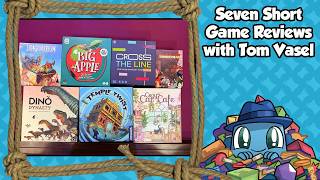




Temple Twist Deep Dive
What the Community Thinks About Temple Twist
Temple Twist has captured the attention of board game reviewers for distinctly different reasons. Some celebrate it as a tactile, spatial puzzle experience unlike anything else in their collections. Others view it as an interesting gimmick that doesn't quite deliver as a game in the traditional sense.
The most consistent praise centers on one element: table presence. The 3D rotating temple box immediately commands attention when it hits the table. Reviewers who focus on the puzzle aspect find it compelling, particularly for players who love spatial reasoning. Bower's Game Corner noted that family members rated the game 8 or 9 out of 10, with particular enthusiasm from players who enjoy spatial puzzles.
However, there is a real split in how reviewers experience the actual gameplay. BoardGameCo found the cooperative mode too chaotic and the solo variant too simple, describing it as "less of a game, more of an activity." Others counter that this is precisely the appeal, especially for families seeking a lighter, activity-oriented experience rather than a tactical challenge.
Core Mechanics That Define Temple Twist
Cooperative Gameplay Under Escalating Challenge
Temple Twist is fundamentally cooperative. All players work together toward a shared goal, with no direct conflict between players. Success or failure is measured against the game system itself, not against each other. This cooperative framework means strategy shifts from outwitting opponents to coordinating with fellow archaeologists. Reviewers noted parallels to The Crew and The Gang, cooperative games that keep adding different ways to increase difficulty as players progress.
3D Spatial Puzzle Manipulation
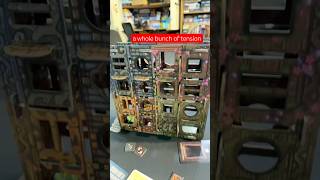
The centerpiece is a three-dimensional rotating temple maze. Players use action cards to manipulate this puzzle in real time, rotating the temple, adding or removing wall barriers, and guiding their explorer piece through the maze toward exit doors. The spatial reasoning required is genuine: players must visualize how rotating and shifting walls will affect the path ahead. Grant Lyon described the appeal of this kind of spatial puzzle directly, and reviewers noted that the physical components matter, with some experiencing the mechanics as a bit fiddly in practice.
The Temple Twist Experience
Tactile, Novelty-Driven Fun
Handling a 3D puzzle that players manipulate throughout a game is not common in the board game space. The physicality of Temple Twist creates strong table presence, as Grant Lyon put it directly. The game feels fresh precisely because it relies on a component type most players have never encountered. This novelty is part of the appeal, though some reviewers questioned whether it sustains across multiple plays once the initial excitement fades.
Chaotic Cooperation or Casual Engagement
The cooperative experience divides reviewers. For some, the coordination required and the unpredictability of rotating a physical puzzle creates engaging tension as the group works toward its goals. For BoardGameCo, the chaos felt overwhelming rather than enjoyable, and the solo experience proved just as divisive: solo play felt too easy to be interesting, while cooperative play felt too chaotic to feel controlled. This suggests Temple Twist works best for an audience seeking activity-based fun rather than tight strategic puzzle solving.
What Makes Temple Twist Stand Out
A Physical Puzzle Unlike Any Other Game
The rotating 3D temple is genuinely unique in the modern board game landscape. Players manipulate the puzzle by hand, creating a tangible connection to the challenge rather than resolving it through card play or a flat board. The component does what it promises: it transforms the experience with real three-dimensional spatial reasoning built into the core loop.
Story Campaign and Escalating Complexity
Rather than a single static ruleset, Bower's Game Corner highlighted a story campaign element that unfolds across multiple plays, introducing new rules and complications as the group progresses. This structure echoes cooperative games like The Crew and The Gang, which reviewers cited as direct comparisons for how the escalating-challenge design keeps bringing players back to the table.
Potential Drawbacks
The Gimmick Question
Multiple reviewers expressed caution about whether the physical puzzle mechanic represents a genuine game innovation or a clever novelty that wears thin after a few plays. Crimsonboardgames specifically flagged the "potential for gimmickiness" as a concern worth watching, even while praising the unique 3D temple manipulation and action-packed cooperative gameplay it enables.
Chaotic Cooperative Gameplay and Variable Solo Experience
BoardGameCo tried both solo and cooperative play and found solo too easy while cooperative felt too chaotic to feel strategic, concluding the game wasn't for that reviewer even while acknowledging it might suit others. The dexterity-dependent nature of manipulating the physical puzzle introduces an element of component friction that some players may find frustrating. Bower's Game Corner also noted that dexterity can be a barrier and that components can be frustrating to manage, alongside acknowledging the host had not yet completed all expeditions in the campaign.
If You Enjoy Temple Twist
Fans of Temple Twist would likely appreciate The Crew, a cooperative trick-taking game that shares the escalating-challenge design philosophy where each scenario introduces new rules and complications. The Gang operates similarly, built around a shared cooperative structure where communication and coordination matter more than lucky outcomes.
Both comparison games are lighter on production gimmicks than Temple Twist but excel at the core cooperative puzzle-solving experience. If Temple Twist's physical novelty appeals but its execution feels uncertain, trying The Crew first may help determine whether the underlying cooperative puzzle design appeals without the 3D component.
What Reviewers Are Saying
"I'm a sucker for good table presents and Temple Twist has table presents for days. And so, that's one of the things that got me excited about it a lot."
— Grant Lyon
"Both my kids right now said that this was rated like an eight or a nine for them, especially the one that likes spatial puzzles. Temple Twist from Kosmos, put it on your radar."
— Bower's Game Corner
"Overall I felt it was less of a game, more of an activity and one that I was most interested in trying this solo. Solo it's too easy. Cooperative is just too chaotic. I didn't feel it was for me but it might be for you."
— BoardGameCo