


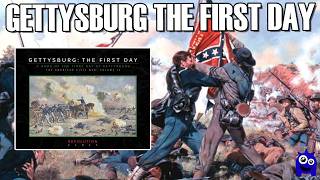





Gettysburg: The First Day Deep Dive
What the Community Thinks About Gettysburg: The First Day
Zilla Blitz, a dedicated wargaming content creator, has consistently praised Gettysburg: The First Day as a standout entry in the Blind Sword series. The consensus among reviewers is clear: this game represents an exceptional balance between historical depth and playable mechanics, making it both accessible to newer players and engaging for experienced wargamers. The game has earned placement on multiple "top anticipated" and "top played" lists, with reviewers citing its elegant design, quality components, and the narrative opportunities it creates during play. What emerges from these discussions is a game that respects both the history of the Battle of Gettysburg and the player's time investment.
Core Mechanics That Define Gettysburg: The First Day
Chit-Pool Activation System
The Blind Sword system, designed by Steve Kerry, distinguishes itself through its innovative chit-pool activation mechanism. Rather than using a rigid sequence of play, units and events are drawn from a common pool of chits, creating a blend of strategy and unpredictability. This approach means an unanticipated event can leave you scrambling to recover, while a fortuitous activation can help turn the tide of battle. Reviewers describe this system as one that "adds a good variety, narrative and unpredictability to each scenario" without ever feeling overpowering or unbalancing. The chit system transforms what could be a dry simulation into an experience where both preparation and improvisation matter equally.
Morale and Cohesion System
The game includes a full leadership and morale system that models the human element of Civil War combat. Units can become shaken, wrecked, or battle-worn, with different degrees of unit decomposition affecting their effectiveness. Reviewers note that this system, combined with mechanics for rallying troops and managing cohesion, creates meaningful tactical choices. Rather than simply tracking hit points, this mechanic forces players to consider how troops maintain discipline under fire, adding a layer of historical authenticity that enhances decision-making without overwhelming complexity.
The Gettysburg: The First Day Experience
The Tension Between Planning and Reaction
One of the defining feelings reviewers report is the dynamic tension created between laid plans and evolving circumstances. The chit-pool system ensures that even a carefully developed strategy can be disrupted by a drawn event or an unexpected activation. Reviewers describe approaching each turn knowing that everything could shift, creating a sense of tactical flexibility where adaptability becomes as important as foresight. This generates memorable gameplay moments where a fortunate event can reverse fortunes or an untimely activation forces a difficult choice.
Accessibility Within Depth
Players consistently describe Gettysburg: The First Day as both inviting and substantial. Reviewers praise it as "very playable" and note that the core rule set, shared across all 12 games in the Blind Sword series, is remarkably clear and easy to follow. Yet beneath this accessible surface lies genuine strategic depth. The game creates a compelling experience whether played solo or with an opponent, with reviewers noting they enjoy it "both two-player and solo" and anticipate playing deeper into the system over time. This combination of approachability and substance makes the game appealing to a broad spectrum of wargamers.
What Makes Gettysburg: The First Day Stand Out
A Mature Rule Set Built on Twelve Games of Development
Gettysburg: The First Day is the 12th game in the Blind Sword series, meaning its core mechanics have been refined through years of development and community play. Reviewers emphasize that this maturity translates directly into clear, tested rules and well-balanced scenarios. The game comes with multiple scenarios of varying complexity, from a quick three-turn engagement to an full 18-turn recreation of the first day, all of which are "highly researched and play tested." This refinement extends to component quality, with reviewers praising the map design as "gorgeous" and noting that Revolution Games' attention to detail is "highly evident." Players can confidently expect a professionally executed product that respects both their time and their desire for historical plausibility.
The Event System That Drives Narrative
The event system, integral to the chit-pool mechanic, stands out as a particular strength. Rather than representing abstract disruptions, events reflect the chaos and unpredictability of 19th-century warfare. Reviewers describe this system as "one of my favorite elements" that "never really felt too overpowering or unbalancing." The events force reactions to shifting tides of war and throttle best-laid plans, creating emergent narratives that differ each play. This transforms Gettysburg: The First Day from a pure simulation into a game that generates stories, making each scenario a unique experience even when played multiple times.
Potential Drawbacks
Rules Complexity Relative to Other Civil War Games
While reviewers praise the Blind Sword series as moderate in complexity compared to other Civil War systems, one reviewer does note that complexity may be "a touch higher" in this specific entry than in other games in the series. The exclusive rules specific to Gettysburg add nuance and historical flavor but require some additional study. For players completely new to wargaming, this could present a learning curve, though reviewers emphasize that the clear layout and organization of rules mitigate this concern considerably.
Substantial Table Space Requirements
The bigger scenarios in Gettysburg: The First Day utilize large mounted maps, with the full campaign scenario employing a 22-inch by 34-inch map. This demands significant table real estate, and players with limited gaming space may find the full scenario challenging to accommodate. However, reviewers note that the game includes smaller maps for the shorter scenarios, allowing players to experience the system without committing to a large footprint for every play.
If You Enjoy Gettysburg: The First Day
Players who find themselves drawn to Gettysburg: The First Day should explore other entries in the Blind Sword series, including Shiloh: The First Day. For those seeking related tactical Civil War experiences, Rock of Chickamauga, another recent release in Herman Lootman's Black Swan series, offers comparable depth and accessibility. Reviewers also recommend investigating the game Fields of Fire Deluxe for those interested in a different era of tactical combat with similarly compelling mechanics. For players wanting to expand into other eras, the principles and accessible design philosophy of the Blind Sword system translate well to other historical periods and conflicts.
What Reviewers Are Saying
One of the series greatest accomplishments is achieving a depth of gameplay in a system that's still streamlined for play. This is not a complex series, as is often the case with Civil War systems.
— Zilla Blitz
The event system is one of my favorite elements as it adds a good variety, narrative and unpredictability to each scenario, but it's never really felt too overpowering or unbalancing.
— Zilla Blitz
And for a Civil War rule set, I think this is a great balance between accuracy, realism, and playability. This is a very, very playable system.
— Zilla Blitz