



Fú: Festive Fortunes Deep Dive
What the Community Thinks About Fú: Festive Fortunes
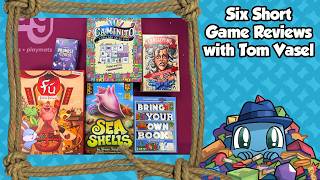
Coverage of Fú: Festive Fortunes is limited, and the two videos available approach the prototype from different angles. The kovray channel, run by Ilia and Tyler, publishes a rules teaching video that walks through setup, shopping, visiting, and eating before explaining final scoring. The Dice Tower's Tom Vasel gives the game a short review inside a roundup of six releases, and their reaction is considerably more critical.
The theme draws positive attention from both. Vasel calls the premise an interesting idea and describes the theme as silly and fun, while the kovray hosts present the game as a celebration in which players host friends, visit them, and eat the snacks they have bought. The two diverge on the economy. Vasel finds the system too tight for its theme and says it is hard to tell how much anything is worth. The kovray video does not weigh in on that question, and it notes that the rules shown may change in the final version because the game is still a prototype.
Core Mechanics That Define Fú: Festive Fortunes
Snack Stalls and the Market Board
Fú: Festive Fortunes is designed by Ho Een and published by King and the Pawn Games. During the shopping phase, players place family tokens on a market board to buy snacks from stalls or decorations from the store. Only one family token fits in each stall space, and kovray explain that a player buys up to two snacks at a time because they only have two hands to carry them. Each snack type must go in its own section of the player's snack platter, although any quantity of the same snack can share a section.
The stalls are where the game's economy starts. Kovray point out that players generally do not eat their own snacks because they are saving them for visitors, so the food on the platter is a lure rather than a meal. Vasel's description of the market adds a second route: a player can skip buying entirely and take money from the supply by placing a token on an unoccupied plus 10 space. Buying the right snacks keeps the visitor count healthy, but kovray warn players to keep enough money for the visiting phase.
Envelope Visits and the Generosity Track
The visiting phase is where the game's identity sits. Each player secretly fills a red envelope for every other player, offering at least the amount they gave the previous year, or five at the start of the game. Envelopes are then exchanged and opened at the same time. A larger gift moves the giver up the recipient's generosity track, an identical gift keeps them in place, and an empty envelope lays the giver's family token flat to show they did not visit. Kovray stress that every gift sets a precedent that limits future choices, which is why the amount needs careful planning.
The generosity track then decides who eats. Working clockwise from the first player, the visitor furthest up the track whose marker is still standing chooses a section of the host's platter and eats everything in it. Visitors alternate picks when several arrive, and an uninvited host eats the food alone. Players score fortune for each visit, so the envelope exchange is both a social act and a scoring engine.
The Fú: Festive Fortunes Experience
A Festive, Social Celebration
The atmosphere described by both channels is lighthearted. Kovray frame the game as a Chinese New Year party in which the zodiac animals visit one another, and they describe the eating phase as a celebration after all. Vasel leans into the humor of the premise, picturing a pig arriving at your house to eat a spring roll. The game seems to invite players to laugh at the idea of sending money in envelopes to friends and then sitting down to share their food.
A Tight, Cautious Economy
The feeling changes once the numbers come into focus. Vasel says the play is restricted by the need to keep spending low so there is money left to visit others, while still trying to attract guests who might only add a few points. They describe a constant worry about the envelopes, since giving a bigger gift this year means being unable to give less later. The experience they describe is cautious and calculated rather than festive, and they believe that clash between tone and mechanics is why the game feels like a mishmash.
What Makes Fú: Festive Fortunes Stand Out
The Red Envelope Exchange
The most appreciated feature is the envelope system itself. Vasel says the concept of giving people envelopes is interesting and that they love the idea of placing envelopes and revealing them at the same moment. Hidden offers, simultaneous reveals, and a generosity track that reshapes relationships give the visiting phase a distinct flavor that Vasel calls it the part of the game they found most interesting.
A Theme Built Around Chinese New Year
Vasel describes the game as the zodiac animals joining to exchange red envelopes and compete for festive treats during Chinese New Year. Kovray highlight the cultural setting too, with the player animals shopping for treats and visiting one another across five years, each divided into shopping, visiting, and eating phases. Vasel says the theme is one of the things they liked about the box and the premise, even though they judge the mechanics to be less successful.
Potential Drawbacks
Very Few Points to Score
Vasel's central complaint is that the scoring feels thin. They note that there are very few points in the game, and that the snack scoring rewards exact counts, such as points for every pair of mandarin oranges and a penalty for an odd one. Because each point matters so much, they say it is hard to judge what anything is worth, and envelope points that feel minor make every decision feel risky. Kovray describe the same scoring rules, so the challenge is confirmed rather than disputed.
The Never-Give-Less Rule
The rule that a player must never give less than their previous gift draws the sharpest criticism from Vasel. They say it is a pain in the neck for game play, even if it has thematic logic about not insulting a host. Because any increase limits future visits, players are afraid to raise their gifts, and with so few points available, a misjudged envelope can leave a player with an expensive pile of food and no visitors. The rule is central to the visiting phase, so reviewers who dislike it will likely dislike the game.
If You Enjoy Fú: Festive Fortunes
Players who enjoy Fú: Festive Fortunes's scoring variety will find similar satisfaction in Sanibel. Vasel calls Sanibel super interesting because it offers all these different ways of scoring, a contrast to the few points they find in the prototype. The transcripts do not name a closer match for the envelope exchange itself.
What Reviewers Are Saying
"You're saving them for your visitors. Buying good snacks will attract visitors, which will score you fortune. Be mindful of what other players may want."
— kovray
"It just feels like the concept, the idea of giving people envelopes is interesting. Less interesting is this whole idea of if I've given you 15 I can never give you less than that in the future."
— The Dice Tower
"Now, buying decorations can help you by giving you a passive ability, ways to score more fortune, or a one-time use ability that can help you in your strategy."
— kovray