




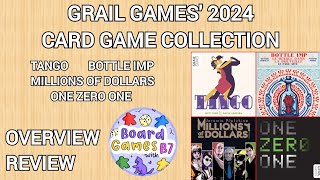
Tango Deep Dive
What the Community Thinks About Tango
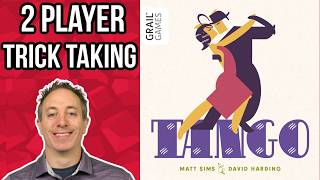
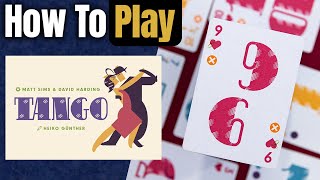
Tango is a two-player trick-taking card game designed by Matt Sims and David Harding and published by Grail Games in 2024. Tango has earned consistent praise from the board game review community as a standout two-player trick-taking card game. Reviewers agree that it delivers unexpected strategic depth from a deceptively simple rule set, making it a refreshing entry in a genre often dominated by games for larger player counts. TheGameBoyGeek positions it among their top two-player trick-takers, ranking it alongside Claim and Fox in the Forest. Board Games With B7 emphasizes that Tango truly shines where many trick-takers struggle, noting there are surprisingly few card games that work well at exactly two players. The consistent takeaway is that Tango succeeds by doing one thing exceptionally well: creating a clean, elegant two-player experience that challenges both players to think differently than they would in other trick-taking games. Where some reviewers note the game may not appeal to those seeking mechanical novelty, the community consensus is that the combination of proven trick-taking fundamentals with Tango's specific innovations creates something worth playing.
Core Mechanics That Define Tango
Hand and Tableau Management
Tango's most distinctive mechanic is the alternation between playing cards from your hand and cards from a face-up display in front of you. Each player maintains a tableau of five cards arranged in a line, with two cards stacked at each position. The bottom card remains face-down until the card above it gets played, which means the tableau gradually reveals itself as the round progresses. This design choice fundamentally shifts the decision space of trick-taking. TheGameBoyGeek highlights how seeing half of each opponent's available options creates entirely different strategic calculations: you can observe which cards they might play from their display, which lets you plan ahead while knowing some of what they could do. Players must constantly weigh which card to play from where, knowing that revealing face-down cards changes the future options for both players. This interplay between hidden and visible information creates the strategic tension that makes Tango feel remarkably deep despite its simple rules.
Dynamic Trump and the Loser's Advantage
In each trick, a dance style card in the center of the play area serves as the trump suit. After each trick is resolved, the player who lost that trick gains the power to change the trump suit by swapping the current dance style card with any card from their hand. This mechanic accomplishes two things at once: it prevents the leader from running away with an insurmountable advantage, and it creates a fascinating strategic dilemma. TheGameBoyGeek notes that this keeps the game dynamic and prevents runaway leaders, because sometimes you might intentionally lose a trick if you have a strong hand in a different suit. The player who wins might then change trump back if they can, creating a back-and-forth negotiation between the two players about which suit will be most valuable. This simple rule generates enormous play-space variation across the ten tricks of each round.
The Tango Experience
Elegant Simplicity with Hidden Depth
Reviewers consistently describe Tango as a game with no wasted effort. There are no special card abilities to remember, no board sections to track, no extraneous systems layered on top of a trick-taking core. Instead, the elegance comes from the distribution of card values, the mechanics of trump, the ability to see half of your opponent's tableau, and the strategic choice of changing trump. TheGameBoyGeek captures this precisely, noting that the game delivers "a lot of depth with not a lot of mechanisms" and that while simple, it is fundamentally crunchy, meaning it really makes you think. The satisfaction comes not from managing complexity but from recognizing how each piece of the puzzle interacts. A card that seems dead weight this turn might be valuable next turn depending on trump. A high card that loses points might still be worth playing if it blocks your opponent from a better play. This is the experience of a game that respects the player's intelligence enough not to overcomplicate the presentation.
Strategic Foresight Under Limited Information
Playing Tango creates a particular tension between planning ahead and adapting to your opponent's moves. Board Stupid's reviewers emphasize that you are "planning ahead as best as you can, remembering that your opponent will know some of the steps that you need to take." This generates a satisfying head-to-head experience where both players feel like they are making meaningful decisions despite having incomplete information. You can see part of what your opponent might play, but not all of it. You know what cards are in your own hand, but not what your opponent holds. This balance of hidden and revealed information means every decision matters, and each game creates a unique puzzle to solve based on what you can see and what you can infer.
What Makes Tango Stand Out
A Two-Player Game That Actually Works
Board Games With B7 identifies what sets Tango apart: there are simply not many card games in the trick-taking genre that function well at exactly two players. Many classic trick-takers were designed for three or more, and while some two-player variants exist, Tango was built from the ground up for head-to-head play. This manifests in how its mechanics work. The exposed tableau means information is shared asymmetrically: you can see some of what your opponent will play, but not everything. The dynamic trump rule ensures that the game remains competitive throughout rather than favoring whoever gets an early lead. These design decisions make it feel tailor-made for two players rather than retrofitted, which is why reviewers note it "really shines" in a category where high-quality options are rare.
Strategic Depth Without Added Complexity
TheGameBoyGeek emphasizes that Tango ranks exceptionally high on the "depth to complexity ratio." The game teaches in minutes and plays in about 30 minutes, yet it makes you think differently than pretty much any other trick-taking game they have encountered. The reason is that every mechanism serves the decision space. The alternating hand-and-tableau play structure, the trump mechanic, the scoring system where nines and tens lose points while ones, twos, and eights gain them, and the ability to see some opponent cards all work in concert to create a tactical puzzle. There are no subsystems or flavoring mechanics. It is pure trick-taking with a specific configuration of rules that produces elegant, crunchy gameplay.
Potential Drawbacks
Limited Appeal for Players Seeking Innovation
TheGameBoyGeek acknowledges that Tango does not have a lot of new innovation. It is built from proven trick-taking fundamentals rather than introducing entirely novel mechanics. Some players want their card games to feature fresh ideas or more mechanisms in play. For those seeking constant mechanical novelty, Tango may feel like a refinement of existing ideas rather than a leap forward. The game's strength lies in how its designer combined familiar elements into a coherent whole rather than in inventing new systems. This is not a flaw for players who value elegance and depth, but it is a legitimate reason why some audiences might look elsewhere.
Niche Appeal Tied to Player Preference
Board Stupid notes that Tango's appeal may be somewhat niche, depending on whether players enjoy trick-taking mechanics and the specific feel of a two-player game. The dance theme and the specific card play structure will not resonate with everyone. Players who are lukewarm on trick-taking or who prefer games with more variance, randomness, or social elements may not connect with what Tango offers. Additionally, the game requires careful attention to both your hand and the table cards to optimize your decisions, which is part of its appeal but also a barrier for players who prefer more casual or forgiving gameplay.
If You Enjoy Tango
Players who find Tango satisfying will likely appreciate other two-player trick-takers that deliver strategic depth in compact packages. Fox in the Forest shares Tango's commitment to creating a meaningful two-player experience within a trick-taking framework and is frequently mentioned alongside Tango in reviewer conversations. Claim is another favorite comparison point, offering elegant design and high strategic value at two players. Sale provides a different take on head-to-head card play and appears in the same conversation as Tango's closest peers. For players who enjoy the exposed information mechanic and the asymmetrical knowledge that comes from seeing part of an opponent's tableau, The Crew and Orum offer trick-taking experiences with different rule structures that reward similar forward planning and card evaluation. Jekyll versus Hyde is another two-player trick-taker that reviewers compare favorably to Tango, offering a different theme and mechanic set within the same genre. All of these games reward players who think carefully about information, value elegant design over added complexity, and enjoy competitive head-to-head play.
What Reviewers Are Saying
"It is clean. There's no fat on this game, but it makes you think differently, and that's what I want from a trick-taking game, and that's what this delivers."
— TheGameBoyGeek
"What makes Tango unique from other trick takers is that apart from each player having their own set of cards in hand they'll also have a display of cards on the table in front of them as well which acts as their second card to play during each trick."
— Board Games With B7
"It sounds really fun and again is an exciting two-player trick-taker. I don't know much more about it than that other than this hits a few boxes that I quite like."
— Board Stupid