



Mysterium Kids: Captain Echo's Treasure Deep Dive
What the Community Thinks About Mysterium Kids: Captain Echo's Treasure
Mysterium Kids: Captain Echo's Treasure is a cooperative children's deduction game for two to six players, designed by Antonin Bokara and Eve Hirschfield and published by Libellud and Space Cow. The transcripts available for this title come from a single channel, Watch It Played. Its host, Rodney Smith, presents a full rules walkthrough, and the same channel also covers the game in a board game news segment. Both videos frame the game around the same premise: the ghost of Captain Echo uses a tambourine to guide the table toward a hidden treasure, and the players work together to decode those sounds.
The overall tone toward the game is warm and approving. Rodney Smith describes the rules as compact enough to teach in a single short session, with the game lasting about 21 minutes. The news segment adds a notable recognition: the game won the children's game award presented alongside the Spiel des Jahres winners. The reviewers agree that the game's appeal lies in its shared guessing rather than in any single rule, and the transcripts do not include a dissenting view.
Core Mechanics That Define Mysterium Kids: Captain Echo's Treasure
Image Deciphering
The central puzzle is a deduction built on an indirect signal. Each round, the ghost secretly draws one of five ghost tokens, and that token points to one of the five numbered noise cards laid out on the Manor board. The ghost then asks the other players to close their eyes or look away, says "boo" to signal the start of a clue, and uses the tambourine to make sounds that might match the target card. Rodney Smith demonstrates several possibilities: a loud bang on the tambourine for an axe, a knock on its wooden side, a fingernail drawn across the surface for a chalkboard, and a series of light, quick taps for a watering can. The ghost cannot speak or give any visible signs, so the players must interpret the sound alone and then agree on one card. The reference description of this mechanic centers on reading a picture for its mood and symbolism. Here the signal is audible rather than visual, but the players still have to work out what a cluegiver intended from an imperfect hint.
The Rotating Ghost and the Moon Track
The second mechanic is the structure that moves the game forward. After each round, the moon token advances one space to the right, the cards on the Manor board are discarded, and the tambourine and the five ghost tokens pass to the player on the left, who becomes the next ghost. When the moon sits beside two card symbols, the ghost gives two clues in that round, one for each of two tokens taken at the start. Each correct guess earns a treasure tile from the stack. Once the moon leaves the track, the game ends and the players tally their stars. Rodney Smith's walkthrough makes the moon the clock of the whole game, and the news segment describes the goal in the same terms: players must find the treasure before the moon has traveled across the sky and the night is over.
The Mysterium Kids: Captain Echo's Treasure Experience
Playful Suspense
The experience is built around a long silence followed by a sudden noise. Each clue opens and closes with a "boo," and the other players keep their eyes closed while the tambourine sounds from across the table. Rodney Smith plays the ghost with a lighthearted, theatrical energy, and the reveal of each clue turns the moment into a small performance. The result feels silly and charming, and the fun comes from watching the ghost try to be clear without speaking a word.
Shared Decision Pressure
The second feeling is the tension of having to agree. Players may hold different opinions, but they must settle on a single guess together. If the group cannot decide, the person seated to the left of the ghost makes the final choice. That rule turns each round into a short negotiation at the table. When the ghost finally reveals the token, the group either earns a treasure or walks away with nothing for that round, and that moment of release is shared by everyone at the table.
What Makes Mysterium Kids: Captain Echo's Treasure Stand Out
Sound as the Clue Medium
The tambourine is the feature that sets this game apart. Rather than relying on words or printed symbols, the ghost uses an instrument and a range of physical techniques to create each hint. Rodney Smith singles out the creativity this allows, showing how a knock on the wooden frame can suggest an axe while a series of light taps can suggest a watering can. That freedom turns cluegiving into a performance rather than a rule to follow, and it gives the game much of its personality.
A Harder Stormy Side
The game includes an optional harder setup. Flipping the top board to the side showing the lightning bolt creates the stormy version, which adds more rounds in which the ghost must give two clues at a time. The stormy treasure tiles, marked with a lightning bolt in the bottom corner, are mixed into the stack, and the final score is read from a separate stormy table on the back of the rulebook. Rodney Smith presents this as a natural next step for groups who want a bigger challenge once the basic game is familiar.
Potential Drawbacks
Dependence on Group Interpretation
The clue system depends heavily on how the group reads an ambiguous sound. Rodney Smith's own example shows the uncertainty: after a clue, the players must choose between options such as the sound of feet rubbing against a mat and a bird flapping its wings. Because the ghost has to stay expressionless and cannot add hints, a round's success rests on the group's shared intuition, and a clue that seems obvious to one player may not land for another. The left-of-ghost tiebreak keeps play moving, but it also means one player makes the final call in a disputed round.
A Tightly Timed Game
The moon track sets a firm limit on how long a game can last, and the stormy side tightens that timing by requiring two clues in some rounds. Some treasure tiles show only one half of a larger treasure, so players must collect both halves to earn the bonus star in the middle. That adds a planning layer that is easy to overlook on a first game. For families who want a quick, light session, the built-in clock is a strength. Groups looking for a longer, more drawn-out evening may find the structure leaves little room to stretch the game beyond a single sitting.
If You Enjoy Mysterium Kids: Captain Echo's Treasure
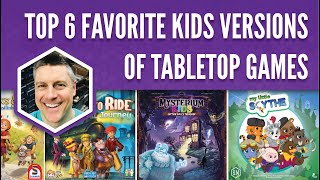
The comparison title raised alongside this game is Mysterium, the adult deduction game in which one player delivers indirect clues and the rest of the table works toward a shared answer. Players who enjoy that style of cooperative reasoning will recognize the same core pleasure here, scaled down for younger players. Anyone drawn to the idea of decoding a cluegiver's intent from an imperfect hint, or to the tension of reaching one group decision under time pressure, will find the central appeal of this game familiar and easy to enjoy.
What Reviewers Are Saying
"Here you gain a point for every star on the tiles you collected, but notice some tiles show one half of a larger treasure. If you get both halves, you can put them together, earning you the extra star in the middle."
— Rodney Smith, Watch It Played
"The ghosts cannot speak or give any visible signs or additional clues, so they'll want to stay as expressionless as possible."
— Rodney Smith, Watch It Played
"The two to six player Mysterium Kids Captain Echo's Treasure won the children's game award where players cooperate to find Captain Echo's treasure before the moon has traveled across the sky and the night is over."
— Matthew, Watch It Played