Game Info
Year
2023
Players
2-4
Age
8+
Playtime
25 min
Complexity
1.2/5
Collection
Ratings
Creator Score
Mechanic profile
Not enough video data yet
Vibe profile
Not enough video data yet
Description
A classic rummy-style tile game of tactics and set collection.
Featured Videos


Ask a Rules Question
Images

GID0452873.jpg

GID0452873_thumb.jpg
All mentions
Browse transcript mentions, sentiments, pros/cons, mechanics, topics, quotes, and references.
Total mentions: 3
This page: 3
Sentiment:
pos 0 ·
mix 1 ·
neu 0 ·
neg 0
Showing 1–3 of 3
Video E_TpGhrO338
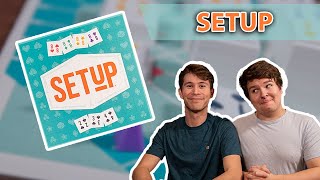
kovray Review
video_pk 68848 · mention_pk 165142
Pros
none
Cons
none
Thematic elements
none
Comparison games
none
Mechanics (from transcript analysis)
Mechanics unknown.
Video topics + discussion points
No key topics recorded for this video.
Quotes (from this video)
- it's retro yeah board game vibe, like is this game from the 80s
- nostalgia and really just like good feelings right off the bat
- looks like Mahjong
- it's a race to finish not necessarily how many points you're gonna have at the end; it's the person that finishes
References (from this video)
No references stored for this video.
Video E_TpGhrO338
kovray Review at 0:09 sentiment: mixed
video_pk 68848 · mention_pk 336897
Click to watch at 0:09 · YouTube ↗
Overall sentiment (raw)
mixed
Pros
- setup is quick and easy to teach
- great table presence and experience
- retro/nostalgic vibe that appeals to families and fans of classic games
- feels like a card game with strategic depth
- short playtime (20-25 minutes) and replayability
Cons
- if you're behind, catching up can be difficult due to lack of a dedicated catch-up mechanic
- luck factor from random tile draws can affect outcomes
- board changes quickly, making advanced planning harder
- limited personal control (only two tiles under full control) can reduce agency
Thematic elements
Comparison games
- Shifting Stones
- Scout
Mechanics (from transcript analysis)
- bonus squares interaction — using tiles on other players' bonus squares grants one point per tile used
- center vs. personal control — only two tiles are fully controlled by the player and two placement spots, with the central four tiles changing during play
- Compound Scoring — score one point per tile placed and one point for each tile that interacts with the tiles you placed
- directional and multi-set creation — you can form sets in any direction and can create multiple sets in the same turn
- End condition — the game ends when a playing piece crosses the finish line; if multiple cross in the same turn, the lead ahead wins
- hand and board setup — each player starts with a tile holder containing four tiles and a scoring marker placed on the board
- luck element — tile draws from the bag introduce variability and luck into the game
- scoring rules — score one point per tile placed and one point for each tile that interacts with the tiles you placed
- swap action — if you cannot or do not want to make a set, you can swap tiles from your hand for the same number of tiles from the bag
- Tile Placement — on your turn you place tiles to form sets that are either the same number or consecutive numbers of the same suit
- tile placement to form sets — on your turn you place tiles to form sets that are either the same number or consecutive numbers of the same suit
- use of board and hand tiles — tiles placed can use tiles already on the board to build or enhance the set
Video topics + discussion points
No key topics recorded for this video.
Quotes (from this video)
- it's retro yeah board game vibe, like is this game from the 80s
- nostalgia and really just like good feelings right off the bat
- looks like Mahjong
- it's a race to finish not necessarily how many points you're gonna have at the end; it's the person that finishes
References (from this video)
No references stored for this video.
Video Guwie8nuEJ4
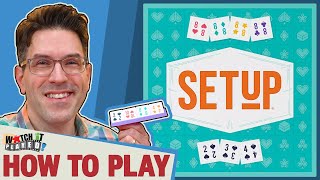
Watch It Played Rules Teach at 0:00
video_pk 64218 · mention_pk 164598
Click to watch at 0:00 · YouTube ↗
Pros
none
Cons
none
Thematic elements
none
Comparison games
none
Mechanics (from transcript analysis)
Mechanics unknown.
Video topics + discussion points
No key topics recorded for this video.
Quotes (from this video)
- the two to four player game setup designed by Jacob Berg
- first player to reach or cross the finish line is the winner
- there are two different types of sets
- one type is any combination of tiles sharing the same number
- the other type of set is consecutive numbers but they must all share the same suit
References (from this video)
No references stored for this video.
Transcript Navigation
Showing 1–3 of 3