










Moytura Deep Dive
What the Community Thinks About Moytura
Reviewers recognize Moytura as a cleverly designed two-player area control game that departs from traditional confrontational mechanics. The consensus centers on its elegant simplicity, striking artwork, and the distinctive tension created by its third faction system. While most praise the design's ingenuity, several reviewers note they haven't yet had a chance to sit down with a full play, suggesting the game's appeal may benefit from personal experience. Bitewing Games' reputation for thoughtful two-player designs comes through in how reviewers discuss the game, with frequent comparisons to designers' other acclaimed titles.
Core Mechanics That Define Moytura
Deity Selection and Escalating Costs
At the heart of Moytura lies a rotating action system centered on invoking deities. Each turn, players select from a row of deity tiles, each representing different ways to deploy troops across the board. The system's elegance emerges in the cost structure: when you activate a deity, it moves to the top of the row, becoming more expensive to use on future turns. This means you face a real decision each round. Do you use the cheaper deities available at the bottom of the row, or do you pay premium worship tokens to access the specific deity ability you want? The designers create meaningful resource management without heavy bookkeeping, forcing players to constantly weigh immediate needs against future flexibility.
The Fomorian Threat
What makes Moytura stand apart from typical area control is the presence of a third faction: the Fomorian enemies, controlled by the game itself through a deck of cards. These are not passive obstacles. The Fomorians actively expand across the board using their own rules, constantly claiming territory unless held back by the players. Critically, the Fomorians score points alongside the two human players. This creates a semi-cooperative dynamic where players must sometimes cooperate to prevent the bot faction from winning outright, even though they remain locked in competition with each other. Players cannot directly remove one another's tokens; instead, they must use the Fomorian expansion to strategic advantage, trying to position these neutral forces to undermine their opponent's territory while keeping the enemies in check.
The Moytura Experience
Tactical Puzzle Solving
Reviewers describe Moytura as a tense, thinky game that rewards careful planning. The lightweight complexity makes it accessible, yet the interaction creates genuine puzzles. You're constantly evaluating which deity to activate, how far to expand your influence, and whether to prioritize defending key regions or letting the Fomorians expand into your opponent's territory. The game doesn't overwhelm with chrome, but the decision space remains consistently engaging. Rob's Gaming Table noted this appeals to players who enjoy "pretty, fun little battlers" with substance beneath the surface.
The Mythology as Atmosphere
The Irish mythology setting, rooted in the Tuatha De Danann and Fomorian mythology, provides thematic flavor without overcomplicating play. Reviewers appreciate the aesthetic coherence: the deity powers align with mythological functions, the map depicts ancient Ireland's regions, and the Fomorians feel appropriately menacing rather than arbitrary. The theme serves the mechanics rather than drowning them, making the 45-minute playtime feel satisfying and cohesive.
What Makes Moytura Stand Out
The Asymmetric Interaction Model
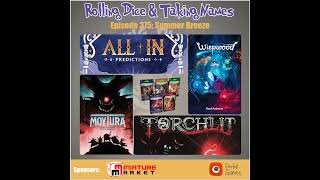
Most area control games devolve into direct conflict: you fight me directly for territory. Moytura inverts this. You cannot directly remove your opponent's tokens. Instead, you must manipulate the board state and Fomorian expansion to create pressure. This fundamental shift in how players interact forces different kinds of decisions. Rolling Dice & Taking Names highlighted this design choice as crucial to the game's appeal, noting that the Fomorian system became "the big thing" that elevated it beyond typical area majority mechanics. The result is a game where your opponent becomes both rival and ally in containing a shared threat.
Designer Pedigree and Proven Excellence
Moytura comes from Trevor Benjamin and David Thompson, co-designers of the acclaimed Undaunted series. Thompson's reputation for "clever little two-player battling games that usually look pretty and are fun" precedes the design team. Reviewers trust this design team based on their track record, and the game delivers on that promise: a clean, well-thought-out system that respects player intelligence without demanding excessive rules overhead. The artwork receives consistent praise, with multiple reviewers noting the visual appeal as a draw alongside the mechanical innovation.
Potential Drawbacks
Limited Historical Context in Gameplay
While the Irish mythology theme is charming, reviewers note it remains decorative. The game plays very abstractly despite its historical setting. Beyond Solitaire's David Thompson acknowledged the light-touch approach to mythology directly: players who wanted deeper thematic simulation or extensive lore engagement may find this unsatisfying. The theme evokes rather than simulates.
Uncertain Replayability and Campaign Depth
Several reviewers mention the game offers multiple map setups and enemy clan variants to vary matches, yet the actual long-term replayability remains partially unproven at the convention setting where most reviewers encountered it. Some suggest demoing before purchasing precisely because they haven't sat with the game enough to attest to sustained engagement. The strategic space may have ceilings that become apparent only after repeated plays.
If You Enjoy Moytura
Players drawn to Moytura's deity selection system will find similar mechanical satisfaction in Cyclades, which also features god auctions and escalating costs. Those who love the area control without direct removal will appreciate Small World, which similarly allows territory to change hands through non-combat means. Fans of the two-player confrontation with elegant systems should explore Undaunted, which shares the designers' approach to clean interaction. And players who enjoy the semi-cooperative pressure of defending against an advancing threat will recognize echoes of Blood Rage's mythological conflict and area dominance.
What Reviewers Are Saying
"The monsters. The monsters is the big thing for me. It's just not monoymano. We got to deal with this third faction that could possibly take the game from us."
— Rolling Dice & Taking Names
"When you activate a deity tile, it will then move to the top of the row of deity tiles, and it will essentially become more expensive the next time you use it. There's also a neutral faction in the game that you will both kind of have to fight, or else they will take over too much of the board. They will sort of run rampant on the board and screw you both."
— Grant Lyon
"This game definitely reminds me of like a mini Cyclades, just with the way that you select a deity to take actions each round. A solo mini Cyclades sounds really interesting to me, so I'm very excited for this one."
— Totally Tabled